WSG ‘Her Stories’ Reading Group: Upcoming session

Reading for WSG reading group session on 28th October, 7–8pm 2025 (GMT)

Frances Brooke’s The History of Emily Montague (Jasmin Bieber’s suggestion).

Please see the WSG October Newsletter for the Zoom link.

All WSG members are welcome to join this session, co-ordinated and facilitated by Karen Lipsedge.

About the reading:

Jasmin Bieber has kindly prepared a PDF of Brooke’s novel, which will be available to participants. If you cannot manage to read the entire novel, Jasmin recommends prioritising the first half, which takes place in Quebec and introduces intriguing, sensible romance plots. Alternatively, you might read from letter 57 to letter 177, which covers the troubled relationship between the main characters.

How the session will be organised:

Jasmin will begin by sharing why she chose Brooke’s novel and discussing the core themes. As with previous sessions, each participant will then share one thing they found noteworthy about the text.

At this meeting, we will also discuss and plan reading group sessions for December 2025 to October 2026, so please bring your suggestions and diaries.

To participate in ‘Her Stories’:

Contact Karen Lipsedge directly: K.Lipsedge@Kingston.ac.uk

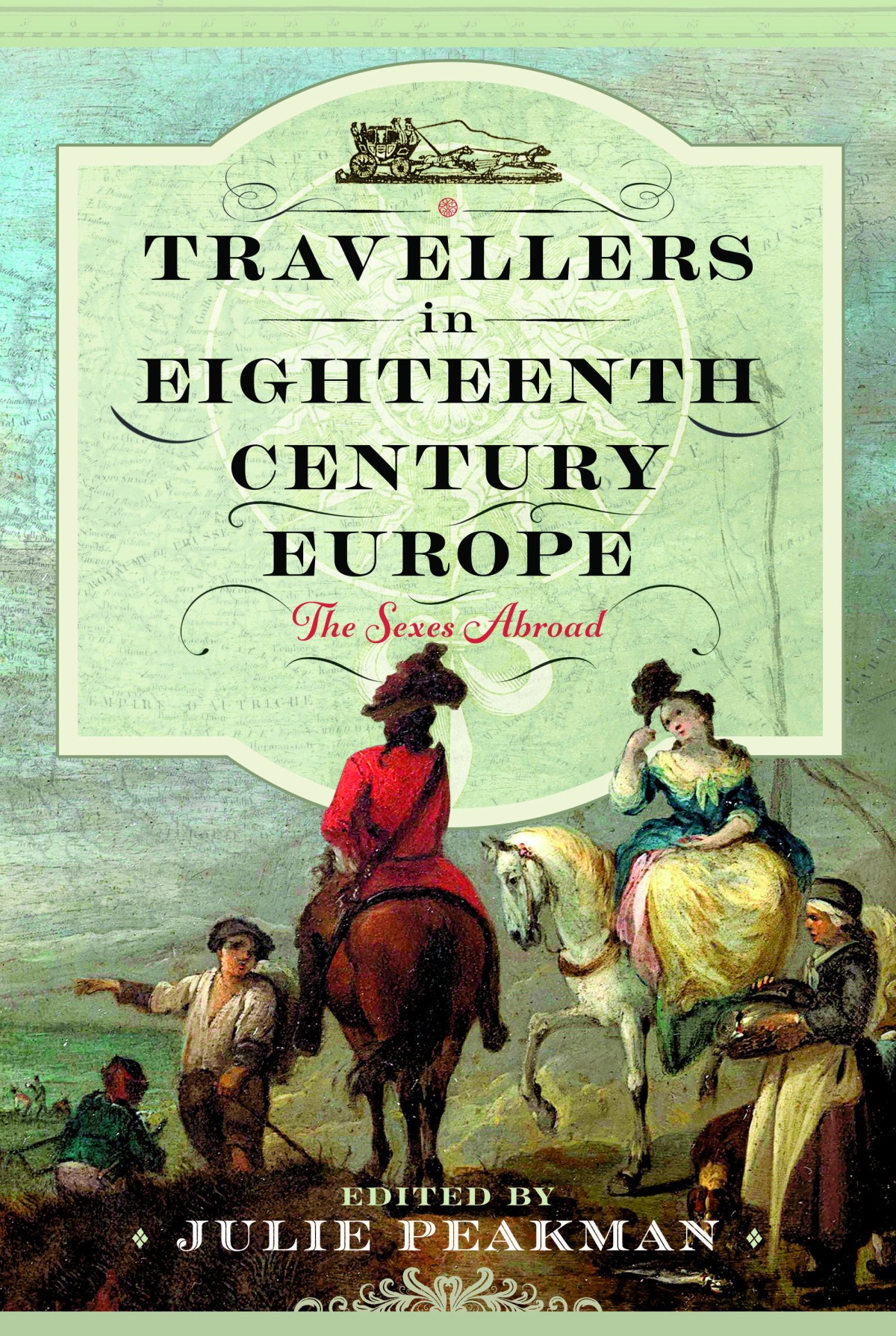
Special Seminar Travellers in Eighteenth-Century Europe: The Sexes Abroad

The Women’s Studies Group will be holding a special seminar at the Foundling Museum in London on 18 January 2025, from 1.30pm to 4.30pm. Come along and listen to Julie Peakman introduce a new edited collection, Travellers in Eighteenth-Century Europe: The Sexes Abroad.

Julie and contributors from the book will give short talks on their chapters. Speakers include Valentina Aparicio, Maria Grazia Dongu, Louise Duckling, Miriam al Jamil, and Teresa Rączka-Jeziorska. Please see the attached PDF for more details and the full book contents.

There will be plenty of time for sociability, so we hope you can join us. Friends and partners are welcome. Please RSVP to wsgpostbox@gmail.com with ‘Travellers’ in the Subject Line and please indicate if you are bringing a guest.

The Women’s Studies Group 1558-1837 is pleased to announce the speakers for their seminar series 2024-25

The Women’s Studies Group 1558-1837 is pleased to announce the speakers for their seminar series 2024-25.

*RESCHEDULED* Our first seminar of the year will now take place on Zoom, starting at the earlier time of 5.45 for 6 pm and finishing 7.30 pm British Summer Time on Monday 14 October 2024. This first seminar features the following presentations:

Marion Wynne-Davies: Isabella Whitney and London.

Avantika Pokhriyal: The Sign of the Woman: Reading Spatial Negotiations in Betsy Thoughtless.

Emily C. Cotton: Elite Women’s Agency in Marriage Negotiations, 1742-1788.

*********

The group has two kinds of meeting for seminars.

In-person seminar meetings. These take place at the Foundling Museum, 40 Brunswick Square, WC1N 1AZ, UK, on Saturday afternoons. We will be allowed into the room at 1.00 pm, to give us time to sort out paperwork and technology, but sessions will run from 1.30 pm – 4.30 pm. Please arrive between 1.00 pm – 1.30 pm. The Foundling is a wheelchair accessible venue, and directions for getting to the Museum can be found here, including for those who are partially sighted. Seminars are free to WSG members. Non-members are welcome and are kindly requested to pay the Museum entrance fee and make a donation of £2 for refreshments. Those attending the seminars are welcome to look round the museum before or after.

ZOOM seminar meetings. These take place on Thursday evenings and will be hosted by a member of the WSG committee. They run from 7.00 pm – 8.30 pm, with the waiting room opening at 6.45 pm. Please be aware, you must be a member of the WSG to gain access to the Zoom sessions. The links are distributed through our WSG mailing list 24-hours before the event.

Download the full programme in PDF format: 

Women’s Studies Group 1558-1837, Seminar Schedule 2024-2025

Monday 14 October 2024

ZOOM STARTING AT THE EARLIER TIME OF 5.45 FOR 6 PM, FINISHING 7.30 PM, BRITISH SUMMER TIME

Marion Wynne-Davies: Isabella Whitney and London.

Avantika Pokhriyal: The Sign of the Woman: Reading Spatial Negotiations in Betsy Thoughtless.

Emily C. Cotton: Elite Women’s Agency in Marriage Negotiations, 1742-1788.

*********

Saturday 19 October 2024

FOUNDLING MUSEUM, LONDON, 1 FOR 1.30 PM, FINISHING 4.30 PM. BRITISH SUMMER TIME

Lindsey Bauer: The Women of Lucca and Costanza Bonarelli: Why Modern Scholars Cannot Place a Full-Stop after ‘Victim’.

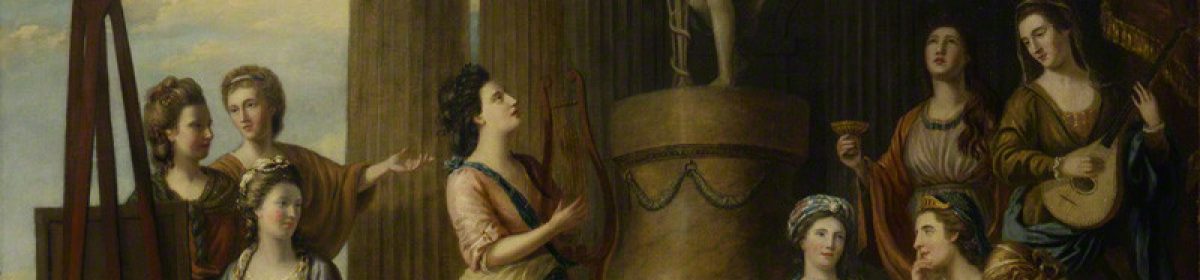
Holly Day: Recontextualising the Nine Living Muses of Great Britain.

*********

Saturday 9 November 2024

FOUNDLING MUSEUM, LONDON, 1 FOR 1.30 PM, FINISHING 4.30 PM. GREENWICH MEAN TIME.

Margarette Lincoln: Perfection: 400 Years of Women’s Quest for Beauty (Yale: Sept. 2024).

Luiza Tavares da Motta: Alchemy and Galvanism in legal theory: a look at nineteenth-century legitimation of common law through Frankenstein.

Megumi Ohsumi: Aphra Behn’s American Feathers.

Charlotte Vallis: An Empress’ Coronation: public display of gender identity for Elizabeth Petrovna, 1741-1761 and Catherine the Great, 1762-1796.

*********

Thursday January 16, 2025

ZOOM STARTING 6.45 FOR 7 PM, FINISHING 8.30 PM. GREENWICH MEAN TIME

Jasmin Bieber: Unprecedented Paths Beyond Europe: British Women’s Travel Writing 1680-1780.

Chandni (Anjali) Rampersad: Female Genius In Memoriam: Women Writers’ Afterlife in the Gentleman’s Magazine (1731-1806).

Rosalyn Sklar: Healing women: Early modern women as healers in their own texts, practices and representations.

*********

Thursday February 6, 2025

ZOOM STARTING 6.45 FOR 7 PM, FINISHING AT 8.30 PM, GREENWICH MEAN TIME

Dra. Pilar Botías Domínguez: ‘‘Masquerading! a lewd custom to debauch our youth’’: compliance and defiance in Aphra Behn’s The Rover (1677).

Amy Solomons and Elizabeth Ingham: Reconstructing Dispersed Collections: The Library of Lady Mary Wortley Montagu.

Charlotte MacKenzie: Women and knowledge making communities in Georgian Cornwall.

*********

Saturday March 15, 2025

FOUNDLING MUSEUM, LONDON, 1 FOR 1.30 PM, FINISHING 4.30 PM GREENWICH MEAN TIME

Susannah Lyon-Whaley: Small Enough to Hold: Stuart Consorts and Knowing Nature Through Cabinets, Miniatures, and Books.

Susan Bennett: ‘Fancy, Design and Taste’: Promoting female artistic talent in the 18th.century.

Valentina P Aparicio: Boundaries and Intimacy in Transatlantic Friendships: Maria Graham and Empress Maria Leopoldina.

Breeze Barrington: An introduction to the topic of her forthcoming book The Graces: The Untold Lives of the Women Who Transformed the Stuart Court.

*********

Thursday 10 April 2025

ZOOM STARTING 6.45 FOR 7 PM, FINISHING AT 8.30 PM, BRITISH SUMMER TIME

Claudia Cristell Maria Berttolini: Saint Gertrude as a female role model in 18th century Puebla de los Ángeles.

Jacqui Grainger: Mary Somerville, the United Service Museum and women of science.

Francesca Saggini: Jane Austen and the Golden Age of Crime Fiction.

For further information including abstracts, see our seminars page, or contact the organiser Carolyn D. Williams, cdwilliamslyle@aol.com. To join the WSG, see our membership page.
Call for papers from the Women’s Studies Group: 1558-1837 (London)

CFP Deadline: 6 August 2024

The Women’s Studies Group 1558-1837 is a small, informal, multidisciplinary group formed to promote women’s studies in the early modern period and the long eighteenth century. Established in the 1980s, the group has enabled those interested in women’s and gender studies to keep in touch, hear about one another’s research, meetings and publications, and meet regularly to discuss relevant topics. We organize regular meetings and an annual workshop (see membership application form) where members can meet and discuss women’s studies topics. This season we shall also be hosting two book launches for publications by our members. We can offer advice and opportunities to engage in activities that increase opportunities for publication, or enhance professional profiles in other ways. The WSG is open to men, women, and non-binary people, students, faculty, and independent scholars, all of whom are invited to join the group and give papers.

The group now has two kinds of meeting for seminars.

In-person seminar meetings. These will take place at the Foundling Museum, 40 Brunswick Square, WC1N 1AZ, UK, on Saturday afternoons. We will be allowed into the room at 1.00 pm., to give us time to sort out paperwork and technology, but sessions will run from 1.30 – 4.30 pm. So please arrive a little early if you can.

ZOOM seminar meetings. These will take place on Thursday evenings and will be hosted by a member of the wsg committee. They will run from 7-8.30 pm, with the waiting room opening at 18.45 pm.

Topics can be related to any aspect of women’s studies: not only women writers, but any activity of a woman or women in the period of our concern, or anything that affects or is affected by women in this period, such as the law, religion, etc. Male writers writing about women or male historical figures relevant to the condition of women in this period are also a potential topic. Papers tackling aspects of women’s studies within or alongside the wider histories of gender and sexuality are particularly welcome; so are topics from the early part of our period. We would also welcome how-to presentations for discussion: examples of suitable topics would include, but are not limited to, grant applications, setting up research networks, becoming a curator, co-authorship, using specialised data, and writing about images. Papers should be 20-25 minutes.

Last year’s titles and abstracts are available on the website seminars page to provide examples of papers accepted in the past. 

Dates of seminar meetings:

Saturday 19 October 2024       In-person 

Saturday 9 November 2024      In-person

Thursday 16 January   2025      ZOOM. 7-8.30 pm, Greenwich Mean Time

Thursday 6 February   2025      ZOOM. 7-8.30 pm, Greenwich Mean Time.

Saturday 15 March     2025       In-person

Thursday 10 April       2025       ZOOM. 7-8.30 pm, British Summer Time

Find out more about us on https://womensstudiesgroup.org

Please reply to Carolyn D. Williams on cdwilliamslyle@aol.com

Lodgers, Landlords, and Landladies in Georgian London by Gillian Williamson. Review by Sarah Murden

London: Bloomsbury Academic. 2021. Pp 256. £85.00 Hardback; £28.99 Paperback; £76.50 Ebook. ISBN: 978-1350212633.

How often, when we walk past surviving Georgian houses, do we wonder what life would have been like for the people who lived behind those closed doors back in the eighteenth and nineteenth centuries? Probably not very often, if at all, if truth be known. We admire the classical architecture which has stood the test of time and is iconic of that period, but what about the lives of those who lived there?

Gillian Williamson’s book Lodgers, Landlords, and Landladies in Georgian London investigates what life would have been like behind those closed doors, both for the landlord/lady and for a lodger. The majority of homeowners weren’t rich and famous, they were more your average working people, living lives we may well be familiar with today – going to work to provide for their family, staying at home to raise the family, socialising with friends, but also taking in lodgers to make ends meet – so what was life really like behind those iconic Georgian doors?

I have to begin this review with a confession. As someone who spends most of their time in the eighteenth century, I had never given lodgers, landlords or landladies a second thought, but this book has definitely shone a very bright light into this world, and how much social history was hidden behind those doors. This book is quite probably unique in its investigation, which makes it utterly fascinating and extremely thought-provoking.

Lodging in the eighteenth century could be compared to a certain extent with multi-occupancy student accommodation today, but with the landlord/lady and possibly their family also living ‘on site’. A lodger rarely had their own door key, and did you even know that there was a ‘code’ to ringing a doorbell or knocking on one of those Georgian front doors waiting to be let in? Each knock or ring defined who you were and your status within Georgian society.

How did one approach the task of finding somewhere to lodge in Georgian London? In some ways part of the actual process of finding lodgings hasn’t really changed that much since the eighteenth century, instead, it has just become quicker. As with today, where you are going to live in London determined the price you would pay for lodgings. Some people only took lodgings for ‘The Season’, others only when Parliament was sitting, but for most, it was taken more as a long-term residence, assuming you weren’t ejected for a misdemeanour, or simply because the owner had a change in their situation, and you would perhaps stay there for about a year or so.

Williamson investigates this process thoroughly, in a step by step way, from the landlord/lady placing an advert in say a newspaper, to potential candidates applying, often via a third party, to how lodgings were advertised, how much it would cost to rent a room(s), the size of your accommodation and then of course, there were the extras to be carefully considered – did you want to do your own cooking in your room or pay for meals with your landlord/lady or dine out? How about laundry? – would you do you own or pay the household servant to do it for you? What about heating? – after all, it was cheaper to sit in the parlour with the owner rather than spend money on your own coals, but then maybe you would have to mix with other lodgers who you may or may not rub along with, who were also trying to save money on heating. Cost was of paramount importance, as were ways to save money on what was an expensive art of simply living. One amusing quote Williamson includes is a reference to the poet William Wordsworth who visited the Lambs at their lodgings, who were then charged extra for sugar as Wordsworth took more sugar in his tea than most – everything had its price!

Lodgers agreed an inventory so there could be no argument when they moved out, along with recompense at the end of the agreement for any damage caused, which it appears was not uncommon, be it spilled ink or fire damage, the list goes on. It was always worth considering when taking unfurnished accommodation that the lodger should check out the status of their landlord so that, should the bailiffs be called in, your possessions weren’t also seized to fund their debt.

Moving lodgings, now this was another performance in itself, such as packing your chest(s) then unpacking at your new location. Williamson investigates methods for arranging your chest to be transported for you, as of course it contained all your worldly goods. Next came the settling into new, strange accommodation, often with people you would never have associated with before and who you may not get along with.

Williamson cites several people who disliked this process intensely and for whom a record remains of their experiences. Then of course, there was the issue of having to live in a room with furniture and accessories which might not have been to one’s taste, but not being able to afford one’s own dwelling with a front door meant there was no choice. Funds determined the potential size of the accommodation, so it may have been just a tiny garret or several rooms with use of the household servants.  Stereotypical gender roles were often assumed, with female lodgers having to fend for themselves, whereas it was commonplace for female landladies to do extra things for their male lodgers, such as repairing clothing and caring for them if unwell.

Some landlord/ladies allowed their lodgers to have their name on the front door to help callers know that you lived there, but it’s perfectly feasible you might be charged extra for this service.

Trying to ‘rub along’ together with strangers is never easy and that hasn’t changed despite the passage of two hundred years. We all have our own idiosyncrasies, as people did back then, but for most people today, we can close our doors and be ourselves – not so for many in Georgian London, as you had to consider the other lodgers.

The book comprises of seven chapters, plus an extensive notes section at the end and is without doubt a book which will appeal to anyone with an interest in social history, day to day life in the Georgian Era and social housing in general. The book is filled with fascinating anecdotes, and I have learnt so much from it, including much I had never even thought about, and as such I would highly recommend it. I’m sure it’s one I will return to again and again in future research.

Sarah Murden

All Things Georgian

Sarah Murden, FRHistS, is an eighteenth-century historian, genealogist and independent researcher, who has also co-authored five books, published by Pen & Sword books. Sarah is most well known for her website, All Things Georgian, which includes around 700 articles, covering all aspects of Georgian life.