WSG Bursary 2024 

We are delighted to announce that the 2024 WSG Bursary has been awarded to Amy Solomons. Amy is a trained archivist and librarian and  is currently a PhD researcher at the University of Liverpool and the National Trust. Her research focusses on eighteenth-century female reading experiences in historic house spaces. She will use the bursary to fund two research trips: to Mount Stuart, Isle of Bute, and Sandon Hall, Staffordshire, each of which contains bibliographic and archival sources documenting Lady Mary Wortley Montagu, her daughter, Lady Mary Countess of Bute, and her granddaughter Lady Louisa Stuart.

***********

Previous Bursary Winners

  • 2023: Eleanor Bird, ‘Margaret Davy, sister-in-law of Humphrey Davy and collector of his works’ (Main Award); & Brianna Robertson-Kirkland , ‘Examining three Georgian opera singers: Elizabeth Billington, Anna Selina Storace and Gertrude Mara’ (Travel Award)
  • 2020: Anna Jamieson, ‘Spending and Shopping: Women’s Experience in the Eighteenth-Century Madhouse’ and Alexis Wolf, ‘Women Nurses and Inspectors of the Foundling Hospital, 1750-1830’ (Joint award with Foundling Museum)
  • 2019: Charlotte Young, ‘Women’s involvement in Canterbury sequestrations, 1643-50’; Hannah Jeans, ‘Women’s Reading Habits and Gendered Genres, c.1600-1700’
  • 2018: Madeleine Pelling, ‘The friendship of Horace Walpole and Mary Hamilton’; Rebecca Simpson, ‘Narratives of pregnancy’
  • 2017: Charmian Mansell, ‘A new history of female service in early modern England, 1550-1650

 **********

Summer Book Launch Event

Please join us for a special online Zoom event on Thursday 27 July, when we will be celebrating four new books by WSG members. Each author will be giving a short, informal talk about their work, followed by a Q&A session.

This event is free and open to everyone. Why not come along for some summer reading inspiration?

Reserve your place now on Eventbrite: Summer Book Launch Event – Online Tickets, Thu 27 Jul 2023 at 19:00 | Eventbrite

COME AND MEET OUR GUEST AUTHORS:

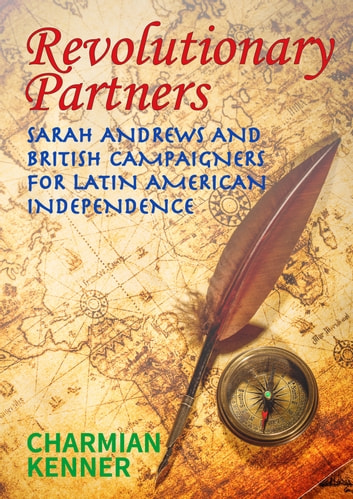
Charmian Kenner is a researcher and writer on women’s history, with a special interest in Latin America. She will discuss her free eBook Revolutionary Partners: Sarah Andrews and British campaigners for Latin American independence.

Revolutionary Partners asks: How did a young woman from Yorkshire meet a Venezuelan revolutionary in the year 1800? This is the story of Sarah Andrews and Francisco de Miranda, whose London home served as a British headquarters for the struggle to liberate Latin America from Spanish rule. Their sons Leander and Francisco took up the cause, joining many Britons who crossed the Atlantic to fight alongside Simón Bolívar or witness the dawn of a new society. All were partners in the revolution, but their contribution is little-known in Britain today, and Sarah Andrews has remained in the shadows.

Peter Radford is an Olympic medallist and world record holder, and Professor at the University of Glasgow and Brunel University. He will discuss his new monograph They Run with Surprising Swiftness: The Women Athletes of Early Modern Britain.

Sports have never been the sole preserve of men; women athletes have always been there. As this book shows, throughout the seventeenth and eighteenth centuries in Britain, women of all ages ran, fought, rode, played football, cricket, tennis, and other sports. They competed in tough, head-to-head events that required extraordinary endurance and skill. They Run with Surprising Swiftness recognizes these remarkable athletes and their achievements and aims to restore them to their rightful place in the long history of women in sport.

Sara Read is a Senior Lecturer in English at Loughborough University. Her research is in the cultural representations of women, bodies and health in the early modern era.

Her second novel The Midwife’s Truth is a sequel to The Gossips’ Choice and continues the story of midwife Lucie Smith. The birth stories, which form the backdrop to the novels, are inspired by the case notes of a Bristol midwife published in 1737. The books mix humour, compassion, and sorrow, and have been scrupulously researched.

Kim Sherwood is an award-winning author and creative writing lecturer at the University of Edinburgh. Her latest novel, A Wild and True Relation (2023), was described by Dame Hilary Mantel as “a rarity – a novel as remarkable for the vigour of the storytelling as for its literary ambition. Kim Sherwood is a writer of capacity, potency and sophistication.”

The novel opens during the Great Storm of 1703, as smuggler Tom West confronts his lover Grace for betraying him to the Revenue. Leaving Grace’s cottage in flames, he takes her orphaned daughter on board ship disguised as a boy to join his crew. But Molly, or Orlando as she must call herself, will grow up to outshine all the men of his company and seek revenge – and a legacy – all of her own.

How the WSG supported my research

A reflection by Charmian Kenner

I have just published my book Revolutionary Partners: Sarah Andrews and British Campaigners for Latin American Independence, and as an independent researcher I have found the Women’s Studies Group to be a vital source of support.

I discovered Sarah Andrews, the main subject of my research, in a painting at the Venezuelan Cultural Centre in London. The picture is a contemporary re-imagining of a scene taking place in the early 1800s. Simón Bolívar, the future Liberator of Venezuela, Bolivia, Colombia, Ecuador, Peru, and Panama from the Spanish, is being received by fellow revolutionary Francisco de Miranda at the latter’s London home. My attention was caught by the depiction of a young woman in the corner of the painting, reading a book with two young children next to her.

This young woman turned out to be Sarah Andrews, the British partner of Francisco de Miranda. Intrigued, I began to investigate her story and found that Sarah ran the household, which served as a London headquarters for supporters of Latin American independence. My starting point was a treasure trove of Sarah’s letters to Miranda while he was away fighting in Venezuela from 1805-1807 while she held the fort back home.

I had been a feminist historian 35 years earlier and many other things in between. Now retired, with no institutional affiliation, I needed a way to exchange ideas with like-minded people. The ideal would be a group centered on women’s history, so I searched online and was excited to find the WSG close to me in London, with seminars accessible to all.

Attending my first seminar, I was welcomed and immediately treated as an equal. Everyone I spoke to was interested in my topic and eager to help, suggesting references and recommending lines of enquiry. I was relieved to find that many in the group were independent researchers and had been able to publish their work.

The seminars were a constant source of wonder, revealing so much about centuries of women’s history. Ideas about my own research were stimulated as contributors interacted with the audience and drew out threads of commonality between the presentations. Questions and comments were always infused with a spirit of positivity. 

Some topics were of direct relevance to my research. A paper by Valentina Aparicio drew attention to Maria Graham’s journal of her stay in newly-independent Chile in 1822, which became an important source for my study. Together with documentation I had already gathered on Mary English and Kitty Cochrane, who accompanied British partners fighting alongside Simón Bolívar, this widened my focus beyond Sarah Andrews’ story. My book now includes the experiences of other British women supporters of Latin American independence.

Like everyone in the WSG, I was invited to submit a paper for the seminars. This was an opportunity to focus my thinking and develop my analysis. The response from the audience was heartening. They were keen to discover more about Sarah Andrews and her social and political context, encouraging me to continue with the research and to publish.

Feedback at the seminar provided me with key ideas from wide-ranging scholarly knowledge amongst the WSG. For example, several group members highlighted the significance of Sarah Andrews’ father being a shoemaker. This could explain how Sarah encountered revolutionary ideas in the Yorkshire market town where she was born since shoemakers’ shops were a well-documented centre for radical discussion.

Further help was forthcoming after the seminar. Louise Duckling sent suggestions for publishers, whilst Gillian Williamson shared information she found in Old Bailey records concerning a burglary at Sarah Andrews’ home in 1840. The court evidence revealed Sarah’s living arrangements and those sharing her house at this point, a period for which little other data was available.

This support validated my topic and spurred me on. I soon began to write, and at a recent WSG seminar I was happy to say that I was about to publish my book with free access online. WSG members received this announcement with the same pleasure and interest they had shown throughout my research journey. It felt like coming full circle. 

The final hurdle was to convert my Word document into the format required for an e-book. Images and captions kept repositioning themselves, and I couldn’t find anyone who knew how to solve the problem. Once again, WSG came to the rescue. I put out a call for help on the email list, and Louise Duckling quickly responded with suggestions for people experienced in formatting. The first person I contacted sent an immediate reply and not only sorted out my pictures but also improved the book’s overall design. I was ready to publish! Revolutionary Partners: Sarah Andrews and British Campaigners for Latin American Independence can be accessed free here.

Thank you, WSG!

Charmian Kenner

Charmian Kenner started life as a feminist historian in the 1970s. After many other incarnations she returned to her original occupation, having discovered the existence of Sarah Andrews, the partner of Venezuelan revolutionary Francisco de Miranda in London in the early 1800s. Sarah’s intriguing story was waiting to be told, and the result is the recently published book Revolutionary Partners: Sarah Andrews and British Campaigners for Latin American Independence, available free on Kobo.

The Tudors: Art and Majesty in Renaissance England

An exhibition review by Valerie Schutte

The Tudors: Art and Majesty in Renaissance England is a dynamic exhibition of Tudor artifacts currently touring the United States. On 14 May 2023, it wrapped up the second leg of its tour at the Cleveland Museum of Art, which was preceded by three months at the Metropolitan Museum of Art, New York, from 10 October 2022 to 8 January 2023, to be followed by three months at the Legion of Honor, San Francisco, from 24 June to 24 September 2023.

The accompanying exhibition catalogue is filled with full-page color images of every item, though not all are on display at all three museums. It also includes entries for items not on display at any of the exhibition stops because some of the loans were cut by the time the exhibition opened in October 2022, being delayed from its original autumn 2020 opening date.

As I saw the exhibition twice in Cleveland, I was unable to see many of the items related to Queen Mary I that were not displayed at this venue. These items included Hans Eworth’s 1554 portrait of her, as well as the cartoons for the panels donated by Philip and Mary for the Last Supper “King’s Window” at Sint-Janskerk, Gouda, though they are both beautifully represented in the catalogue. As a scholar of Mary I, I also have minor objections to the descriptions of some of the entries. For example, item number 27 is a 1557 copy of Juan Luis Vives’ Instruction of a Christen Woman on loan from the British Library. The catalogue description was written by Sarah Bochicchio, a PhD Candidate in art history at Yale University. While Bochicchio points out that Vives was a spiritual advisor to Catherine of Aragon and a director of Mary’s studies, she also writes that the text informed Mary and Elizabeth as inheritors of a gendered hierarchy of leadership. Furthermore, on the object label at the exhibition, Catherine of Aragon is not even mentioned, while the description highlights how both Mary and Elizabeth navigated a gendered duality during their queenships. While this is accurate, I am frustrated that such a powerful monument to Catherine and Mary must be discussed in terms of its importance to Elizabeth, thus fortifying the public perception of Elizabeth being a more important or worthy Tudor queen.

However, the more than 80 items on display in Cleveland showcased visual art as a formidable tool of monarchical power, from paintings and drawings to cups and bowls, and suits of armor to giant hanging tapestries. Various museums and private collections across Europe and the United States contributed displayed items. The Devonshire Collection at Hardwick Hall lent the “Sea Dog” table, a drawing table so called because of the sea dogs carved into its walnut legs, the Victoria and Albert Museum lent the Heneage Jewel, and the Kunsthistorisches Museum of Vienna lent Hans Holbein’s painting of Jane Seymour, while the newly-crowned King Charles III lent a miniature of Henry VIII and drawings by Holbein from the Royal Collection. These are only a few of the museums and collectors who participated in fielding these artifacts.

While some of the displayed items are well known, such as the painting of Henry VIII from the workshop of Hans Holbein and both the Sieve and Rainbow portraits of Elizabeth, many are lessor known artifacts that still portrayed the magnificence of the Tudor court. These include the ewer and basin engraved with portrait medallions of the monarchs on loan by the Boston Museum of Fine Arts and the embroidered portrait of Elizabeth I in a garden loaned from a private collection. 

Altogether the exhibition overwhelms its viewers with images of majesty, power, and Renaissance ideas of humanism and antique glory. The Tudors: Art and Majesty in Renaissance England is not to be missed, as this variety of Tudor objects and artifacts is not likely to be showcased in the United States again anytime soon.

Valerie Schutte is a historian who specialises in books dedicated to Tudor queens. She has published two monographs and her seventh edited collection will be published later this year – Mid-Tudor Queenship and Memory: The Making and Re-Making of Lady Jane Grey and Mary I. She is editing a special issue of the Royal Studies Journal to be published in December 2023 on Tudor royal sexualities. Schutte is currently writing a cultural biography of Anne of Cleves and is working on several essays on Queen Mary I.

Women, Collecting, and Cultures beyond Europe. Arlene Leis. Review by Valeria Viola

Women, Collecting, and Cultures beyond Europe. Arlene Leis. New York and London, Routledge. 2023. 282 pages, 21 Colour & 33 B/W Illustrations. £120.00, ISBN 978-1-032-13546-5

Arlene Leis makes the aim of this essay collection explicit in the book title. The 17 chapters intersect and consolidate two fields of research: Women and Collecting. The topic itself is not new, but research in this field is still very much alive. In 1985, in response to the provocative question ‘Did Women Have a Renaissance?’ raised by Joan Kelly-Gadol (1977), David Herlihy pinpointed that, even when pushed to marginal positions, women could find other routes to social influence in a world of men. Since then, scholars have demonstrated that one of these routes was collecting. An increasingly extensive approach has brought to light many women who commissioned buildings or collected artworks, so that the assumption of uniquely male-gendered patronage has become no longer sustainable (Reiss 2013). This extensive approach has at times risked dismissing the female social performance as inevitable (Hills 2003). Yet, research has been energized again by the exploration of the dynamics between the two sexes, who used art to negotiate their own spaces (e.g., Maurer 2019). This exploration has generated new questions about the influence of gender on the motivations and practices of collecting, and on the opportunity to use the same methodology to explore women’s and men’s collections. Arlene Leis herself addressed these issues in Women and the Art and Science of Collecting in Eighteenth-Century Europe (2021), co-edited with Kacie L. Wills, and they also appear, here and there, in this new book, proving that her research interest fits well into this burgeoning trajectory.

The key aspect of Leis’ new publication, however, lies in the last words of its title, Cultures beyond Europe, which signal how the work is sensitive to the increasingly pressing question of decolonizing research. The view of Europe from China, with which the book opens, is significant in this sense. While most of the essays are by English-speaking authors, their perspectives and approaches vary and extend to less-investigated areas and peoples around the globe, and to a greater extent than other recent publications on similar topics (e.g., Bellion and Smentek 2023). The broad chronological framework of the book, from the end of the seventeenth century to almost the present day, could be daunting, but it allows the reader to engage with case studies spanning long periods and to gain a glimpse into secular changes in collecting practices. 

Understandably, this wide perspective is not meant to be all-encompassing. A global methodology can deal with temporary connections and fragmented narratives without aiming for comprehensive knowledge of a phenomenon (Adamson, Riello, and Teasly 2011). The tempting effort to “fill the gap” is quickly set aside by Leis, who – more wisely – nudges us towards a comparative reading of the different narratives, by suggesting that we either follow the structure of the five themed sections or make our own connections. Since documentation is often poor in relation to women’s collections, these narratives stem from the collectables themselves, which bear their own information and knowledge. The problematic paucity of sources on women’s possessions, compared to their male counterparts, emerges as a transversal issue, from the poor goods of the women from San Fernando de Béxar, which have been traced through their wills by Amy M. Porter, to the Chinese imperial collections investigated by Chih-En Chen. In this regard, Chen has circumvented the problem by using a cross-source methodology that has proved useful for capturing the interactions between everyday practices, objects, and spaces. 

Albeit to varying degrees, the individual chapters show us that collected items are neither neutral nor passive but can implement change. In this sense, the book can be framed within the scholarship on materiality, where the term ‘materiality’ refers to the capacity of things to actively affect people’s attitudes and behaviours. Through a rigorous exploration of the eighteenth-century collections in the Chinese Imperial harem, Chih-En Chen argues that trompe l’oeil porcelain satisfied Qing women’s curiosity about European art, giving them a fictive freedom from their golden cage. Focusing on the Ottoman Empire, Gwendolyn Collaço argues that a dowry, prepared by a woman for another woman, could affect both the receiver’s and the donor’s social status. In Laura Garcia-Vedrenne and Martha Sandoval-Villegas’s case study, four court dresses demonstrate the wealth of an unidentified woman living in late eighteenth-century Mexico City. In Lisa Hellman’s study, the complexity of an entire collection is viewed through the lens of a single dress that bears witness to the travels and encounters of a Swedish woman. For its part, this dress caused her misfortunes and successes, according to the different perceptions of the stories it related. Perception, acceptance, and reciprocity can serve as the reading keys to the essay by Maria Antonietta Spadaro dealing with the Japanese artist, O’Tama Kiyohara, who moved to Italy at the end of the nineteenth century. While O’Tama assimilated the European way of painting, her oriental culture was met with mixed acclaim.

In a period of voyages, long-distance trade, and transcultural encounters, materiality intersects with questions of power and domination. Knowledge as intellectual appropriation is central to the naturalistic classifications that Europeans carried out in their colonies. As the contribution of women has often been thwarted and long gone unrecognized, many questions remain about their role in the colonization process. The botanist Jeanne Baret, discussed by Glynis Ridley, was forced to disguise herself as a man to travel with the French expedition to circumnavigate the world. Unsurprisingly, her work has remained somewhat overshadowed by that of the men she worked with. In this regard, however, the question that emerges as more urgent is not whether women indexed samples differently from men, but to what extent their scientific interest determined their political complicity. Thoroughly delving into the multi-faceted relationship between British colonialism and the scientific illustrations of Indian flora and fauna, Apurba Chatterjee argues that an aristocratic woman, Lady Mary Impey, participated in the colonial enterprise by collecting images of birds drawn by Indian artists. If the inclusion of specimens in the Linnaean taxonomy already implied their extraction from their native environments, a further degree of appropriation was their transfer to European soil. Additionally, the crossing of borders provided these samples with new values and potential. For instance, the pineapple plant successfully replanted in Amsterdam gave fame to Agnes Block, the amateur botanist investigated by Catherine Powell-Warren. Not much differently, the display of dwarves from the Portuguese colonies emphasized the colonial power of the Lisbon court. This case study by Agnieszka Anna Ficek underscores the extent to which curiosity for the exotic intersected with discourses of race, exploitation, and slavery.

While gaining knowledge of others was both the cause and the result of transcultural encounters, the documentation and exhibitions of objects became a further step to perpetuate, promote, and spread this acquired knowledge. The crucial point was and remains the degree of cultural interference that an external (mostly Western) perspective can impose on the heritage of others. This point holds true even when these actions are implemented with the best intentions. Cynthia Sugars explores the case of a British botanist, Catharine Parr Traill, who, while laying the foundations for Canada’s natural history, misunderstood and bypassed Indigenous knowledge of nature because of her moralistic and imperialist view. In their laudable efforts to preserve and promote artists from Santa Fe, the five Pennsylvania women investigated by Nancy Owen Lewis could not avoid imposing their idea of art on indigenous works. As Martha Sandoval-Villegas argues in her study of Mesoamerican huipils, the objects may come from communities that gave collecting practices different purposes. 

When exhibited, objects push people to take a stand with respect to the stories, knowledge, and meanings that the same objects bring with them. For Angela Fey and Maureen Matthews, for example, the collection of Métis embroidered clothing enabled women from Manitoba to face and acknowledge their indigenous heritage. Yet, when collectors themselves are unaware of what lies behind their collections, they prevent any other observer from reaching a critical awareness. Brandt Zipp suggests this reflection to us when he tells us about a group of white women who, between the 1920s and 1930s, recovered forgotten examples of eighteenth-century American pottery, but not the Afro-American identity of their ceramicist. Working against this attitude, Toby Upson proposes an adjacency approach which aims for the viewers to understand the object without alienating it from themselves. According to this approach, institutional and non-institutional collectors should not only display or explain otherness but also help observers to find a critically aware position with respect to the same otherness. Louise Hamby seems to suggest a very personal approach, but one that is equally open to the cultural implications of the object. As an artist, she has collected Aboriginal fibre objects from Arnhem Land in Australia with the aim of learning and collaborating with local artists. 

To conclude, the global perspective of this book allows the reader to perceive differences and similarities between very varied contexts, thus responding to the expectations created by its title. However, it also opens questions that are useful for the development of its lively field of research. For this reason, scholars dealing with the fields of women, materiality, and collecting will find it very useful. Furthermore, the book makes a very rich contribution to the niche field of the relationship between art, science, and gender. However, the text could also be of interest to all those who aspire to a decolonizing vision of history. Amongst these, I would certainly include the teachers who try to provide their students with this vision every day.

Valeria Viola

Valeria Viola (Ph.D. in History of Art and Architecture in 2020) is an Art teacher with experience in both architectural practice and research. At the moment, she is engaged in integrating gender and decolonial perspectives into teaching. You can find her publications here: https://york.academia.edu/ValeriaViola

Cited works.

Adamson, Glenn, Giorgio Riello, and Sara Teasly (eds.). “Introduction”. In Global Design History, 1–10. Abingdon: Routledge, 2011.

Bellion, Wendy and Kristel Smentek (eds.). Material Cultures of the Global Eighteenth Century. Art, Mobility, and Change. London and New York: Bloomsbury Visual Arts, 2023.

Herlihy, David. “Did Women have a Renaissance? A Reconsideration.” Medievalia et Humanistica 13 (1985): 1-22.

Hills, Helen (ed.). “Theorizing the Relationship between Architecture and Gender in Early Modern Europe.” In Architecture and the Politics of Gender in Early Modern Europe, 3–36. Aldershot and Burlington: Ashgate, 2003.

Maurer, Maria F. Gender, Space and Experience at the Renaissance Court. Performance and Practice at the Palazzo Te. Amsterdam: Amsterdam University Press, 2019.Reiss, Sheryl E. “Beyond Isabella and Beyond: Secular Women Patrons of Art in Early Modern Europe.” In The Ashgate Research Companion to Women and Gender in Early Modern Europe, edited by Allyson M. Poska, Jane Couchman, and Katherine A. McIver, 445–467. London and New York: Routledge, 2013.