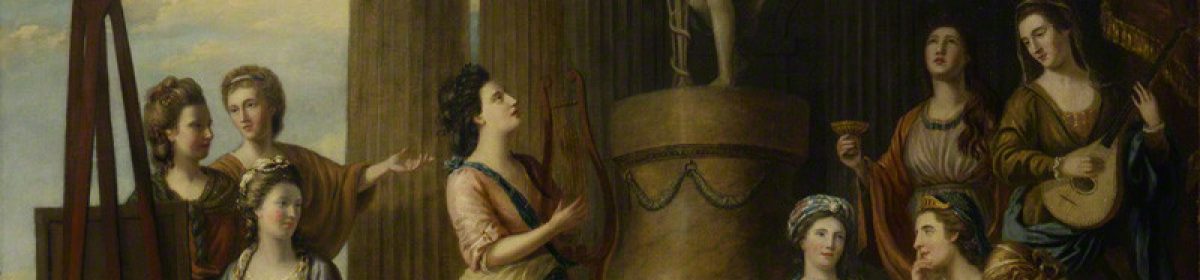
The Women’s Studies Group 1558-1837 is pleased to announce the speakers for their seminar series 2024-25

The Women’s Studies Group 1558-1837 is pleased to announce the speakers for their seminar series 2024-25.

*RESCHEDULED* Our first seminar of the year will now take place on Zoom, starting at the earlier time of 5.45 for 6 pm and finishing 7.30 pm British Summer Time on Monday 14 October 2024. This first seminar features the following presentations:

Marion Wynne-Davies: Isabella Whitney and London.

Avantika Pokhriyal: The Sign of the Woman: Reading Spatial Negotiations in Betsy Thoughtless.

Emily C. Cotton: Elite Women’s Agency in Marriage Negotiations, 1742-1788.

*********

The group has two kinds of meeting for seminars.

In-person seminar meetings. These take place at the Foundling Museum, 40 Brunswick Square, WC1N 1AZ, UK, on Saturday afternoons. We will be allowed into the room at 1.00 pm, to give us time to sort out paperwork and technology, but sessions will run from 1.30 pm – 4.30 pm. Please arrive between 1.00 pm – 1.30 pm. The Foundling is a wheelchair accessible venue, and directions for getting to the Museum can be found here, including for those who are partially sighted. Seminars are free to WSG members. Non-members are welcome and are kindly requested to pay the Museum entrance fee and make a donation of £2 for refreshments. Those attending the seminars are welcome to look round the museum before or after.

ZOOM seminar meetings. These take place on Thursday evenings and will be hosted by a member of the WSG committee. They run from 7.00 pm – 8.30 pm, with the waiting room opening at 6.45 pm. Please be aware, you must be a member of the WSG to gain access to the Zoom sessions. The links are distributed through our WSG mailing list 24-hours before the event.

Download the full programme in PDF format: 

Women’s Studies Group 1558-1837, Seminar Schedule 2024-2025

Monday 14 October 2024

ZOOM STARTING AT THE EARLIER TIME OF 5.45 FOR 6 PM, FINISHING 7.30 PM, BRITISH SUMMER TIME

Marion Wynne-Davies: Isabella Whitney and London.

Avantika Pokhriyal: The Sign of the Woman: Reading Spatial Negotiations in Betsy Thoughtless.

Emily C. Cotton: Elite Women’s Agency in Marriage Negotiations, 1742-1788.

*********

Saturday 19 October 2024

FOUNDLING MUSEUM, LONDON, 1 FOR 1.30 PM, FINISHING 4.30 PM. BRITISH SUMMER TIME

Lindsey Bauer: The Women of Lucca and Costanza Bonarelli: Why Modern Scholars Cannot Place a Full-Stop after ‘Victim’.

Holly Day: Recontextualising the Nine Living Muses of Great Britain.

*********

Saturday 9 November 2024

FOUNDLING MUSEUM, LONDON, 1 FOR 1.30 PM, FINISHING 4.30 PM. GREENWICH MEAN TIME.

Margarette Lincoln: Perfection: 400 Years of Women’s Quest for Beauty (Yale: Sept. 2024).

Luiza Tavares da Motta: Alchemy and Galvanism in legal theory: a look at nineteenth-century legitimation of common law through Frankenstein.

Megumi Ohsumi: Aphra Behn’s American Feathers.

Charlotte Vallis: An Empress’ Coronation: public display of gender identity for Elizabeth Petrovna, 1741-1761 and Catherine the Great, 1762-1796.

*********

Thursday January 16, 2025

ZOOM STARTING 6.45 FOR 7 PM, FINISHING 8.30 PM. GREENWICH MEAN TIME

Jasmin Bieber: Unprecedented Paths Beyond Europe: British Women’s Travel Writing 1680-1780.

Chandni (Anjali) Rampersad: Female Genius In Memoriam: Women Writers’ Afterlife in the Gentleman’s Magazine (1731-1806).

Rosalyn Sklar: Healing women: Early modern women as healers in their own texts, practices and representations.

*********

Thursday February 6, 2025

ZOOM STARTING 6.45 FOR 7 PM, FINISHING AT 8.30 PM, GREENWICH MEAN TIME

Dra. Pilar Botías Domínguez: ‘‘Masquerading! a lewd custom to debauch our youth’’: compliance and defiance in Aphra Behn’s The Rover (1677).

Amy Solomons and Elizabeth Ingham: Reconstructing Dispersed Collections: The Library of Lady Mary Wortley Montagu.

Charlotte MacKenzie: Women and knowledge making communities in Georgian Cornwall.

*********

Saturday March 15, 2025

FOUNDLING MUSEUM, LONDON, 1 FOR 1.30 PM, FINISHING 4.30 PM GREENWICH MEAN TIME

Susannah Lyon-Whaley: Small Enough to Hold: Stuart Consorts and Knowing Nature Through Cabinets, Miniatures, and Books.

Susan Bennett: ‘Fancy, Design and Taste’: Promoting female artistic talent in the 18th.century.

Valentina P Aparicio: Boundaries and Intimacy in Transatlantic Friendships: Maria Graham and Empress Maria Leopoldina.

Breeze Barrington: An introduction to the topic of her forthcoming book The Graces: The Untold Lives of the Women Who Transformed the Stuart Court.

*********

Thursday 10 April 2025

ZOOM STARTING 6.45 FOR 7 PM, FINISHING AT 8.30 PM, BRITISH SUMMER TIME

Claudia Cristell Maria Berttolini: Saint Gertrude as a female role model in 18th century Puebla de los Ángeles.

Jacqui Grainger: Mary Somerville, the United Service Museum and women of science.

Francesca Saggini: Jane Austen and the Golden Age of Crime Fiction.

For further information including abstracts, see our seminars page, or contact the organiser Carolyn D. Williams, cdwilliamslyle@aol.com. To join the WSG, see our membership page.

Call for papers from the Women’s Studies Group: 1558-1837 (London)

CFP Deadline: 6 August 2024

The Women’s Studies Group 1558-1837 is a small, informal, multidisciplinary group formed to promote women’s studies in the early modern period and the long eighteenth century. Established in the 1980s, the group has enabled those interested in women’s and gender studies to keep in touch, hear about one another’s research, meetings and publications, and meet regularly to discuss relevant topics. We organize regular meetings and an annual workshop (see membership application form) where members can meet and discuss women’s studies topics. This season we shall also be hosting two book launches for publications by our members. We can offer advice and opportunities to engage in activities that increase opportunities for publication, or enhance professional profiles in other ways. The WSG is open to men, women, and non-binary people, students, faculty, and independent scholars, all of whom are invited to join the group and give papers.

The group now has two kinds of meeting for seminars.

In-person seminar meetings. These will take place at the Foundling Museum, 40 Brunswick Square, WC1N 1AZ, UK, on Saturday afternoons. We will be allowed into the room at 1.00 pm., to give us time to sort out paperwork and technology, but sessions will run from 1.30 – 4.30 pm. So please arrive a little early if you can.

ZOOM seminar meetings. These will take place on Thursday evenings and will be hosted by a member of the wsg committee. They will run from 7-8.30 pm, with the waiting room opening at 18.45 pm.

Topics can be related to any aspect of women’s studies: not only women writers, but any activity of a woman or women in the period of our concern, or anything that affects or is affected by women in this period, such as the law, religion, etc. Male writers writing about women or male historical figures relevant to the condition of women in this period are also a potential topic. Papers tackling aspects of women’s studies within or alongside the wider histories of gender and sexuality are particularly welcome; so are topics from the early part of our period. We would also welcome how-to presentations for discussion: examples of suitable topics would include, but are not limited to, grant applications, setting up research networks, becoming a curator, co-authorship, using specialised data, and writing about images. Papers should be 20-25 minutes.

Last year’s titles and abstracts are available on the website seminars page to provide examples of papers accepted in the past. 

Dates of seminar meetings:

Saturday 19 October 2024       In-person 

Saturday 9 November 2024      In-person

Thursday 16 January   2025      ZOOM. 7-8.30 pm, Greenwich Mean Time

Thursday 6 February   2025      ZOOM. 7-8.30 pm, Greenwich Mean Time.

Saturday 15 March     2025       In-person

Thursday 10 April       2025       ZOOM. 7-8.30 pm, British Summer Time

Find out more about us on https://womensstudiesgroup.org

Please reply to Carolyn D. Williams on cdwilliamslyle@aol.com

WSG Mentoring scheme, 2023-2024: The Mentor’s Experience by Victoria Joule

From our first ‘meeting’ over a slightly shaky Facetime, I remember Clare and I slipped easily into free and energic conversation. As Clare mentions, this felt more like a partnership; there was no pressure here to be tested or assessed: our conversations were about ideas. Of course, we were both mindful of wanting to set goals for the sessions, but much of what Clare wanted was the chance to explore where she was in her project. Clare’s comments also remind me of my teaching; it has been over six years since I last taught at university and I always enjoyed collaborative learning. With Clare, not only did it revive the feelings of excitement over students discovering and generating ideas, but it also energised me in terms of my research. Discussing her material, asking questions and finding connections together has really brightened my thinking about an ongoing project. Clare’s enthusiasm has been inspiring and now I have some new reading to pursue.

The financial pressures of university life and the ever-increasing demand for postgraduate students to publish, promote themselves and secure funding is, potentially, overwhelming. What struck me about Clare is that, out of all these pressures, she retains the love and passion for her subject matter. Part of the ‘unwritten rules’ of academia, namely how to interact with academics, particularly senior ones, I think, is about a healthy combination of confidence and respect, and a commitment to the subject; all of which Clare has in abundance. We should feel comfortable to engage with academics whatever level or place we are from and WSG has always been a space that I have been made to feel welcome and open to share and develop knowledge. Networks such as WSG are an essential part of developing research. I have thoroughly enjoyed working with Clare and I look forward to seeing her progress and flourish in her field.

WSG Mentoring scheme, 2023-2024: The Mentee’s Experience by Clare Burgess

I have found the midpoint of a PhD a dangerous no-man’s land. Far enough away from the start to have lost the initial enthusiasm and naïve optimism, and too far from the end of the marathon to take advantage of the ‘last push’ energy that carries many of us through. In that lull of second year, I searched for some sort of guidance or programme that might allow me to find a way through, and found the WSG mentoring scheme. Given how busy my supervisors were – both on research leave – this seemed a good way of marking my progress and of getting guidance.

I was quickly assigned Vicki as a mentor, and have since found our meetings incredibly affirming and helpful. Removed from the formal setting of the traditional supervisor-supervisee relationship, and comfortable in the knowledge that Vicki wasn’t judging my progress, the relationship felt much more like a partnership. The usual power dynamics felt distant from our casual and encouraging chats, and Vicki seemed just as willing to learn from me as I was from her. She asked questions from interest, not just to test my knowledge, and I didn’t fear not knowing the answers. She helped me through writing and editing my first chapter for publication, and through a funding application, but more importantly, she helped me navigate the unwritten rules of academia – what was acceptable to ask, how would a certain request be viewed, what were the expectations in a given situation. I found this invaluable, and it’s something that I think the scheme is really disposed to. Having someone who’s been there before, who has asked the same questions, and in whose presence you feel no pressure to perform, has been of huge benefit.

Vicki’s guidance steered me through an odd phase, devoid of landmarks, and helped me further in navigating academia, and as such has set me up well for the last stage of the PhD, and hopefully for the next steps after that. I think the mentoring scheme – with a mentor like mine who eschewed the traditional hierarchy of mentor and mentee – can be a rewarding and helpful experience with tangible benefits for both participants.

They Run with Surprising Swiftness: The Women Athletes of Early Modern Britain. By Peter Radford. Review by Carolyn D. Williams

They Run with Surprising Swiftness: The Women Athletes of Early Modern Britain. By Peter Radford. Charlottesville and London: University of Virginia Press. 2023. Pp 296. £31.79 (paperback), ISBN 9780813947938.

Readers of Peter Radford’s previous work, including his chapter entitled ‘Better than the Men’ in Exploring the Lives of Women (2018), a collection of essays by members of the Women’s Studies Group 1558–1887, will expect great things from his latest publication. They will not be disappointed.

This fascinating and wide-ranging study of women’s past achievements in sports and athletics, as well as other forms of physical activity demanding various combinations of strength, skill, courage and endurance, incorporates a forceful defence of their ability and right to participate in these activities today. We are currently emerging from a period when women’s participation in sport was restricted on the grounds that strenuous exertion would threaten their capacity for motherhood or even their physical survival. Radford has unearthed evidence of ‘a kind of cultural amnesia’ (208) that seems to have been fostered by nineteenth-century masculine anxieties, obliterating awareness of traditional female sports. The chapter headed ‘Moral Meddling, Cant, and Sheer Humbug: 1825 Onward’ gives a painfully eloquent account of this turning point. As he shows elsewhere in his book, the participants were often subjected to various forms of misogynistic prejudice, but at least the existence of these events was acknowledged.

As in previous work, Radford counters this great forgetting. After producing evidence for women’s robustness in the Neolithic period, and their versatile athleticism in Ancient Greece, he provides detailed studies of events involving female runners, and occasionally walkers, concentrating on the period 1638–1850. A theme that should inspire interest in other feminist historians is the rise and fall of the smock race, and its connections with skimmington rides. He then discusses women’s involvement in football, cricket, prize-fighting (with swords and fists), equestrianism and tennis: women in the last two categories beat the best male professionals.

Some of the book’s findings cast new light on established disciplines. Analyses of the pictures of sporting activities included in the illustrations use information about eighteenth-century practices to distinguish the works of eye-witnesses from copies and products of the artists’ imagination. For example, familiarity with the structure and placement of wickets, knowledge of the rules of best-of-three races, and awareness of what running women actually look like provide tools for art historians seeking to establish the authenticity of sporting pictures. John Collett emerges as a reliable and well-informed creator of original images of female runners and cricketers, which were copied inaccurately by Thomas Rowlandson.

Frances Burney scholars should brace themselves for an outright denial that anything like the twenty-yard race between two enfeebled octagenarian women in Evelina (1778) was ever reported in the eighteenth century: Radford sees it as ‘a product of her fertile imagination’ (31), possibly sparked by a reference in Tobias Smollett’s The Adventures of Ferdinand, Count Fathom (1753) to two aristocratic gamblers running their grandmothers together, i.e. seeing which would live longer. In actuality, age presented fewer barriers to demonstrations of physical prowess: ninety-year-old Mary Wilkinson walked the 290 miles from York to London ‘in five days and three hours with “a keg of gin, and a quantity of provisions on her back”’ (125), while an eighteen-month-old girl ‘walked the length of the Mall (half a mile) in twenty-three minutes’ (90).

Precisely because this work is the result of carefully planned and scrupulously detailed research, it abounds in unexpected discoveries, sometimes appearing initially random: they are the rewards for the author’s determination to follow the evidence. Three examples must suffice. Firstly, everybody acquainted with early modern childbirth customs must have come across references to a ‘groaning cheese’, but how many know exactly what it was? Radford has unearthed a reference to a specimen weighing a hundred pounds that was the first prize for a race between ‘six heavily pregnant brewers’ wives’ who were to run a mile ‘to the top of Arthur’s Seat in Edinburgh’; he then cites ‘an old English tradition in which the father of a newborn baby brought a very large, flat, round cheese for the baby’s christening’: slices would be cut from the centre, and the baby passed through the resulting hole ‘for luck’ (56). Secondly, the importance of accurate time-keeping, especially when wagers were involved, have led the author, after thorough investigation, to conclude that ‘watches were high-status, finely-crafted objects in the eighteenth century, and they recorded time very accurately; cheap and unreliable watches were still sometime in the future’ (118). More directly relevant to the book’s subject, but even more startling, is the discovery that ‘the first example of a football match played on grass, with teams of a fixed number, and played for the benefit and amusement of a crowd’ (179) was a six-a-side women’s event that took place on a bowling green in Bath, probably arranged by Beau Nash, in 1726.

There are a few minor errors in expression and presentation. In the transcription of the motto of the Amateur Athletic Assocation, taken from lines 95 and 96 of Pindar’s 9th Olympian Ode, ποδῶν and ἀκμαί have been run together when they should have space between them, and ideally […] to indicate the omission of an intervening word (115). In the useful appendix, explaining the technicalities of distance measurement, currency and gambling in early modern Britain, the author apparently makes a slip when describing the kind of wager known as a match against time: ‘In the example above, a timekeeper would stand at the finishing line and call “Time” precisely one hour after the start’ (245). Unfortunately, the hypothetical example requires the contestants to run ‘one mile (e.g. from the tavern door to the church door)’ (245) which seems far too short a distance for the time allowed, especially when we reflect that ‘a fifteen-year-old girl from Wrotham ran it in 5 minutes 28 seconds on Saturday July 11, 1795, a record unbeaten in Britain until 20 August 1932’ (119). Perhaps the chosen course should be taken into consideration: how long would the contestants stay in the tavern before they reached its door?

As well as applying extensive and meticulous scholarship to his study of human physical activity in general and sport in particular, the author deploys the practical experience acquired during an athletic career that earned him a world record, two Commonwealth gold medals and two Olympic bronze medals. He can flesh out the briefest account of an event with considerations of how it would have been organized and publicised, how the expenses would be covered, how many heats were involved, or the conditions in which it took place: for example, in 1822, when girls ran races ‘on a wet Wednesday in August’ on Gander Down, to the east of Winchester, ‘it must have been difficult for them on the wet grass, though these were chalk downs and would have drained quickly’ (205).

Professor Radford has yet more to say about the history of women’s physical achievements: on Saturday, October 7, 2023, at the opening seminar of the Women’s Studies Group 2023–24 season, at London’s Foundling Museum, he will present a paper entitled ‘Strong Women in Early Modern Europe: A Counter Narrative’. To readers of this book, this is very good news.

Carolyn D. Williams