WSG Virtual Reading Group : Her Stories, starting September 2024

The aim of ‘Her Stories’, the new WSG virtual reading group, is to provide an opportunity for members to discuss together a diverse range of literary texts; from novels, to plays and critical texts. Taking our WSG timeline of 1558-1837 as a general guide, there will be 3-4 one hour reading group sessions a year, with participants proposing and selecting the texts in a 30 min pre-meeting at the start of each annual reading group schedule.

Each virtual reading group session will be co-ordinated and facilitated by Karen Lipsedge and will open to all WSG members. The selected text discussed at each session of ‘Her Stories’ will be determined by participants and, thus, the themes and questions raised and discussed will vary accordingly. To ensure that all participants can contribute to each reading group session, however, at the start of each meeting of ‘Her Story’ each participant will share one thing they thought was noteworthy about the selected text. Based on my experience, this strategy serves as an inclusive ice breaker and is also the ideal conversation starter.

If you are interested in taking part in ‘Her Stories’, by Monday 9th September 2024 please contact Karen directly on K.Lipsedge@Kingston.ac.uk. Please also suggest one text that you would like ‘Her Stories’ to discuss in one of the forthcoming sessions.

Here are some of my suggestions for forthcoming sessions of ‘Her Story’

(NB. All of these have accessible versions and links to some of those)

anonymous Eliza’s Babes: or The Virgins–offering (1652)

Lady Mary Wortley Montagu, The Turkish Embassy Letters, 1716-18; and 1793 and/or Lady Nugent’s Journal, first published in 1839

The parrot. With A compendium of the times. By the authors of the Female spectator.  1746

Mary Robinson, Walsingham: Or, The Pupil of Nature (1797)

Amanda Vickery, ‘Golden Age to Separate Spheres? A Review of the Categories and Chronology of English Women’s History’, The Historical Journal, Vol. 36, No. 2 (Jun., 1993), pp. 383-414.Cambridge University Press

Saidiya Hartman, ‘Venus in Two Acts ‘, Small Axe (2008) 12 (2): 1–14.

The Women’s Studies Group 1558-1837 is pleased to announce the speakers for their seminar series 2024-25

The Women’s Studies Group 1558-1837 is pleased to announce the speakers for their seminar series 2024-25.

*RESCHEDULED* Our first seminar of the year will now take place on Zoom, starting at the earlier time of 5.45 for 6 pm and finishing 7.30 pm British Summer Time on Monday 14 October 2024. This first seminar features the following presentations:

Marion Wynne-Davies: Isabella Whitney and London.

Avantika Pokhriyal: The Sign of the Woman: Reading Spatial Negotiations in Betsy Thoughtless.

Emily C. Cotton: Elite Women’s Agency in Marriage Negotiations, 1742-1788.

*********

The group has two kinds of meeting for seminars.

In-person seminar meetings. These take place at the Foundling Museum, 40 Brunswick Square, WC1N 1AZ, UK, on Saturday afternoons. We will be allowed into the room at 1.00 pm, to give us time to sort out paperwork and technology, but sessions will run from 1.30 pm – 4.30 pm. Please arrive between 1.00 pm – 1.30 pm. The Foundling is a wheelchair accessible venue, and directions for getting to the Museum can be found here, including for those who are partially sighted. Seminars are free to WSG members. Non-members are welcome and are kindly requested to pay the Museum entrance fee and make a donation of £2 for refreshments. Those attending the seminars are welcome to look round the museum before or after.

ZOOM seminar meetings. These take place on Thursday evenings and will be hosted by a member of the WSG committee. They run from 7.00 pm – 8.30 pm, with the waiting room opening at 6.45 pm. Please be aware, you must be a member of the WSG to gain access to the Zoom sessions. The links are distributed through our WSG mailing list 24-hours before the event.

Download the full programme in PDF format: 

Women’s Studies Group 1558-1837, Seminar Schedule 2024-2025

Monday 14 October 2024

ZOOM STARTING AT THE EARLIER TIME OF 5.45 FOR 6 PM, FINISHING 7.30 PM, BRITISH SUMMER TIME

Marion Wynne-Davies: Isabella Whitney and London.

Avantika Pokhriyal: The Sign of the Woman: Reading Spatial Negotiations in Betsy Thoughtless.

Emily C. Cotton: Elite Women’s Agency in Marriage Negotiations, 1742-1788.

*********

Saturday 19 October 2024

FOUNDLING MUSEUM, LONDON, 1 FOR 1.30 PM, FINISHING 4.30 PM. BRITISH SUMMER TIME

Lindsey Bauer: The Women of Lucca and Costanza Bonarelli: Why Modern Scholars Cannot Place a Full-Stop after ‘Victim’.

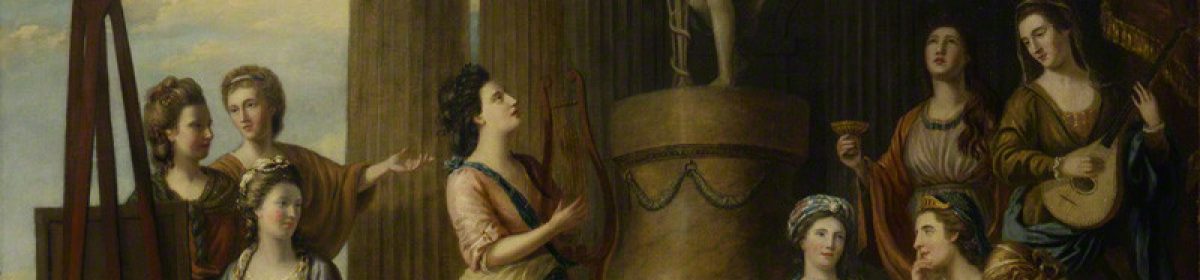
Holly Day: Recontextualising the Nine Living Muses of Great Britain.

*********

Saturday 9 November 2024

FOUNDLING MUSEUM, LONDON, 1 FOR 1.30 PM, FINISHING 4.30 PM. GREENWICH MEAN TIME.

Margarette Lincoln: Perfection: 400 Years of Women’s Quest for Beauty (Yale: Sept. 2024).

Luiza Tavares da Motta: Alchemy and Galvanism in legal theory: a look at nineteenth-century legitimation of common law through Frankenstein.

Megumi Ohsumi: Aphra Behn’s American Feathers.

Charlotte Vallis: An Empress’ Coronation: public display of gender identity for Elizabeth Petrovna, 1741-1761 and Catherine the Great, 1762-1796.

*********

Thursday January 16, 2025

ZOOM STARTING 6.45 FOR 7 PM, FINISHING 8.30 PM. GREENWICH MEAN TIME

Jasmin Bieber: Unprecedented Paths Beyond Europe: British Women’s Travel Writing 1680-1780.

Chandni (Anjali) Rampersad: Female Genius In Memoriam: Women Writers’ Afterlife in the Gentleman’s Magazine (1731-1806).

Rosalyn Sklar: Healing women: Early modern women as healers in their own texts, practices and representations.

*********

Thursday February 6, 2025

ZOOM STARTING 6.45 FOR 7 PM, FINISHING AT 8.30 PM, GREENWICH MEAN TIME

Dra. Pilar Botías Domínguez: ‘‘Masquerading! a lewd custom to debauch our youth’’: compliance and defiance in Aphra Behn’s The Rover (1677).

Amy Solomons and Elizabeth Ingham: Reconstructing Dispersed Collections: The Library of Lady Mary Wortley Montagu.

Charlotte MacKenzie: Women and knowledge making communities in Georgian Cornwall.

*********

Saturday March 15, 2025

FOUNDLING MUSEUM, LONDON, 1 FOR 1.30 PM, FINISHING 4.30 PM GREENWICH MEAN TIME

Susannah Lyon-Whaley: Small Enough to Hold: Stuart Consorts and Knowing Nature Through Cabinets, Miniatures, and Books.

Susan Bennett: ‘Fancy, Design and Taste’: Promoting female artistic talent in the 18th.century.

Valentina P Aparicio: Boundaries and Intimacy in Transatlantic Friendships: Maria Graham and Empress Maria Leopoldina.

Breeze Barrington: An introduction to the topic of her forthcoming book The Graces: The Untold Lives of the Women Who Transformed the Stuart Court.

*********

Thursday 10 April 2025

ZOOM STARTING 6.45 FOR 7 PM, FINISHING AT 8.30 PM, BRITISH SUMMER TIME

Claudia Cristell Maria Berttolini: Saint Gertrude as a female role model in 18th century Puebla de los Ángeles.

Jacqui Grainger: Mary Somerville, the United Service Museum and women of science.

Francesca Saggini: Jane Austen and the Golden Age of Crime Fiction.

For further information including abstracts, see our seminars page, or contact the organiser Carolyn D. Williams, cdwilliamslyle@aol.com. To join the WSG, see our membership page.

Call for papers from the Women’s Studies Group: 1558-1837 (London)

CFP Deadline: 6 August 2024

The Women’s Studies Group 1558-1837 is a small, informal, multidisciplinary group formed to promote women’s studies in the early modern period and the long eighteenth century. Established in the 1980s, the group has enabled those interested in women’s and gender studies to keep in touch, hear about one another’s research, meetings and publications, and meet regularly to discuss relevant topics. We organize regular meetings and an annual workshop (see membership application form) where members can meet and discuss women’s studies topics. This season we shall also be hosting two book launches for publications by our members. We can offer advice and opportunities to engage in activities that increase opportunities for publication, or enhance professional profiles in other ways. The WSG is open to men, women, and non-binary people, students, faculty, and independent scholars, all of whom are invited to join the group and give papers.

The group now has two kinds of meeting for seminars.

In-person seminar meetings. These will take place at the Foundling Museum, 40 Brunswick Square, WC1N 1AZ, UK, on Saturday afternoons. We will be allowed into the room at 1.00 pm., to give us time to sort out paperwork and technology, but sessions will run from 1.30 – 4.30 pm. So please arrive a little early if you can.

ZOOM seminar meetings. These will take place on Thursday evenings and will be hosted by a member of the wsg committee. They will run from 7-8.30 pm, with the waiting room opening at 18.45 pm.

Topics can be related to any aspect of women’s studies: not only women writers, but any activity of a woman or women in the period of our concern, or anything that affects or is affected by women in this period, such as the law, religion, etc. Male writers writing about women or male historical figures relevant to the condition of women in this period are also a potential topic. Papers tackling aspects of women’s studies within or alongside the wider histories of gender and sexuality are particularly welcome; so are topics from the early part of our period. We would also welcome how-to presentations for discussion: examples of suitable topics would include, but are not limited to, grant applications, setting up research networks, becoming a curator, co-authorship, using specialised data, and writing about images. Papers should be 20-25 minutes.

Last year’s titles and abstracts are available on the website seminars page to provide examples of papers accepted in the past. 

Dates of seminar meetings:

Saturday 19 October 2024       In-person 

Saturday 9 November 2024      In-person

Thursday 16 January   2025      ZOOM. 7-8.30 pm, Greenwich Mean Time

Thursday 6 February   2025      ZOOM. 7-8.30 pm, Greenwich Mean Time.

Saturday 15 March     2025       In-person

Thursday 10 April       2025       ZOOM. 7-8.30 pm, British Summer Time

Find out more about us on https://womensstudiesgroup.org

Please reply to Carolyn D. Williams on cdwilliamslyle@aol.com

WSG Mentoring scheme, 2023-2024: The Mentor’s Experience by Victoria Joule

From our first ‘meeting’ over a slightly shaky Facetime, I remember Clare and I slipped easily into free and energic conversation. As Clare mentions, this felt more like a partnership; there was no pressure here to be tested or assessed: our conversations were about ideas. Of course, we were both mindful of wanting to set goals for the sessions, but much of what Clare wanted was the chance to explore where she was in her project. Clare’s comments also remind me of my teaching; it has been over six years since I last taught at university and I always enjoyed collaborative learning. With Clare, not only did it revive the feelings of excitement over students discovering and generating ideas, but it also energised me in terms of my research. Discussing her material, asking questions and finding connections together has really brightened my thinking about an ongoing project. Clare’s enthusiasm has been inspiring and now I have some new reading to pursue.

The financial pressures of university life and the ever-increasing demand for postgraduate students to publish, promote themselves and secure funding is, potentially, overwhelming. What struck me about Clare is that, out of all these pressures, she retains the love and passion for her subject matter. Part of the ‘unwritten rules’ of academia, namely how to interact with academics, particularly senior ones, I think, is about a healthy combination of confidence and respect, and a commitment to the subject; all of which Clare has in abundance. We should feel comfortable to engage with academics whatever level or place we are from and WSG has always been a space that I have been made to feel welcome and open to share and develop knowledge. Networks such as WSG are an essential part of developing research. I have thoroughly enjoyed working with Clare and I look forward to seeing her progress and flourish in her field.

WSG Mentoring scheme, 2023-2024: The Mentee’s Experience by Clare Burgess

I have found the midpoint of a PhD a dangerous no-man’s land. Far enough away from the start to have lost the initial enthusiasm and naïve optimism, and too far from the end of the marathon to take advantage of the ‘last push’ energy that carries many of us through. In that lull of second year, I searched for some sort of guidance or programme that might allow me to find a way through, and found the WSG mentoring scheme. Given how busy my supervisors were – both on research leave – this seemed a good way of marking my progress and of getting guidance.

I was quickly assigned Vicki as a mentor, and have since found our meetings incredibly affirming and helpful. Removed from the formal setting of the traditional supervisor-supervisee relationship, and comfortable in the knowledge that Vicki wasn’t judging my progress, the relationship felt much more like a partnership. The usual power dynamics felt distant from our casual and encouraging chats, and Vicki seemed just as willing to learn from me as I was from her. She asked questions from interest, not just to test my knowledge, and I didn’t fear not knowing the answers. She helped me through writing and editing my first chapter for publication, and through a funding application, but more importantly, she helped me navigate the unwritten rules of academia – what was acceptable to ask, how would a certain request be viewed, what were the expectations in a given situation. I found this invaluable, and it’s something that I think the scheme is really disposed to. Having someone who’s been there before, who has asked the same questions, and in whose presence you feel no pressure to perform, has been of huge benefit.

Vicki’s guidance steered me through an odd phase, devoid of landmarks, and helped me further in navigating academia, and as such has set me up well for the last stage of the PhD, and hopefully for the next steps after that. I think the mentoring scheme – with a mentor like mine who eschewed the traditional hierarchy of mentor and mentee – can be a rewarding and helpful experience with tangible benefits for both participants.