WSG ‘Her Stories: Upcoming sessions in 2025

Reading for 3rd WSG reading group session on 5th June, 7-8pm 2025 (GMT)

‘The History of Betsy Thoughtless’ Eliza Haywood (Yvonne’s suggestion).

Please see the WSG May Newsletter for the Zoom link.

Reading for 4th WSG reading group session on 28th October, 7-8pm 2025 (GMT)

Frances Brooks’ ‘History of Montague’ (Jasmine’s suggestion).

Please see the WSG May Newsletter for the Zoom link.

How each reading group will be organised:

At the start of each reading group session, the member who selected the text will give a very brief introduction to it and why they selected it.

We will then each share the one thing we want to discuss about the text, whether that is the characters, the style, the reader or one word or phrase. It is up to you!

The Women’s Studies Group 1558-1837 is pleased to announce the speakers for their seminar series 2024-25

The Women’s Studies Group 1558-1837 is pleased to announce the speakers for their seminar series 2024-25.

*RESCHEDULED* Our first seminar of the year will now take place on Zoom, starting at the earlier time of 5.45 for 6 pm and finishing 7.30 pm British Summer Time on Monday 14 October 2024. This first seminar features the following presentations:

Marion Wynne-Davies: Isabella Whitney and London.

Avantika Pokhriyal: The Sign of the Woman: Reading Spatial Negotiations in Betsy Thoughtless.

Emily C. Cotton: Elite Women’s Agency in Marriage Negotiations, 1742-1788.

*********

The group has two kinds of meeting for seminars.

In-person seminar meetings. These take place at the Foundling Museum, 40 Brunswick Square, WC1N 1AZ, UK, on Saturday afternoons. We will be allowed into the room at 1.00 pm, to give us time to sort out paperwork and technology, but sessions will run from 1.30 pm – 4.30 pm. Please arrive between 1.00 pm – 1.30 pm. The Foundling is a wheelchair accessible venue, and directions for getting to the Museum can be found here, including for those who are partially sighted. Seminars are free to WSG members. Non-members are welcome and are kindly requested to pay the Museum entrance fee and make a donation of £2 for refreshments. Those attending the seminars are welcome to look round the museum before or after.

ZOOM seminar meetings. These take place on Thursday evenings and will be hosted by a member of the WSG committee. They run from 7.00 pm – 8.30 pm, with the waiting room opening at 6.45 pm. Please be aware, you must be a member of the WSG to gain access to the Zoom sessions. The links are distributed through our WSG mailing list 24-hours before the event.

Download the full programme in PDF format: 

Women’s Studies Group 1558-1837, Seminar Schedule 2024-2025

Monday 14 October 2024

ZOOM STARTING AT THE EARLIER TIME OF 5.45 FOR 6 PM, FINISHING 7.30 PM, BRITISH SUMMER TIME

Marion Wynne-Davies: Isabella Whitney and London.

Avantika Pokhriyal: The Sign of the Woman: Reading Spatial Negotiations in Betsy Thoughtless.

Emily C. Cotton: Elite Women’s Agency in Marriage Negotiations, 1742-1788.

*********

Saturday 19 October 2024

FOUNDLING MUSEUM, LONDON, 1 FOR 1.30 PM, FINISHING 4.30 PM. BRITISH SUMMER TIME

Lindsey Bauer: The Women of Lucca and Costanza Bonarelli: Why Modern Scholars Cannot Place a Full-Stop after ‘Victim’.

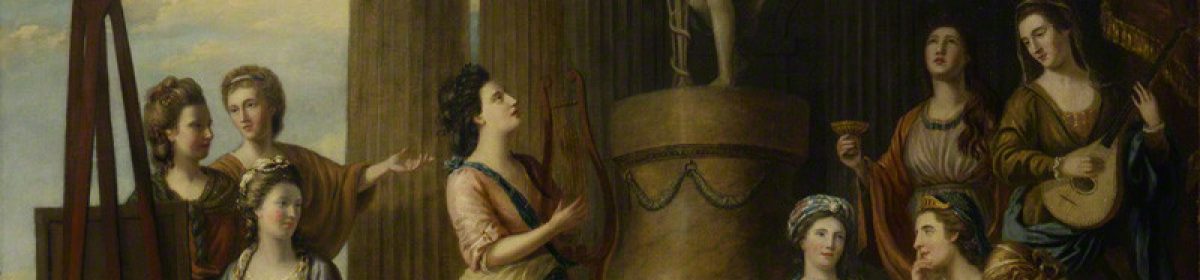
Holly Day: Recontextualising the Nine Living Muses of Great Britain.

*********

Saturday 9 November 2024

FOUNDLING MUSEUM, LONDON, 1 FOR 1.30 PM, FINISHING 4.30 PM. GREENWICH MEAN TIME.

Margarette Lincoln: Perfection: 400 Years of Women’s Quest for Beauty (Yale: Sept. 2024).

Luiza Tavares da Motta: Alchemy and Galvanism in legal theory: a look at nineteenth-century legitimation of common law through Frankenstein.

Megumi Ohsumi: Aphra Behn’s American Feathers.

Charlotte Vallis: An Empress’ Coronation: public display of gender identity for Elizabeth Petrovna, 1741-1761 and Catherine the Great, 1762-1796.

*********

Thursday January 16, 2025

ZOOM STARTING 6.45 FOR 7 PM, FINISHING 8.30 PM. GREENWICH MEAN TIME

Jasmin Bieber: Unprecedented Paths Beyond Europe: British Women’s Travel Writing 1680-1780.

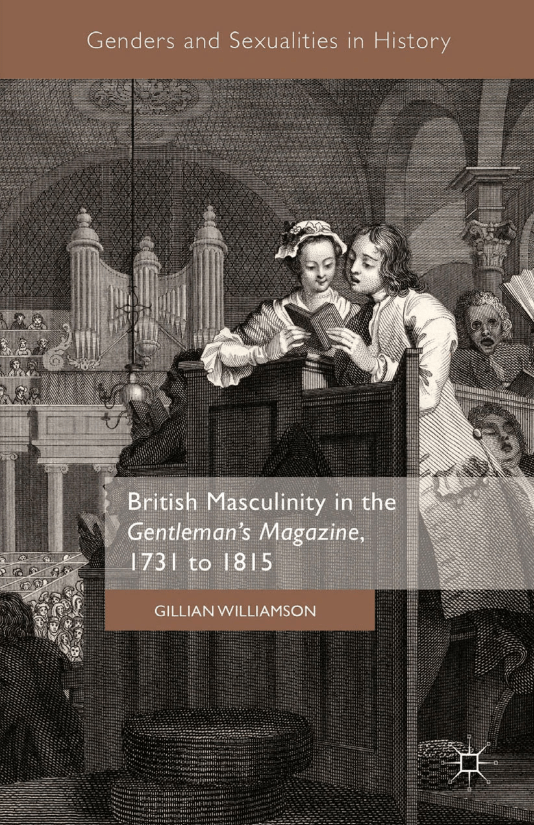
Chandni (Anjali) Rampersad: Female Genius In Memoriam: Women Writers’ Afterlife in the Gentleman’s Magazine (1731-1806).

Rosalyn Sklar: Healing women: Early modern women as healers in their own texts, practices and representations.

*********

Thursday February 6, 2025

ZOOM STARTING 6.45 FOR 7 PM, FINISHING AT 8.30 PM, GREENWICH MEAN TIME

Dra. Pilar Botías Domínguez: ‘‘Masquerading! a lewd custom to debauch our youth’’: compliance and defiance in Aphra Behn’s The Rover (1677).

Amy Solomons and Elizabeth Ingham: Reconstructing Dispersed Collections: The Library of Lady Mary Wortley Montagu.

Charlotte MacKenzie: Women and knowledge making communities in Georgian Cornwall.

*********

Saturday March 15, 2025

FOUNDLING MUSEUM, LONDON, 1 FOR 1.30 PM, FINISHING 4.30 PM GREENWICH MEAN TIME

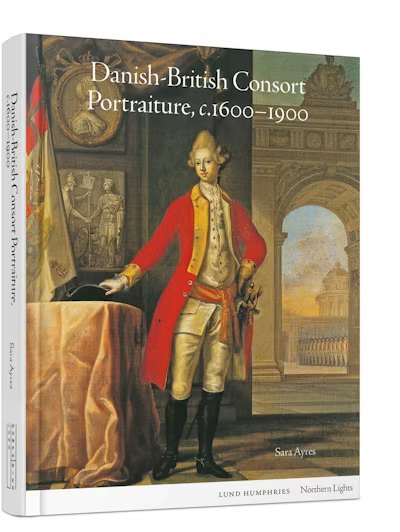
Susannah Lyon-Whaley: Small Enough to Hold: Stuart Consorts and Knowing Nature Through Cabinets, Miniatures, and Books.

Susan Bennett: ‘Fancy, Design and Taste’: Promoting female artistic talent in the 18th.century.

Valentina P Aparicio: Boundaries and Intimacy in Transatlantic Friendships: Maria Graham and Empress Maria Leopoldina.

Breeze Barrington: An introduction to the topic of her forthcoming book The Graces: The Untold Lives of the Women Who Transformed the Stuart Court.

*********

Thursday 10 April 2025

ZOOM STARTING 6.45 FOR 7 PM, FINISHING AT 8.30 PM, BRITISH SUMMER TIME

Claudia Cristell Maria Berttolini: Saint Gertrude as a female role model in 18th century Puebla de los Ángeles.

Jacqui Grainger: Mary Somerville, the United Service Museum and women of science.

Francesca Saggini: Jane Austen and the Golden Age of Crime Fiction.

For further information including abstracts, see our seminars page, or contact the organiser Carolyn D. Williams, cdwilliamslyle@aol.com. To join the WSG, see our membership page.

Call for papers from the Women’s Studies Group: 1558-1837 (London)

CFP Deadline: 6 August 2024

The Women’s Studies Group 1558-1837 is a small, informal, multidisciplinary group formed to promote women’s studies in the early modern period and the long eighteenth century. Established in the 1980s, the group has enabled those interested in women’s and gender studies to keep in touch, hear about one another’s research, meetings and publications, and meet regularly to discuss relevant topics. We organize regular meetings and an annual workshop (see membership application form) where members can meet and discuss women’s studies topics. This season we shall also be hosting two book launches for publications by our members. We can offer advice and opportunities to engage in activities that increase opportunities for publication, or enhance professional profiles in other ways. The WSG is open to men, women, and non-binary people, students, faculty, and independent scholars, all of whom are invited to join the group and give papers.

The group now has two kinds of meeting for seminars.

In-person seminar meetings. These will take place at the Foundling Museum, 40 Brunswick Square, WC1N 1AZ, UK, on Saturday afternoons. We will be allowed into the room at 1.00 pm., to give us time to sort out paperwork and technology, but sessions will run from 1.30 – 4.30 pm. So please arrive a little early if you can.

ZOOM seminar meetings. These will take place on Thursday evenings and will be hosted by a member of the wsg committee. They will run from 7-8.30 pm, with the waiting room opening at 18.45 pm.

Topics can be related to any aspect of women’s studies: not only women writers, but any activity of a woman or women in the period of our concern, or anything that affects or is affected by women in this period, such as the law, religion, etc. Male writers writing about women or male historical figures relevant to the condition of women in this period are also a potential topic. Papers tackling aspects of women’s studies within or alongside the wider histories of gender and sexuality are particularly welcome; so are topics from the early part of our period. We would also welcome how-to presentations for discussion: examples of suitable topics would include, but are not limited to, grant applications, setting up research networks, becoming a curator, co-authorship, using specialised data, and writing about images. Papers should be 20-25 minutes.

Last year’s titles and abstracts are available on the website seminars page to provide examples of papers accepted in the past. 

Dates of seminar meetings:

Saturday 19 October 2024       In-person 

Saturday 9 November 2024      In-person

Thursday 16 January   2025      ZOOM. 7-8.30 pm, Greenwich Mean Time

Thursday 6 February   2025      ZOOM. 7-8.30 pm, Greenwich Mean Time.

Saturday 15 March     2025       In-person

Thursday 10 April       2025       ZOOM. 7-8.30 pm, British Summer Time

Find out more about us on https://womensstudiesgroup.org

Please reply to Carolyn D. Williams on cdwilliamslyle@aol.com

The Tudors: Art and Majesty in Renaissance England

An exhibition review by Valerie Schutte

The Tudors: Art and Majesty in Renaissance England is a dynamic exhibition of Tudor artifacts currently touring the United States. On 14 May 2023, it wrapped up the second leg of its tour at the Cleveland Museum of Art, which was preceded by three months at the Metropolitan Museum of Art, New York, from 10 October 2022 to 8 January 2023, to be followed by three months at the Legion of Honor, San Francisco, from 24 June to 24 September 2023.

The accompanying exhibition catalogue is filled with full-page color images of every item, though not all are on display at all three museums. It also includes entries for items not on display at any of the exhibition stops because some of the loans were cut by the time the exhibition opened in October 2022, being delayed from its original autumn 2020 opening date.

As I saw the exhibition twice in Cleveland, I was unable to see many of the items related to Queen Mary I that were not displayed at this venue. These items included Hans Eworth’s 1554 portrait of her, as well as the cartoons for the panels donated by Philip and Mary for the Last Supper “King’s Window” at Sint-Janskerk, Gouda, though they are both beautifully represented in the catalogue. As a scholar of Mary I, I also have minor objections to the descriptions of some of the entries. For example, item number 27 is a 1557 copy of Juan Luis Vives’ Instruction of a Christen Woman on loan from the British Library. The catalogue description was written by Sarah Bochicchio, a PhD Candidate in art history at Yale University. While Bochicchio points out that Vives was a spiritual advisor to Catherine of Aragon and a director of Mary’s studies, she also writes that the text informed Mary and Elizabeth as inheritors of a gendered hierarchy of leadership. Furthermore, on the object label at the exhibition, Catherine of Aragon is not even mentioned, while the description highlights how both Mary and Elizabeth navigated a gendered duality during their queenships. While this is accurate, I am frustrated that such a powerful monument to Catherine and Mary must be discussed in terms of its importance to Elizabeth, thus fortifying the public perception of Elizabeth being a more important or worthy Tudor queen.

However, the more than 80 items on display in Cleveland showcased visual art as a formidable tool of monarchical power, from paintings and drawings to cups and bowls, and suits of armor to giant hanging tapestries. Various museums and private collections across Europe and the United States contributed displayed items. The Devonshire Collection at Hardwick Hall lent the “Sea Dog” table, a drawing table so called because of the sea dogs carved into its walnut legs, the Victoria and Albert Museum lent the Heneage Jewel, and the Kunsthistorisches Museum of Vienna lent Hans Holbein’s painting of Jane Seymour, while the newly-crowned King Charles III lent a miniature of Henry VIII and drawings by Holbein from the Royal Collection. These are only a few of the museums and collectors who participated in fielding these artifacts.

While some of the displayed items are well known, such as the painting of Henry VIII from the workshop of Hans Holbein and both the Sieve and Rainbow portraits of Elizabeth, many are lessor known artifacts that still portrayed the magnificence of the Tudor court. These include the ewer and basin engraved with portrait medallions of the monarchs on loan by the Boston Museum of Fine Arts and the embroidered portrait of Elizabeth I in a garden loaned from a private collection. 

Altogether the exhibition overwhelms its viewers with images of majesty, power, and Renaissance ideas of humanism and antique glory. The Tudors: Art and Majesty in Renaissance England is not to be missed, as this variety of Tudor objects and artifacts is not likely to be showcased in the United States again anytime soon.

Valerie Schutte is a historian who specialises in books dedicated to Tudor queens. She has published two monographs and her seventh edited collection will be published later this year – Mid-Tudor Queenship and Memory: The Making and Re-Making of Lady Jane Grey and Mary I. She is editing a special issue of the Royal Studies Journal to be published in December 2023 on Tudor royal sexualities. Schutte is currently writing a cultural biography of Anne of Cleves and is working on several essays on Queen Mary I.

WSG Mentoring Scheme: The Mentee’s Experience by Amy Solomons

Amy Solomons was mentored by Karen Lipsedge during the 2021-22 scheme. Below, she reflects on her experience of the scheme and the support she received from her mentor.

***

I started my PhD in October 2019 which means I only had six months of ‘normality’ before the pandemic hit in Spring 2020. My PhD, in collaboration with the National Trust, relied heavily on physical sources which I could no longer access. Throughout 2020 and 2021, I worked to reframe my PhD to mitigate the loss of crucial time in the archives. Throughout the pandemic, I participated in online conferences, made connections on Twitter and connected with my peers at Liverpool through online coffee chats. These experiences were great in tackling the isolation of doing a PhD during the pandemic. As the world began to reopen, I organised a quick succession of trips to archives and National Trust properties, keen to reconnect with colleagues and make strides in my PhD research. I also felt that I needed to fast track my personal and professional development to make up for lost opportunities during the pandemic.

When I saw the WSG Mentoring Scheme advertised, I knew that it would be a fantastic opportunity to enhance my PhD experience. I applied to the WSG Mentoring Scheme in February 2022 with three aims: to enhance my networking skills, to explore post-PhD career options and to write my first journal article. My supervisory team are hugely supportive but I was keen to expand my network and learn from different experiences. I was really pleased when the WSG got in touch and paired me with Dr Karen Lipsedge.

Our first meeting was fantastic and Karen helped me to set out a strategy to achieve my first aim: networking. I was attending my second in-person conference not long after our meeting and asked Karen for tips in growing my network. Karen’s advice was hugely reassuring and helped me to feel more confident in approaching senior academics at the conference. It was great to be able to feedback on the conference with Karen in a future meeting. I have now attended several face-to-face conferences and have started to enjoy the previously dreaded ‘tea break’ on the schedule!

Karen’s advice on forming connections with non-academic partners proved hugely beneficial during my recent placement with the British Library. I took advantage of available training and worked with colleagues at the library to learn about different career paths within the sector. Outside of the placement, I continued to have discussions with Karen about post-PhD options and now have two routes (one academic and one in the Galleries, Libraries, Archives, and Museums sector, otherwise known as GLAM) to explore next year when I submit my PhD.

We also dedicated time in every meeting to progress on my publication plans. Academia is hugely competitive and sometimes difficult for those of us in the earlier stages of our career to navigate. Informal conversations with Karen have been invaluable in understanding the process and thinking about the best way to frame an article. I now feel more confident about the co-editing experience and review process. I am currently co-editing a special issue for a journal and the process now seems less daunting. I am looking forward to seeing my article in print later in the year.

Throughout the process, Karen has continued to encourage me to reflect on my experiences and celebrate the small wins! The mentoring scheme has been a fantastic opportunity to broaden my network, gain advice and set aside dedicated time to work on my professional development. Like many current PhD researchers, I missed out on face-to-face connections and informal network building for almost two years. My meetings with Karen pushed me to make new contacts, develop my ideas and think about future opportunities. I am hugely grateful to Karen for her continued support beyond our sessions and to the WSG for facilitating the experience.

***

Amy Solomons is currently undertaking a collaborative PhD with the University of Liverpool and the National Trust researching networks of female readers in eighteenth-century library collections.