Happy New Year to all our subscribers! As we look ahead to 2026, we are particularly excited about a new event in our calendar. We hope you can join us and take part in this initiative.
To celebrate International Women’s Day, on Saturday 7th March 2026, members of the Women’s Studies Group will be delivering a series of short talks in the museum galleries at the Foundling Museum, London.
WSG members are invited to propose a short presentation (around 15 minutes) in the museum for the visiting public to hear, loosely based on the topic ‘Women’s Lives in the eighteenth century: Struggle, Fame and Fortune’. These talks can take place in front of one of the museum’s paintings or objects or in a room of your choice. Short talks, play-readings, poetry, extracts from letters, etc., are all possibilities. Presentations can focus on women’s history topics such as mothers and children; women and the army; actors and writers; risk, sensation and exposure; the law and society’s attitudes to transgression.
Our members cover a wealth of subjects in their research which would be of interest to visitors, and we are keen to involve as many of our members as possible. If you are interested in participating, please contact the WSG at 2wsgevents@gmail.com
The Women’s Studies Group 1558-1837 is a small, informal, multidisciplinary group formed to promote women’s studies in the early modern period and the long eighteenth century. Established in the 1980s, the group has enabled those interested in women’s and gender studies to keep in touch, hear about one another’s research, meetings and publications, and meet regularly to discuss relevant topics. We organize regular meetings and an annual workshop (see membership application form) where members can meet and discuss women’s studies topics. This season we shall also be hosting two book launches for publications by our members. We can offer advice and opportunities to engage in activities that increase opportunities for publication or enhance professional profiles in other ways. The WSG is open to men, women, and non-binary people, students, faculty, and independent scholars, all of whom are invited to join the group and give papers.
The group now has two kinds of meetings for seminars.
In-person seminar meetings. These will take place at the Foundling Museum, 40 Brunswick Square, WC1N 1AZ, UK, on Saturday afternoons. We will be allowed into the room at 1.00 pm., to give us time to sort out paperwork and technology, but sessions will run from 1.30 – 4.30 pm. So please arrive a little early if you can.
ZOOM seminar meetings. These will take place on Thursday evenings and will be hosted by a member of the WSG committee. They will run from 19:00 – 20:30 GMT , with the waiting room opening at 18.45 GMT.
Topics can be related to any aspect of women’s studies: not only women writers, but any activity of a woman or women in the period of our concern, or anything that affects or is affected by women in this period, such as the law, religion, etc. Male writers writing about women or male historical figures relevant to the condition of women in this period are also a potential topic. Papers tackling aspects of women’s studies within or alongside the wider histories of gender and sexuality are particularly welcome; so are topics from the early part of our period. We would also welcome how-to presentations for discussion: examples of suitable topics would include, but are not limited to, grant applications, setting up research networks, becoming a curator, co-authorship, using specialised data, and writing about images. Papers should be 20-25 minutes.
Dates of seminar meetings:
Saturday 4 October 2025
In-person, Foundling Museum London 13:00 for 13:30 – 16:30, British Summer Time (GMT +1)
Thursday 6 November 2025
ZOOM 19:00 – 20:30 (GMT)
Saturday 6 December 2025
In-person, Foundling Museum, London 13:00 for 13:30 – 16:30 (GMT)
Thursday 15 January 2026
ZOOM 19:00 – 20:30 (GMT)
Thursday 12 March 2026
ZOOM 19:00 – 20:30 (GMT)
Saturday 7 February 2026
In-person, Foundling Museum, London 13:00 for 13:30 – 16:30 (GMT)
Please reply to 2wsgevents@gmail.com with expressions of interest and draft titles, listing all the seminar sessions when you are available to present your paper by 31 April 2025.
Final titles and abstracts will be expected to follow by the end of May 2025.
STARTING 6.45 FOR 7 PM, FINISHING AT 8.30 PM, BRITISH SUMMER TIME
Chair: Karen Griscom
Host: Louise Duckling
Claudia Cristell Maria Berttolini: Saint Gertrude as a female role model in 18th century Puebla de los Ángeles.
Jacqui Grainger: Mary Somerville, the United Service Museum and women of science.
Francesca Saggini: Jane Austen and the Golden Age of Crime Fiction.
Valentina P. Aparicio: Boundaries and Intimacy in Transatlantic Friendships: Maria Graham and Empress Maria Leopoldina.
The seminar will take place on Zoom. Please be aware, you must be a member of the WSG to gain access to the Zoom sessions. The links are distributed through our WSG mailing list 24-hours before the event.
For further information, please see our seminars page. To join the WSG, please see our membership page.
The WSG seminar on the 6 February featured presentations by Pilar Botías Domínguez and Charlotte MacKenzie. The scheduled paper by Amy Solomons and Elizabeth Ingham has been postponed until the 2025–2026 seminar season.
Pilar offered an analysis of Aphra Behn’s play The Rover (1677) through the lens of the masquerade. She suggested that Behn uses the masquerade not only as a dramatic device, but also as a means to explore women’s right of self-determination. The paper was rich in quotation and citation providing contextual depth to the analysis of the play and its internal dynamics. For example, employing Bakhtin’s (1984) idea of carnival time – as being “subject only to its laws, that is, the laws of its own freedom” – Pilar illustrated how the immersive, carnivalesque setting of the play enables female defiance and transgression.
The use of masks and crossdressing in The Rover highlight the limited social mobility that is usually available for women. In the play, by wearing masks, women are able to defy patriarchy and adopt a new identity while the carnival takes place, as their own identity is disabled for a moment. For example, Hellena can dress as a gypsy, permitting her to act differently than her social station would normally allow. The paper explored the actions and words of Behn’s two very different women – Hellena and Florinda – and their acts of defiance and ultimate compliance. Additionally, Pilar demonstrated how the male characters of the novel were the targets of female wit and satire.
Charlotte MacKenzie offered an analysis of women in Georgian Cornwall and how their learning was facilitated by local knowledge making communities. Charlotte explored three categories of female learning set against the backdrop of Cornwall as a county of technological and scientific discovery. Each of the three categories featured detailed case studies of Cornish women drawn from local manuscript sources, alongside material from women visitors such as Hester Piozzi and the writer Eliza Fenwick.
The first category featured women as household managers, which included running finances and healthcare. Examples were provided of female friendly societies that enabled women to set aside money for financial security, and the role of women in providing rural healthcare. The second category included women as readers, writers, and theatre-goers, exploring (among other things) the role of the Penzance theatre, book clubs and circulating libraries. The third example focused on women and their involvement in natural history. This paper demonstrated the wide range of women’s intellectual involvement in the sharing of knowledge: from friendly female societies to meetings on antiquities to participants in Cornwall’s mining community.
To close the session, there was a lively discussion about both presentations. Pilar was able to explicate that, as The Rover takes place outside of England, the Naples setting heightens the sense of freedom and strangeness, allowing for the presentation of topics not always suitable for the English stage. The conversation also turned to the more sinister and dangerous connotations of the masquerade and how masks could hide pock marks, decay, and signs of venereal disease. Charlotte gave greater detail of the types of society meetings women were attending in Cornwall, such as those related to mining and geology, and there was further discussion of the Penzance book club. Charlotte astutely concluded that women did not have to be literate to make or share knowledge; knowledge could be passed on orally or via demonstration. Both presentations were extremely well-received.
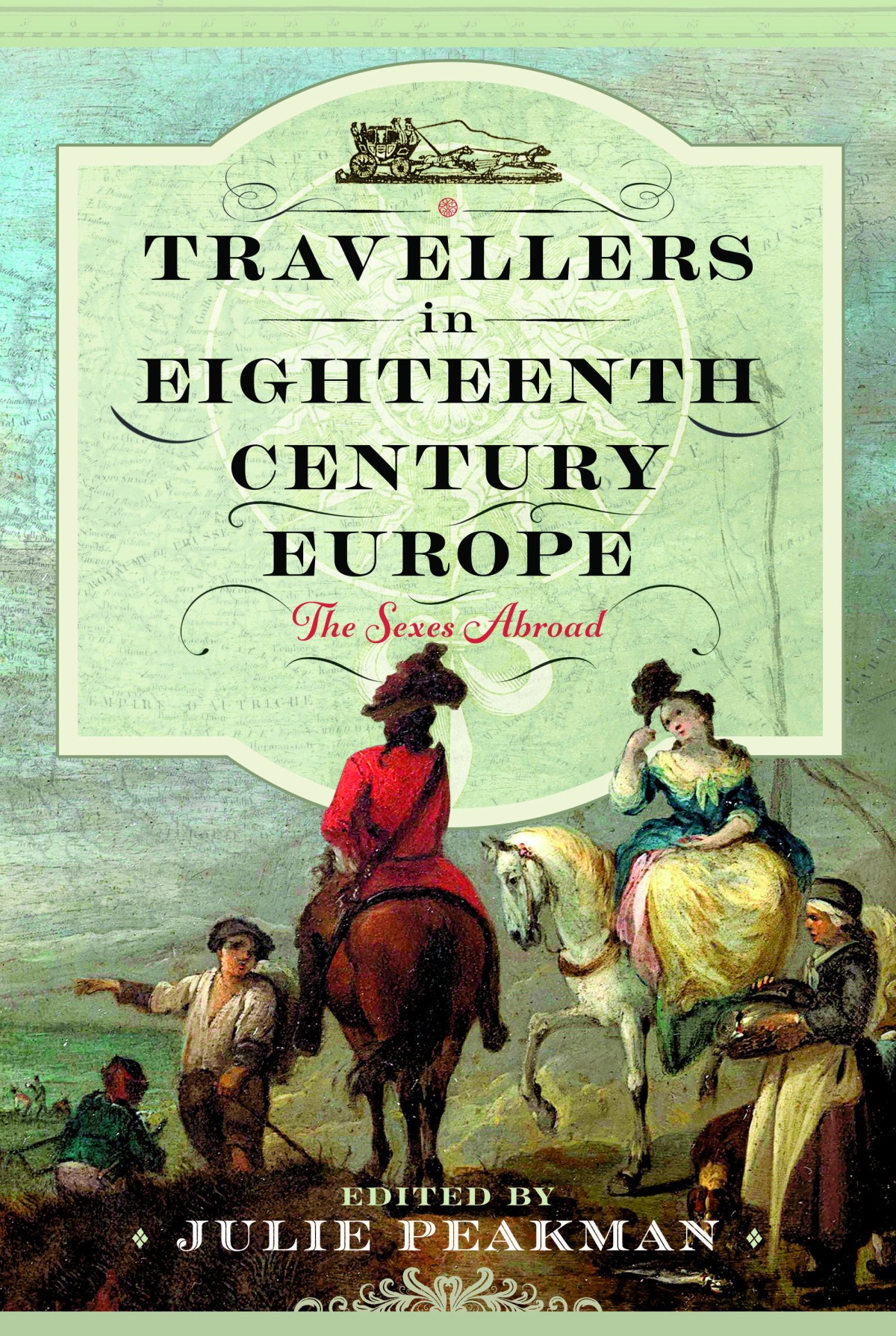
The Women’s Studies Group will be holding a special seminar at the Foundling Museum in London on 18 January 2025, from 1.30pm to 4.30pm. Come along and listen to Julie Peakman introduce a new edited collection, Travellers in Eighteenth-Century Europe: The Sexes Abroad.
Julie and contributors from the book will give short talks on their chapters. Speakers include Valentina Aparicio, Maria Grazia Dongu, Louise Duckling, Miriam al Jamil, and Teresa Rączka-Jeziorska. Please see the attached PDF for more details and the full book contents.
There will be plenty of time for sociability, so we hope you can join us. Friends and partners are welcome. Please RSVP to wsgpostbox@gmail.com with ‘Travellers’ in the Subject Line and please indicate if you are bringing a guest.
 Women's Studies Group 1558 - 1837