We were delighted to welcome distinguished Professor Emerita Merry Wiesner-Hanks as a special guest to discuss her new book Women and the Reformations: A Global History.

The seminar began with a 30-minute presentation outlining the book’s structure and introducing us to some of the incredible women within its pages. Professor Wiesner-Hanks explained how the idea for the book emerged in response to the Luther 500 celebrations in 2017. These celebrations did not truly reflect the new scholarship on women that had emerged in Reformation Studies in the previous decades. Women and the Reformations aims tofill that gap for a general audience.
Our attention was drawn to the plural in the title: this is a work about Reformations, Catholic and Protestant, with women from both sides appearing in every chapter. The motivation is to draw parallels and comparisons, rather than organise the material in a ‘predictable’ way. The text is therefore structured by the type of women that are featured: monarchs, mothers, migrants, martyrs, mystics, and missionaries.
The historical, geographical, and thematic scope of the book is impressive. The content will not be covered in detail here, as a full book review is planned for a later post. In the meantime, we will share some fascinating insights from the seminar.
Most strikingly, it is worth noting there are 258 named individuals in the book. Some of them are very young – and they were taken very seriously in their time – and some are very old. Some are well-known, such as Teresa of Avila, and others are recently discovered.
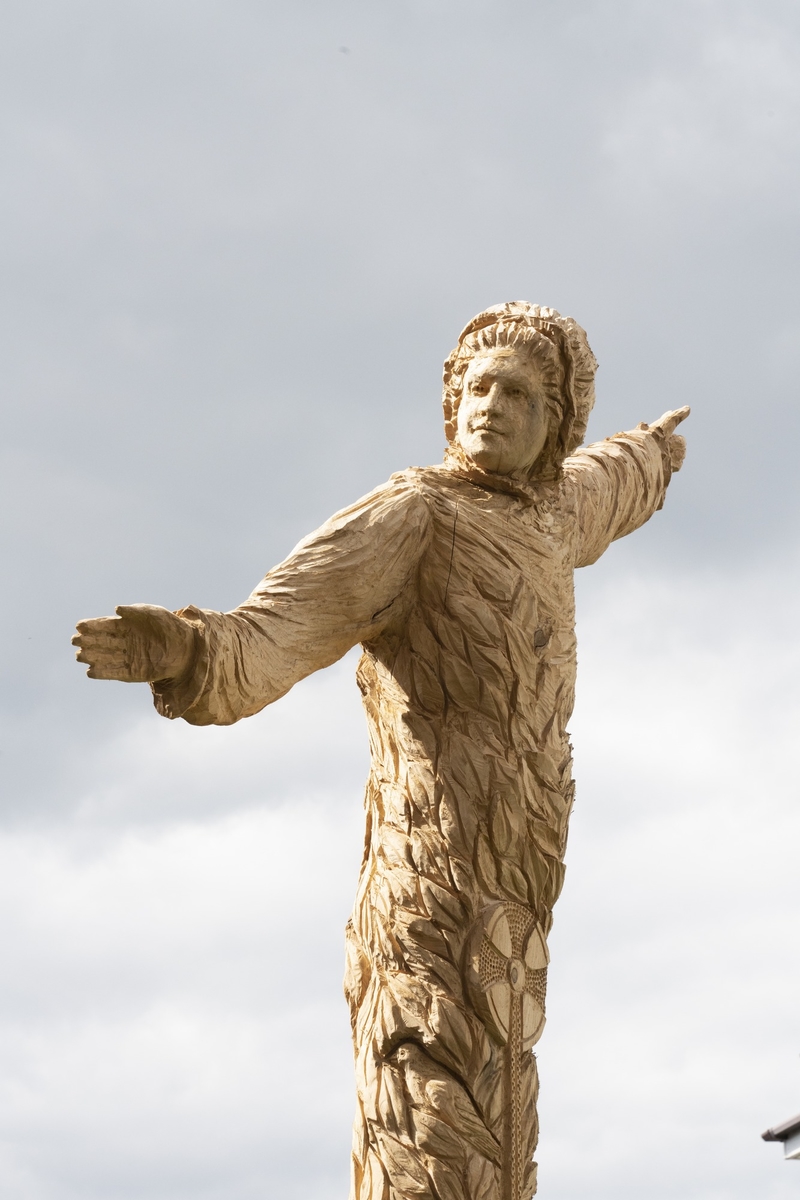
Professor Wiesner-Hanks’ presentation gave a very clear sense of how ordinary people might encounter these women today, through memorials, statues, and material culture. A striking example is the sculpture of Susanna Wesley (1669–1742) by Simon O’Rourke, carved from the remains of a Cypress tree in East Finchley Methodist Churchyard.
Another significant feature of the book is the fact it is a global history. A woman from outside Europe is featured in each chapter. For example, among others, we heard about the African visionary, Kimpa Vita; the Ethiopian abbess and saint, Walatta Petros; the Peruvian mystic, Rose of Lima; and Japanese and Korean martyrs.
In the questions, we enjoyed a lively discussion on women’s agency, early modern patriarchy, and Allyson M. Poska’s case for “agentic gender norms”. Women were right at the centre of every different exchange at this time, actively breaking these gender norms. There were so many female networks in this period, and a surprising number of women rulers who exercised power: this is essentially a book about women’s agency.
Another important strand to the conversation was around writing craft: how can we communicate ideas in an accessible way for a wider audience? Professor Wiesner-Hanks shared some tips, ideas, and her enthusiasm for writing a trade book, covering elements from writing style to selection of material. This was a practical and inspirational way to close the session. We hope to hold similar events in the future.
Our thanks to Merry Wiesner-Hanks and the team at Yale University Press, as well as our chair Valerie Schutte, for making this seminar possible.
Captions:
Susanna Wesley (1669–1742), Mother of Methodism. By Simon O’Rourke.
© the artist. Image credit: Nick Bowman / Art UK.
 Women's Studies Group 1558 - 1837