Upcoming in-person seminar, Foundling Museum, Saturday 6th December, 2025

We have an upcoming in-person seminar taking place Saturday 6th December, 2025.  In-Person: Foundling Museum, 40 Brunswick Square, London, WC1N 1AZ, Saturday 13.00 for 13:30 – 16:30(GMT).

The papers to be presented are:

Breeze Barrington: ‘Versifying Maid[s] of Honour’: Mary of Modena’s artistic legacy.

Diane Clements: ‘A very anxious and affectionate mother’: dealing with personal indebtedness in Georgian England.

Rhian Jones: ‘For what signifies an absent friend?’ Epistolary friendship between women and men in England, c. 1650-1750.

All members are invited to attend.

WSG Member Organizes Hybrid Conference: “Collective Biographies Across Disciplines and Ages”

WSG Member Organizes July 1st, 2025 Hybrid Conference: “Collective Biographies Across Disciplines and Ages”

The Women’s Studies Group 1558–1837 is pleased to announce an upcoming one-day hybrid conference, “Collective Biographies Across Disciplines and Ages,” taking place on 1 July 2025, in person at the Università degli Studi di Cagliari (Faculty of Humanities, Via San Giorgio 12, Aula 6 and Aula Magna) and online via Microsoft Teams. This international event is organized by WSG member Dr. Maria Grazia Dongu, and it brings together an international group of scholars across disciplines.

About the Conference

This conference explores the literary, historical, and artistic dimensions of collective biography, narratives that center shared experience, social connection, and cultural memory. Presenters will consider how collective biographies function as both historical sources and narrative strategies, across genres as varied as Shakespearean drama, Quaker life writing, detective fiction, and eighteenth-century art. Drawing on approaches from literary studies, historiography, and biography theory, the conference reflects on how individual and group identities are shaped through storytelling.

The Women’s Studies Group 1558–1837 is proud to support this event, which features presentations by a number of our members and provides the opportunity to strengthen scholarly networks internationally and across disciplines.

Conference Schedule – 1 July 2025

9:30 am – Brief Introduction: On Collective Biographies by Maria Grazia Dongu (Università di Cagliari)

10:00 am – Competing to Tell Lives in Shakespeare’s Richard III by Maria Grazia Dongu (Università di Cagliari)

10:30 am – A Case Study of Early Quaker Biographies by Judith Roads (Independent Scholar)

11:00 am – Indizi tra le righe: l’Irlanda che cambia nelle detective story (Clues Between the Lines: Ireland’s Changing Face in Detective Stories) Luciano Cau (Università di Cagliari)

11:30 amBreak

12:00 pm – Anne of Cleves in Collective Biographies by Valerie Schutte (Independent Scholar)

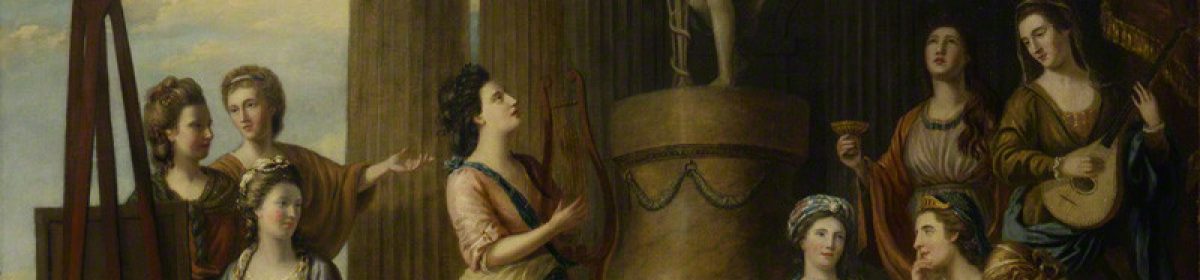
12:30 pm – The Collective Biographies of 18th-Century Art: Harnessing the Power of Storytelling to Re-Read Martin’s “Lady Elizabeth Murray and Dido Belle” (1779) by Karen Lipsedge (Kingston University)

1:00 pm – Vita collettiva e autorialità: La famiglia Manzoni (Collective Life and Authorship: The Manzoni Family) by Fabio Vasarri (University of Florence)

13:30 pm – Catherine of Aragon, Cardinal Wolsey and Henry VIII through Chronicles and Shakespeare’s plays by Valeria Steri, Alessandra Carta, and Elena Melis (Università di Cagliari)

The day will conclude with a roundtable discussion among speakers and attendees.

Hybrid Attendance – All Are Welcome

This is a hybrid event, and attendees are warmly invited to join either in person or virtually.
To receive the Microsoft Teams link for online attendance, please contact Dr. Maria Grazia Dongu at dongu@unica.it.

The Women’s Studies Group 1558–1837 is proud to support Dr. Maria Grazia Dongu in organizing this exciting interdisciplinary event. We celebrate her leadership and the vibrant international scholarly exchange this conference promises to foster across disciplinary boundaries.

The Art of the Actress: Fashioning Identities. By Laura Engel. Review by Victoria Joule

The Art of the Actress: Fashioning Identities. By Laura Engel. Cambridge: Cambridge University Press. 2024. Pp 78. £17.00 paperback), ISBN 9781108977906.

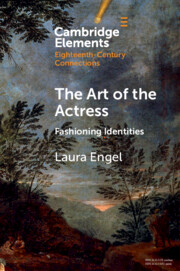
The cover image of Laura Engel’s The Art of the Actress is not of an eighteenth-century actress, but instead features the moody tones of Donato Creti’s Astronomical Observations: Comet (1711). Although not discussed within the book – indeed, Engel may not have chosen the image – the significance is clear. Set against darkening skies, the glowing comet shines out much like the actresses discussed in the text; their dazzling images and performances are moments in history that artists and actress-artists alike attempted to capture in solid form for posterity. In this book, Engel offers the reader a visually and intellectually stimulating insight into the literary, cultural and material legacy of the actress. The Art of the Actress is part of Cambridge Elements: an extensive collection of shorter academic works covering a wide range of disciplines. Engel’s work is published within the Eighteenth-Century Connections series that explores ‘connections between verbal and visual texts and the people, networks, cultures and places’ with attention to ‘oral, written and visual media’. Cambridge Elements can be purchased as affordable print or electronic editions, and some are also open access.

The paperback version of Engel’s book is about the size of a journal but lighter and softer to handle, and the cover image is beautifully reproduced. The text is divided into four parts: part one concentrates on the use of pearls in portraiture; part two is on the relationship between artist and actress; part three focuses on another material object – a muff; and part four cleverly reads the style of ‘unfinished’ art against the in/ability to capture the actress’s image. Engel effectively selects specific material objects and specific actresses to provide ‘a visual exhibition highlighting the representations, creative works, collaborations, and experiences of both well-established and lesser-known performers’ (3) in the eighteenth century. In Engel’s terms, ‘The “art” of the actress thus refers to the actress represented in art, as well as the actress’s labor and skill in making art ephemerally through performance and tangibly through objects’ (2). Throughout the study, Engel highlights the fascinating web of theatrical connections between artists and actresses, demonstrating how ‘women fashioned their identities on- and offstage, as well as how audiences perceived women in the public sphere through theatrical lenses’ (3–4).

Part one immediately establishes Engel’s aims using a piece of jewellery to observe the complex history it brings to different visual portrayals. A string of pearls can tell a story about the actress and her infiltration into the higher echelons of society, but it also conveys the pearls’ murky history in terms of slavery; furthermore, ideas about beauty and competing metaphors of virginity and sexuality show the actress’s ‘[occupation of a] precarious and significant place in the early modern world’ (18). The section concludes with a concise but fascinating examination of pearls as stage accessory in portraits of actresses, providing links between the parts they and others played.

Part two develops the concept of the actress as artist/artist as actress. With a focus on Anne Damer (amateur actress and sculptor) and Angelica Kauffman (artist), Engel demonstrates how involvement in acting had an impact on their representations of women. Engel provides an expansive backstory to a selection of portraits showing how Damer and Kauffman’s private and public lives, as well as public theatre and private theatricals – and even specific performances, costumes and contemporary fashions – fed into their artistic creations. Damer, present in the public eye as an actress, sculptor, and quite a character with her ‘dazzling, over-the-top costumes’ (38), was inevitably subject to satiric attacks. Engel provides an empowering reading of the ongoing presence of these women’s work in museums and galleries as testimony to their valuable contributions to the arts.

The penultimate section focusses on one figure and an emblematic object: Mary Anne Clarke and her strategically held muff. Clarke appeared with a huge white muff at the scandalous court case concerning her selling of army commissions to fund decoration of the house given to her by her lover, the Duke of York. Taking theory and knowledge of actresses’ self-fashioning and their contemporary reception and portrayal, Engel reads the subsequent images of Clarke in comparable ways: ‘Although Clarke was not an actress on the stage, her theatrical maneuvering and publicity stunts established her as a performer to be reckoned with’ (48). The validity of this approach is reinforced by the section on Thomas Rowlandson’s collection of prints featuring Clarke and actress Dorothy Jordan, in which Engel persuasively highlights connections between the satirical portrayals of the two women. Engel concludes with a more uplifting comment on Clarke’s later attempt to control her image through neo-classical sculpture.

To conclude, Engel effectively examines the transitory nature of performance by turning to ‘unfinished’ artwork. Engel uses a selection of Sir Thomas Lawrence’s unfinished portraits to show how they ‘are inextricably tied to the theater, an art form that is by definition fleeting, ephemeral, and open-ended’ (63). Again, Engel reveals the intricate web of theatrical connections behind and feeding into artistic works. The unfinished portraits are of the actress and playwright Elizabeth Inchbald, and of Lady Cahir who performed with Lawrence in one of Inchbald’s plays at a private theatrical. Engel extends the reading of theatrical influences on portraiture to a brief analysis of other portraits. One is ‘almost too finished’ (68) compared to the others: ‘these portraits are alive because they are not done yet’ (65).

One lasting impression this condensed book gives is just how theatrically infused culture was in the eighteenth century. Because of the impressive scope of Engel’s work in exploring the connections and conversations between artists and actresses, visual art, performances and more, there is less space at times to delve into detailed analysis and deepening of concepts, such as how the eighteenth-century actress ‘is central to understanding unfolding anxieties about nation, race, gender and heteronormativity’ (4). For example, the ‘unexpected analogy’ between an enslaved (female) child and duchess (in Duchess of Portsmouth with an Unknown Female Attendant) could be developed further using broader post-colonial studies, particularly in relation to the subsequent portrait of Nell Gwyn (with black male slave) which Engel presents as an echo (17). Sometimes the cruder, more explicit aspects of the material are left unsaid: for example, we can consider exactly how Gwyn is (erotically) ‘making’ (or stuffing or washing?) sausages and how Clarke’s muff (like Sophia Western’s in Tom Jones)is representative of female genitalia. These kinds of questions, however, also point to the effectiveness of Engel’s style, which encourages an interactive engagement. Engel often poses questions or makes references to online reproductions of portraits for readers to follow up in addition to the extensive range she discusses. I found myself setting up another device to look at these images while reading this book. I can imagine students and scholars alike being inspired to pursue new research projects. As a kind of condensed monograph, in an age when time seems to be as short as ever and new research is published rapidly, this easy-to-read book serves as a model and inspiration for future study.

Victoria Joule is an independent scholar based in Wales. Victoria has published on women’s writing of the long eighteenth century with particular attention to self-representation and literary forms. She co-edited and contributed to the essay collection with Emrys D. Jones, Intimacy and Celebrity in Eighteenth-Century Literary Culture: Public Interiors (Palgrave Macmillan, 2018).

The Tudors: Art and Majesty in Renaissance England

An exhibition review by Valerie Schutte

The Tudors: Art and Majesty in Renaissance England is a dynamic exhibition of Tudor artifacts currently touring the United States. On 14 May 2023, it wrapped up the second leg of its tour at the Cleveland Museum of Art, which was preceded by three months at the Metropolitan Museum of Art, New York, from 10 October 2022 to 8 January 2023, to be followed by three months at the Legion of Honor, San Francisco, from 24 June to 24 September 2023.

The accompanying exhibition catalogue is filled with full-page color images of every item, though not all are on display at all three museums. It also includes entries for items not on display at any of the exhibition stops because some of the loans were cut by the time the exhibition opened in October 2022, being delayed from its original autumn 2020 opening date.

As I saw the exhibition twice in Cleveland, I was unable to see many of the items related to Queen Mary I that were not displayed at this venue. These items included Hans Eworth’s 1554 portrait of her, as well as the cartoons for the panels donated by Philip and Mary for the Last Supper “King’s Window” at Sint-Janskerk, Gouda, though they are both beautifully represented in the catalogue. As a scholar of Mary I, I also have minor objections to the descriptions of some of the entries. For example, item number 27 is a 1557 copy of Juan Luis Vives’ Instruction of a Christen Woman on loan from the British Library. The catalogue description was written by Sarah Bochicchio, a PhD Candidate in art history at Yale University. While Bochicchio points out that Vives was a spiritual advisor to Catherine of Aragon and a director of Mary’s studies, she also writes that the text informed Mary and Elizabeth as inheritors of a gendered hierarchy of leadership. Furthermore, on the object label at the exhibition, Catherine of Aragon is not even mentioned, while the description highlights how both Mary and Elizabeth navigated a gendered duality during their queenships. While this is accurate, I am frustrated that such a powerful monument to Catherine and Mary must be discussed in terms of its importance to Elizabeth, thus fortifying the public perception of Elizabeth being a more important or worthy Tudor queen.

However, the more than 80 items on display in Cleveland showcased visual art as a formidable tool of monarchical power, from paintings and drawings to cups and bowls, and suits of armor to giant hanging tapestries. Various museums and private collections across Europe and the United States contributed displayed items. The Devonshire Collection at Hardwick Hall lent the “Sea Dog” table, a drawing table so called because of the sea dogs carved into its walnut legs, the Victoria and Albert Museum lent the Heneage Jewel, and the Kunsthistorisches Museum of Vienna lent Hans Holbein’s painting of Jane Seymour, while the newly-crowned King Charles III lent a miniature of Henry VIII and drawings by Holbein from the Royal Collection. These are only a few of the museums and collectors who participated in fielding these artifacts.

While some of the displayed items are well known, such as the painting of Henry VIII from the workshop of Hans Holbein and both the Sieve and Rainbow portraits of Elizabeth, many are lessor known artifacts that still portrayed the magnificence of the Tudor court. These include the ewer and basin engraved with portrait medallions of the monarchs on loan by the Boston Museum of Fine Arts and the embroidered portrait of Elizabeth I in a garden loaned from a private collection. 

Altogether the exhibition overwhelms its viewers with images of majesty, power, and Renaissance ideas of humanism and antique glory. The Tudors: Art and Majesty in Renaissance England is not to be missed, as this variety of Tudor objects and artifacts is not likely to be showcased in the United States again anytime soon.

Valerie Schutte is a historian who specialises in books dedicated to Tudor queens. She has published two monographs and her seventh edited collection will be published later this year – Mid-Tudor Queenship and Memory: The Making and Re-Making of Lady Jane Grey and Mary I. She is editing a special issue of the Royal Studies Journal to be published in December 2023 on Tudor royal sexualities. Schutte is currently writing a cultural biography of Anne of Cleves and is working on several essays on Queen Mary I.

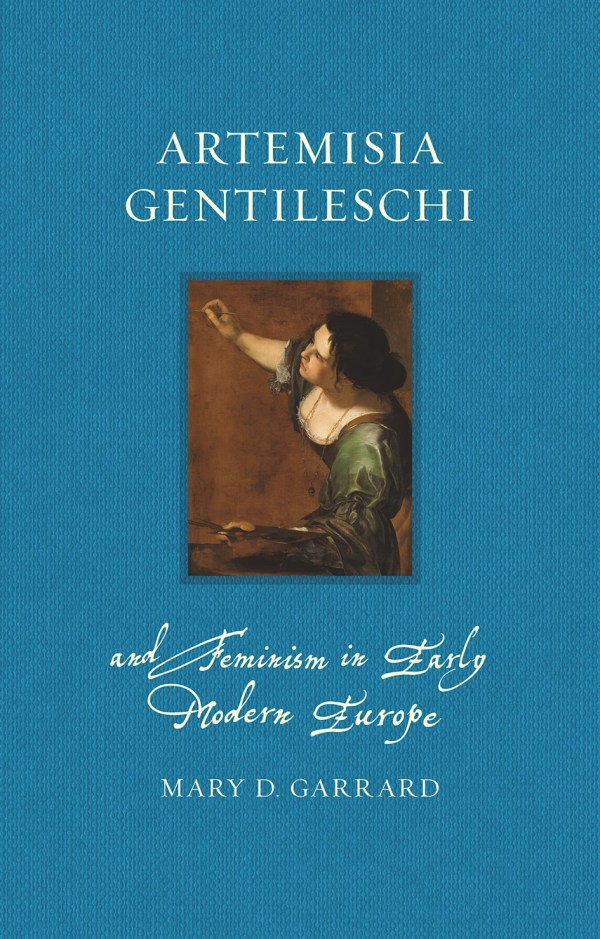
Artemisia Gentileschi and Feminism in Early Modern Europe by Mary D. Garrard. London: Reaktion Books. 2020. Pp. 320. £15.95 (hardback), ISBN 9781789142020.

Artemisia Gentileschi is an artist whose time has more than come. New acquisitions of her work continue to emerge with great fanfare into the gallery spaces of the world’s most august art institutions, the most recent being the Getty Museum’s acquisition of her Lucretia (1627). In 2020, London’s National Gallery built an important show around the acquisition of Gentileschi’s Self Portrait as Catherine of Alexandria (1615–17). Gentileschi’s paintings are reentering a world in which not nearly enough has changed for women since the time when she was painting her original visions. In a climate of feminist protest, in which women’s voices are rightly loud and insistent, Gentileschi’s work retains a force of resonance, a relevance, that renders it as compelling and urgent as ever it was.

Not least, the parallel between Gentileschi’s experience of taking a rape complaint to trial and the experiences of women today who enter a courtroom in the hope of obtaining justice is painfully obvious. It is by now impossible to approach Gentileschi’s oeuvre without knowledge of this crime against her, and of the horror of her trial. The MeToo movement has highlighted how common it is for women to experience the crime of sexual assault and how rarely such crimes are punished. Society continues to accommodate systemic violence against women and girls. The crime of rape, then, is apposite to women’s reception of her work at this contemporary moment. It cannot be evacuated from Gentileschi’s history as an artist without enacting a distortion.

Yet too often, Gentileschi’s works of art have been framed as materially indexical to her rape, as symptoms arising from a private trauma. At their worst, such framings figure Gentileschi’s artistic agency as secondary to that of her abusers, whose actions not only “author” her works but provide their natural interpretive framework. Clearly, there is a balance to be struck between telling the whole of the important story of this female artist and allowing the undoubted quality and originality of her work to stand on its own terms. This can only take place outside of the tired psychobiographical framework that serves only to suppress Gentileschi’s painterly originality within a reductive teleological narrative of victimhood.

Eminent scholar, founding member of the field of feminist art history and pioneer of Artemisia Gentileschi studies, Mary D. Garrard is perhaps uniquely equipped to plot a course through these rocky waters. If, as Garrard argues, the repetition and magnification of artists and their work is a central strategy for canon formation, then Garrard is rightly feted for having been responsible for some of the most effective and transformative repetition and magnification of women’s art in the discipline of art history. Her new book represents a new and full account of Artemisia Gentileschi’s life and work. There are seven chapters, organised around recurring and important themes in Gentileschi’s work. This structure facilitates an interrogation of the contemporary visual and literary context illuminating these pictures and their subjects – their Judiths, Susannas, Lucretias, musicians, saints and allegorical figurations.

Garrard’s strategy of situating Gentileschi’s paintings within the contemporary writing and patronage of women avoids the shallows, contextualising the paintings within a broad and lively field of female authorship, creativity and crucially, feminism avant-la-lettre. This does not render the emotion in Gentileschi’s paintings insubstantial, but rather rebalances it against a feminist intellectual ballast, recuperating this extraordinary artist’s richness and range. It reframes Gentileschi’s work as a deliberate intervention in public debate.

Garrard’s book establishes Gentileschi very firmly as a player within the artistic and intellectual networks spanning Europe’s great courts and cities. This is really fascinating stuff, which, moreover, serves to situate Gentileschi’s art within a transterritorial conversation, as visual currency circulating within an intellectual exchange, that both draws on and responds emphatically to contemporary discourses. Moreover, Garrard demonstrates how Gentileschi’s paintings intervened in the flourishing feminist debates then known as the querelles des femmes, resituating her oeuvre within a lively community of early modern women who thought, knew, spoke, wrote, performed and painted. Intriguingly, Garrard argues that Gentileschi’s painting visualises this community of women as one which crosses class lines. Garrard extends this idea beautifully throughout, showing how Gentileschi’s work too spans historical time, forming a rallying point for the entry of new members into this feminist community persevering into our own present day.

While acknowledging the dangers of the biographical fallacy, Garrard makes a good case for reading Gentileschi’s pictures with her biography in mind. She argues convincingly for the painter’s use of her own likeness in her paintings, a matter of some recent debate. Garrard’s love for her subject is apparent, certainly no bad thing, and her connoisseurial, but also heartfelt, engagement with her subject produces a rich intimacy in her treatment of the artist’s history. Garrard’s use of the painter’s first name throughout is indicative of this intimacy, which feels very genuine, even ethical, as the evident product of so many years of patient study (I don’t claim the same privilege for myself here, although Garrard’s point about the status of Gentileschi’s celebrity, her name brand recognition, is well made). Accordingly, Garrard works hard to centre the originality of Gentileschi’s style, of her painterly voice, and points to several areas fertile for new research, not least, early modern women’s feminist patronage of women artists.

This intimacy extends into Garrard’s formal discussions of Gentileschi’s paintings, their remarkably palpable women, livid with corporeality, their straining hands, solid forearms and locked elbows, their stolid calm in the face of blood and danger. Gentileschi’s painting of women psychologically and physically absorbed in the back-breaking work of political murder, their total commitment to assassination, retains the power to arrest the gaze. Both Gentileschi and Garrard debunk the cherished myth that women of early modern Europe were all as modest and submissive as the conduct literature of their own day and an art historiography rooted in the nineteenth century would have them be.

The book’s approach stands on it own in quite a busy field. Much is being published on Artemisia Gentileschi right now, but nothing quite like this. The book is written in an engaging and conversational style appealing to a generalist audience, but there is plenty here for specialists to value. As standard with Reaktion Books, there are lovely endpapers and a cloth cover, and many high quality colour reproductions. There is a useful bibliography. A small caveat: I would have liked more information in the image captions, where the dimensions of paintings and their locations are not usually listed; it’s important for us to know the scale at which Gentileschi worked.

Dr Sara Ayres

Affiliate Researcher

Centre for Privacy Studies at Copenhagen University