Women, Collecting, and Cultures beyond Europe. Arlene Leis. Review by Valeria Viola

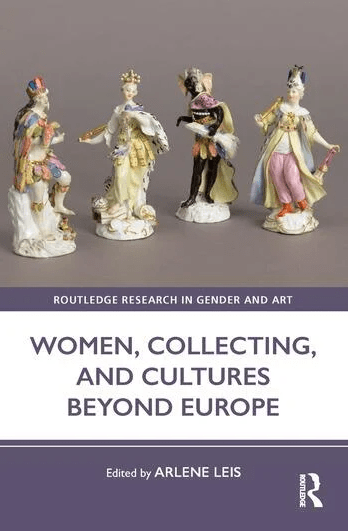
Women, Collecting, and Cultures beyond Europe. Arlene Leis. New York and London, Routledge. 2023. 282 pages, 21 Colour & 33 B/W Illustrations. £120.00, ISBN 978-1-032-13546-5

Arlene Leis makes the aim of this essay collection explicit in the book title. The 17 chapters intersect and consolidate two fields of research: Women and Collecting. The topic itself is not new, but research in this field is still very much alive. In 1985, in response to the provocative question ‘Did Women Have a Renaissance?’ raised by Joan Kelly-Gadol (1977), David Herlihy pinpointed that, even when pushed to marginal positions, women could find other routes to social influence in a world of men. Since then, scholars have demonstrated that one of these routes was collecting. An increasingly extensive approach has brought to light many women who commissioned buildings or collected artworks, so that the assumption of uniquely male-gendered patronage has become no longer sustainable (Reiss 2013). This extensive approach has at times risked dismissing the female social performance as inevitable (Hills 2003). Yet, research has been energized again by the exploration of the dynamics between the two sexes, who used art to negotiate their own spaces (e.g., Maurer 2019). This exploration has generated new questions about the influence of gender on the motivations and practices of collecting, and on the opportunity to use the same methodology to explore women’s and men’s collections. Arlene Leis herself addressed these issues in Women and the Art and Science of Collecting in Eighteenth-Century Europe (2021), co-edited with Kacie L. Wills, and they also appear, here and there, in this new book, proving that her research interest fits well into this burgeoning trajectory.

The key aspect of Leis’ new publication, however, lies in the last words of its title, Cultures beyond Europe, which signal how the work is sensitive to the increasingly pressing question of decolonizing research. The view of Europe from China, with which the book opens, is significant in this sense. While most of the essays are by English-speaking authors, their perspectives and approaches vary and extend to less-investigated areas and peoples around the globe, and to a greater extent than other recent publications on similar topics (e.g., Bellion and Smentek 2023). The broad chronological framework of the book, from the end of the seventeenth century to almost the present day, could be daunting, but it allows the reader to engage with case studies spanning long periods and to gain a glimpse into secular changes in collecting practices. 

Understandably, this wide perspective is not meant to be all-encompassing. A global methodology can deal with temporary connections and fragmented narratives without aiming for comprehensive knowledge of a phenomenon (Adamson, Riello, and Teasly 2011). The tempting effort to “fill the gap” is quickly set aside by Leis, who – more wisely – nudges us towards a comparative reading of the different narratives, by suggesting that we either follow the structure of the five themed sections or make our own connections. Since documentation is often poor in relation to women’s collections, these narratives stem from the collectables themselves, which bear their own information and knowledge. The problematic paucity of sources on women’s possessions, compared to their male counterparts, emerges as a transversal issue, from the poor goods of the women from San Fernando de Béxar, which have been traced through their wills by Amy M. Porter, to the Chinese imperial collections investigated by Chih-En Chen. In this regard, Chen has circumvented the problem by using a cross-source methodology that has proved useful for capturing the interactions between everyday practices, objects, and spaces. 

Albeit to varying degrees, the individual chapters show us that collected items are neither neutral nor passive but can implement change. In this sense, the book can be framed within the scholarship on materiality, where the term ‘materiality’ refers to the capacity of things to actively affect people’s attitudes and behaviours. Through a rigorous exploration of the eighteenth-century collections in the Chinese Imperial harem, Chih-En Chen argues that trompe l’oeil porcelain satisfied Qing women’s curiosity about European art, giving them a fictive freedom from their golden cage. Focusing on the Ottoman Empire, Gwendolyn Collaço argues that a dowry, prepared by a woman for another woman, could affect both the receiver’s and the donor’s social status. In Laura Garcia-Vedrenne and Martha Sandoval-Villegas’s case study, four court dresses demonstrate the wealth of an unidentified woman living in late eighteenth-century Mexico City. In Lisa Hellman’s study, the complexity of an entire collection is viewed through the lens of a single dress that bears witness to the travels and encounters of a Swedish woman. For its part, this dress caused her misfortunes and successes, according to the different perceptions of the stories it related. Perception, acceptance, and reciprocity can serve as the reading keys to the essay by Maria Antonietta Spadaro dealing with the Japanese artist, O’Tama Kiyohara, who moved to Italy at the end of the nineteenth century. While O’Tama assimilated the European way of painting, her oriental culture was met with mixed acclaim.

In a period of voyages, long-distance trade, and transcultural encounters, materiality intersects with questions of power and domination. Knowledge as intellectual appropriation is central to the naturalistic classifications that Europeans carried out in their colonies. As the contribution of women has often been thwarted and long gone unrecognized, many questions remain about their role in the colonization process. The botanist Jeanne Baret, discussed by Glynis Ridley, was forced to disguise herself as a man to travel with the French expedition to circumnavigate the world. Unsurprisingly, her work has remained somewhat overshadowed by that of the men she worked with. In this regard, however, the question that emerges as more urgent is not whether women indexed samples differently from men, but to what extent their scientific interest determined their political complicity. Thoroughly delving into the multi-faceted relationship between British colonialism and the scientific illustrations of Indian flora and fauna, Apurba Chatterjee argues that an aristocratic woman, Lady Mary Impey, participated in the colonial enterprise by collecting images of birds drawn by Indian artists. If the inclusion of specimens in the Linnaean taxonomy already implied their extraction from their native environments, a further degree of appropriation was their transfer to European soil. Additionally, the crossing of borders provided these samples with new values and potential. For instance, the pineapple plant successfully replanted in Amsterdam gave fame to Agnes Block, the amateur botanist investigated by Catherine Powell-Warren. Not much differently, the display of dwarves from the Portuguese colonies emphasized the colonial power of the Lisbon court. This case study by Agnieszka Anna Ficek underscores the extent to which curiosity for the exotic intersected with discourses of race, exploitation, and slavery.

While gaining knowledge of others was both the cause and the result of transcultural encounters, the documentation and exhibitions of objects became a further step to perpetuate, promote, and spread this acquired knowledge. The crucial point was and remains the degree of cultural interference that an external (mostly Western) perspective can impose on the heritage of others. This point holds true even when these actions are implemented with the best intentions. Cynthia Sugars explores the case of a British botanist, Catharine Parr Traill, who, while laying the foundations for Canada’s natural history, misunderstood and bypassed Indigenous knowledge of nature because of her moralistic and imperialist view. In their laudable efforts to preserve and promote artists from Santa Fe, the five Pennsylvania women investigated by Nancy Owen Lewis could not avoid imposing their idea of art on indigenous works. As Martha Sandoval-Villegas argues in her study of Mesoamerican huipils, the objects may come from communities that gave collecting practices different purposes. 

When exhibited, objects push people to take a stand with respect to the stories, knowledge, and meanings that the same objects bring with them. For Angela Fey and Maureen Matthews, for example, the collection of Métis embroidered clothing enabled women from Manitoba to face and acknowledge their indigenous heritage. Yet, when collectors themselves are unaware of what lies behind their collections, they prevent any other observer from reaching a critical awareness. Brandt Zipp suggests this reflection to us when he tells us about a group of white women who, between the 1920s and 1930s, recovered forgotten examples of eighteenth-century American pottery, but not the Afro-American identity of their ceramicist. Working against this attitude, Toby Upson proposes an adjacency approach which aims for the viewers to understand the object without alienating it from themselves. According to this approach, institutional and non-institutional collectors should not only display or explain otherness but also help observers to find a critically aware position with respect to the same otherness. Louise Hamby seems to suggest a very personal approach, but one that is equally open to the cultural implications of the object. As an artist, she has collected Aboriginal fibre objects from Arnhem Land in Australia with the aim of learning and collaborating with local artists. 

To conclude, the global perspective of this book allows the reader to perceive differences and similarities between very varied contexts, thus responding to the expectations created by its title. However, it also opens questions that are useful for the development of its lively field of research. For this reason, scholars dealing with the fields of women, materiality, and collecting will find it very useful. Furthermore, the book makes a very rich contribution to the niche field of the relationship between art, science, and gender. However, the text could also be of interest to all those who aspire to a decolonizing vision of history. Amongst these, I would certainly include the teachers who try to provide their students with this vision every day.

Valeria Viola

Valeria Viola (Ph.D. in History of Art and Architecture in 2020) is an Art teacher with experience in both architectural practice and research. At the moment, she is engaged in integrating gender and decolonial perspectives into teaching. You can find her publications here: https://york.academia.edu/ValeriaViola

Cited works.

Adamson, Glenn, Giorgio Riello, and Sara Teasly (eds.). “Introduction”. In Global Design History, 1–10. Abingdon: Routledge, 2011.

Bellion, Wendy and Kristel Smentek (eds.). Material Cultures of the Global Eighteenth Century. Art, Mobility, and Change. London and New York: Bloomsbury Visual Arts, 2023.

Herlihy, David. “Did Women have a Renaissance? A Reconsideration.” Medievalia et Humanistica 13 (1985): 1-22.

Hills, Helen (ed.). “Theorizing the Relationship between Architecture and Gender in Early Modern Europe.” In Architecture and the Politics of Gender in Early Modern Europe, 3–36. Aldershot and Burlington: Ashgate, 2003.

Maurer, Maria F. Gender, Space and Experience at the Renaissance Court. Performance and Practice at the Palazzo Te. Amsterdam: Amsterdam University Press, 2019.Reiss, Sheryl E. “Beyond Isabella and Beyond: Secular Women Patrons of Art in Early Modern Europe.” In The Ashgate Research Companion to Women and Gender in Early Modern Europe, edited by Allyson M. Poska, Jane Couchman, and Katherine A. McIver, 445–467. London and New York: Routledge, 2013.

Venanzio Rauzzini and the Birth of a New Style in English Singing: Scandalous Lessons. Brianna E. Robertson-Kirkland. Review by Cheryll Duncan.

Venanzio Rauzzini and the Birth of a New Style in English Singing: Scandalous Lessons. By Brianna E. Robertson-Kirkland. New York and Abingdon: Routledge, 2022. Pp 244. 11 B/W Illustrations. £130.00 (hardback) £29.24 (ebook), ISBN 9780367443375.

The Italian castrato Venanzio Rauzzini (1746–1810) spent some 36 years in Britain, where he made a significant contribution to the musical and cultural life of the nation. His multi-faceted career was chronicled in Paul F. Rice’s monograph Venanzio Rauzzini in Britain: Castrato, Composer, and Cultural Leader (2015), which concluded that Rauzzini’s most enduring legacy was ‘his teaching of a generation of leading soloists and his development of the Bath concerts’ (p. 285). While his activities as a concert director account for a generous proportion of the book, however, little attention is given to Rauzzini’s achievements as an educator. Robertson-Kirkland’s study fills this gap in the literature by examining the singer’s influence through the lens of his teaching, probing the pedagogical methods and socio-historic contexts that contributed to his producing some of the finest singers of the period. It unpacks the loyal network of relationships that Rauzzini built with his students, revealing how he cultivated a respectable public image in order to navigate the culture of suspicion that surrounded music masters generally, and castrati in particular.  

After an opening ‘Prelude’ that sets out the book’s novel agenda, chapter one provides an overview of British music education in the eighteenth century, pointing up the distinction between the rigorous training that Rauzzini received in Italy and the unregulated system of apprenticeships and private tuition that prevailed in Britain. Arriving in London in 1774 to take up the role of primo uomo at the King’s Theatre, Rauzzini brought with him a wealth of knowledge of Italian music pedagogy at a time when Italian opera and vocal methods were highly respected. Having already established himself as an operatic star and singing master on the continent, the timing was opportune for Rauzzini to hone his skills in Britain. He was also well placed to use his celebrity status to promote his own students on the London stage, and chapter two explores the mixed reception given to two such individuals. Caterina Schindlerin failed to make a lasting impression and prompted Charles Burney to grumble about ‘the number of Italian singers who insisted their inferior students perform with them in the opera’ (p. 43). Anna Selina (Nancy) Storace was only ten when Rauzzini assigned her a minor role in his opera Le ali d’Amore in 1776 (Storace’s performances 1773–1778 are listed in Appendix 1). After completing her training in Italy, she went on to enjoy considerable success, not least as Mozart’s first Susanna in Le nozze de Figaro.  

Rauzzini’s activity as a teacher was closely linked to the musical and cultural life of Bath, where from 1780 his own prestigious concert series provided a public platform for his growing network of associates. Chapter three compares the vocal techniques and careers of Gertrud Mara and Elizabeth Billington, both leading sopranos who regularly sang at these concerts. Claims that they were formally trained by Rauzzini are shown to be unlikely, however, although both women were certainly part of the musical circle that promoted his reputation. The next chapter unpacks why Rauzzini was dubbed ‘the father of a new style in English singing’, contrasting English and Italian vocal techniques and explaining how the two melded to create a ‘new style’. Although unable to father children of his own, Rauzzini spawned a generation of celebrity British-born singers through his teaching of Italian vocal technique. Chapter five explores this method through a detailed account of Rauzzini’s Twelve Solfeggi (1808), a treatise aimed at the advanced student and which sealed his pedagogical legacy. The concepts and history of the solfeggi tradition are lucidly explained and shown to be a versatile training tool that was fundamental to musical literacy and vocal flexibility. Rauzzini’s exemplary musicianship can be attributed to his own study of solfeggi, which was the standard method taught in the Italian conservatories and continues to inform vocal pedagogy today.

Chapters six and seven engage with the ‘scandalous lessons’ of the book’s subtitle, amusingly reflected in the caricature by Thomas Rowlandson chosen for its cover. During his early years in Bath, Rauzzini’s pupils included wealthy young women for whom musical skill was an expected accomplishment, and in which context his renowned good looks and geniality made him susceptible to slander. In 1779 he was publicly accused by William Gooch of a romantic involvement with his wife Elizabeth while she was Rauzzini’s pupil. The assumptions underlying this incident provide a platform for exploring fictional narratives that played into contemporary attitudes concerning music masters, particularly foreign ones. George Colman the elder’s comic afterpiece The Musical Lady (1762) satirised the British infatuation with Italian music and musicians through its portrayal of Sophy, a young woman whose moral judgement was swayed by ‘an unhealthy attachment to music and Italians’ (p. 132). 

Although Rauzzini emerged from the Gooch incident relatively unscathed, other singers in his circle were less fortunate, and those whose careers were harmed by their involvement in scandal are discussed in chapter seven. Gertrud Mara’s liaison with Charles Florio prompted Joseph Haydn to declare her behaviour to be ‘despicable to the whole nation’ (p. 155), while Nancy Storace’s affair with John Braham, another of Rauzzini’s students, elicited considerable opprobrium in the press. Framing these case studies is an anecdote concerning a romantic entanglement immediately prior to Rauzzini’s arrival in England, recounted years later by the tenor Michael Kelly in his Reminiscences (1826, I, p.10). The story was unsubstantiated and received scant notice at the time, but it has recently been appropriated by a media keen to exploit public curiosity around castrati, particularly their perceived gender and sexual function. Thus an article in The Guardian in 2010 headlined Rauzzini as ‘the bedhopping singing star of the 1700s’, describing him as ‘a ladies’ man, a kind of castrato Casanova, sleeping his way round Europe’.

Intriguingly entitled ‘The Eighteenth Century in the Twenty-First Century’, the Postlude opens with an admission that we know very little about what Rauzzini’s singing lessons actually entailed, because of the intrinsically private nature of the teaching space. The one-to-one lesson is still the primary model for vocal and instrumental instruction today, and Robertson-Kirkland does not shy away from drawing parallels between potential hazards of the teacher-pupil relationship 350 years ago and those in the present. Reference to recent abusive behaviour and sexual grooming at a specialist music school in the UK makes uncomfortable reading but is effective in highlighting the timeliness and relevance of this study.

Overall, this is a fascinating investigation of teaching in relation to the education of professional and amateur singers in Georgian Britain, set in its wider cultural and social context. The writing is clear and engaging, and the scholarship lightly worn while underpinned by meticulous archival work of an interdisciplinary nature. There is a useful appendix containing short biographies of 47 singers advertised as Rauzzini’s pupils, the majority of whom are women. Comprehensive end notes for each chapter are supplemented by a detailed bibliography of manuscripts and published sources, and the excellent index will ensure the book’s usefulness as a reference tool. As a study that places teaching at the centre of the socio-historical narrative, it is a welcome addition to Routledge’s Studies in Eighteenth-Century Cultures and Societies series and deserves a wide readership.  

Cheryll Duncan

Cheryll Duncan is Emeritus Professor of Musicology at the Royal Northern College of Music in Manchester, UK. She publishes on professional music culture in Britain during the late seventeenth and eighteenth centuries, with a particular focus on records of the equity and common-law courts. 

Mary Shelley and Europe: Essays in Honour of Jean de Palacio. Edited by Antonella Braida. Review by Jacqueline Mulhallen

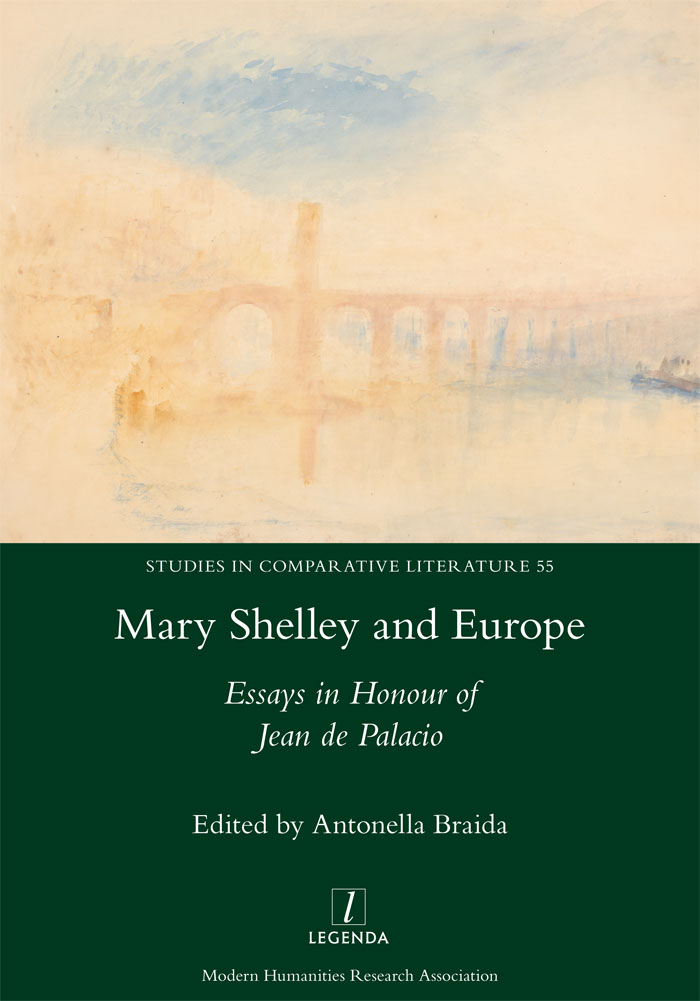
Mary Shelley and Europe: Essays in Honour of Jean de Palacio. Edited by Antonella Braida. MHRA, Oxford: Legenda. 2020. pp. 206. £80 (hardback), ISBN: 9781781885482. £10.99 (paperback, forthcoming), ISBN: 9781781885529.

Mary Shelley and Europe is a wonderful selection of essays which discusses an aspect of Mary Shelley’s life that was so important to her art and yet is perhaps under-emphasised in discussing her work.  Mary Shelley travelled to Europe in 1814 and lived in Italy from 1818 to 1823.  She wrote two books of travel, which mark the beginning and end of her writing career, and many of her novels and stories are set either wholly or partly in Europe. She spoke Italian and French fluently and translated from those languages. Europe was very much present to Mary Shelley even when she was unable to travel. And yet, in 1951, when Jean de Palacio began to study her work, she was known mainly as the editor of Shelley’s poems and the author of Frankenstein – and at the time her work as editor was very much under-appreciated and Frankenstein was better known for James Whale’s film version than the novel itself.

Jean de Palacio’s study of Percy Bysshe Shelley’s Epipsychidion led to his interest in Mary Shelley, especially when he discovered that she had correctly included a line omitted by a Victorian editor of the poem. Yet he was discouraged from this study and found it difficult to find texts, reading them in the British Library and acquiring them from rare books dealers.  Since then, as he notes in his chapter, Mary Shelley’s status as a writer has been completely transformed and now she is considered a major writer of the time. De Palacio was one of the first to show how Mary Shelley’s transcription of her husband’s poetry and her knowledge of Italian made her superior to the Victorian editors who followed her.

Nora Crook, as well as paying tribute to de Palacio’s pioneering work, shows how many poems, reviews, articles and translations have been identified subsequently, thus establishing Mary Shelley as a professional writer with her own style and voice and showing her as European.  She describes the difficulties of identifying these and other contributions to journals where they are unsigned. Although style, subject matter and dating are helpful, mistakes can be made. She gives examples of possible work yet to be confirmed and stresses the need for fora to be set up to establish an agreed canon of work since no current bibliography on Mary Shelley is comprehensive.

De Palacio also suggested that collaboration between husband and wife tended to give Mary Shelley an entitlement to sometimes make additions, though she may have exceeded this on occasions. He also appreciated the importance of Italy to Mary Shelley. Michael Rossington, also paying tribute to de Palacio’s groundbreaking work, considers how, when he started his studies in the 1950s, the critical appreciation of the work of Percy Bysshe Shelley, then at its nadir, began to rise. Manuscripts from the Shelley family were donated to the Bodleian Library prompting fresh books and essays from scholars, in particular Geoffrey Matthews, who seems to have been one of the first to have realised the difficulties facing Mary Shelley as an editor, citing examples of text crossed out, written criss-crossed or upside down. The difficulties were not only practical but emotional, such as the pain involved in looking at text stained with seawater as a result of being in the boat when her husband drowned. Valentina Varinelli also discusses what she describes as two forms of dialogue with Percy Bysshe Shelley’s poetry (p. 57), being the memories prompted from these texts, and Mary Shelley’s poem The Choice. Varinelli’s extended critique of this poem is particularly interesting. The theme of collaboration is discussed in more detail by Anna Mercer in her essay, which also looks at the poetry that Mary Shelley wrote in Italy.

Lisa Vargo’s chapter on Mary Shelley’s political thought and activity shows that Mary Shelley was always interested in Italian politics and that, although her politics remained liberal, she never wished to ally herself wholly to a group and did not want to play a public part. Maria Parrino’s essay emphasises Mary Shelley’s study of Italian. When they lived in Italy, the Shelleys’ knowledge of the language distinguished them from other English residents. Mary Shelley was not only able to converse with well-educated Italian friends but to chat happily with her servants, using their colloquial phrases. Years later, on her return to Italy, she was still able to speak Italian fluently, showing that she had in the intervening years kept up her study of the language. Indeed, she reviewed books and translated stories from French and Italian, so the knowledge of the languages was very much part of her cultural life and her career.

Other essays in the book discuss the reception of adaptations for the theatre of Frankenstein, such as Presumption (1823), and popular images of Mary Shelley. However, the idea of her as a European, whose working life involved translation and travel in Europe and interaction both politically and artistically with other Europeans, is one which transforms her image from that of an indigent, lonely widow and single mother living on memories of a brief happiness into an independent professional woman with a fascinating creative life and interesting contacts. One realises that this must have always been the case, of course, but emphasis on her editing of her husband’s poetry and on Frankenstein, rather than on the later novels and stories, has obscured the literary and personal achievements of her later life. This book does much to redress the balance.

Jacqueline Mulhallen

Author of The Theatre of Shelley (2010), Percy Bysshe Shelley: Poet and Revolutionary (2015), and the plays Sylvia and Rebels and Friends.

WSG seminar series 2020-21

The Women’s Studies Group 1558-1837 is pleased to announce the speakers for their seminar series 2020-21. All meetings will start promptly at 1pm BST/GMT* (with arrivals from 12.30 onward to allow for necessary preparations and administration). We aim to finish by 3.30pm.

Please be aware, you must be a member of the WSG to gain access to the Zoom sessions. The links are distributed through our WSG mailing list 24-hours before the event. Becoming a member means you will be able to attend the Zoom and in-person seminars for the 2020-2021 season.

***

September 19, 2020*
Stephen Spiess: Reading Strumpets: Thomas Heywood, Sexual Epistemology, and the Making of English Whoredom
Sonia Villegas Lopez: Female Libertinism in Gabriel de Brémond’s Transnational Oriental Fictions.
Anthony Walker-Cook: Descending into the Underworld with Mary Leapor and Sarah Fielding.

November 21, 2020
Rocio Martinez: To defend a princess’s rights to her father’s throne: Maria Theresia of Austria and the protestations against her renunciation of the inheritance of the Spanish Monarchy.
Avleen Grewal: Vathek: Gaze, Disorientations and Policing Identity.
Eva Lippold: Marriage and Magic Swords: Mariana Starke’s Factual Fairytale.

December 5, 2020
Daniel Beaumont: Melancholy and Despair among Early Modern English Women: A case study of Hannah Allen’s Satan’s Methods and Malice Baffled (1683).
Yvonne Noble: Elizabeth Elstob, Mary Delany, and Money.
Valerie Schutte: Popular Literature at the Accession of Queen Mary.

January 23, 2021
Megan Shaw: Looking towards a cultural history of Katherine Villiers, Duchess of Buckingham (1603-1649).
Gillian Beattie-Smith: Catherine Helen Spence: a consideration of her feminist and transnational agency.
Kate Stephenson: Lawyers, Débardeuses and Pages; Women Masquerading as Men.

February 20, 2021
Sarah Ailwood: ‘In justice to myself’: Legal and Textual Subjectivities in Eighteenth-Century Women’s Memoirs.
Daisy Winter: “I who am but dust”: mortal fear in Elizabeth Delaval’s ‘Memoirs and Meditations’.
Valentina Aparicio: Maria Graham’s Journal of a residence in Chile (1824): a transnational community of women.

March 20, 2021                                                                                                                       Cheryll Duncan: ‘Much want of judgment’: new evidence concerning the singer Jane Barbier.
Maria Clara Pivate Biajoli: Understanding Current Readers’ Reception of Jane Austen through Fan Fiction.                                                                                              Miriam al Jamil: The Grand Duchess of Tuscany’s Birth Days: Weary and Waiting at the Florentine Court.

April 17, 2021*

Julie Vig: Women and martiality in the Sikh literature of early modern Punjab.
Francesca Saggini: ‘From St Martin’s Street to “Camilla Cottage.” Frances Burney’s Houses between Fact and Fantasy.’

Anna Jamieson: “Comforts in her Calamity”: Dorothea Fellowes’s Shopping and Spending in the late Eighteenth-Century Private Madhouse.

*Please note that the September and April meetings are BST, and the rest are GMT.

For further information including abstracts, see our seminars page, or contact the organiser Carolyn D. Williams.  To join the WSG, see our membership page.

Reminder: WSG seminar March 2020

***EDIT: Due to the current COVID-19 pandemic, we have cancelled this event.***

The third seminar of the year takes place on Saturday 21 March. Seminars take place at the Foundling Museum, 40 Brunswick Square, WC1N 1AZ, starting promptly at 1pm and finishing at 4pm.  Doors open at 12.30.  The Foundling is a wheelchair accessible venue, and directions for getting to the Museum can be found here, including those for the visually impaired.  All seminars are free and open to the public, though refreshments will cost £2 to those who aren’t WSG members.  Those attending the seminars are welcome to look round the museum before or after.

Saturday 21 March, 2020. Chairs Carolyn D. Williams and Angela Escott
Lindy Moore: The Scottish Schoolmistress in the Eighteenth Century
Alexis Wolf: Women and Mentoring in the Late Eighteenth Century: Mary Wollstonecraft, Margaret King and Mary Shelley
Rachel Eckersley: Female benefactors to dissenting academies in England
Catriona Wilson: “Some attention to those female members”: Feminised monarchy in the first exhibition of Kensington Palace’s State Apartments, 1899

For further information including abstracts, see our seminars page.  To join the WSG, see our membership page.