Annual Workshop 24th September 2022
On the Margins: Interrogating the Notion of Marginal Status in the long Eighteenth Century. Foundling Museum, London
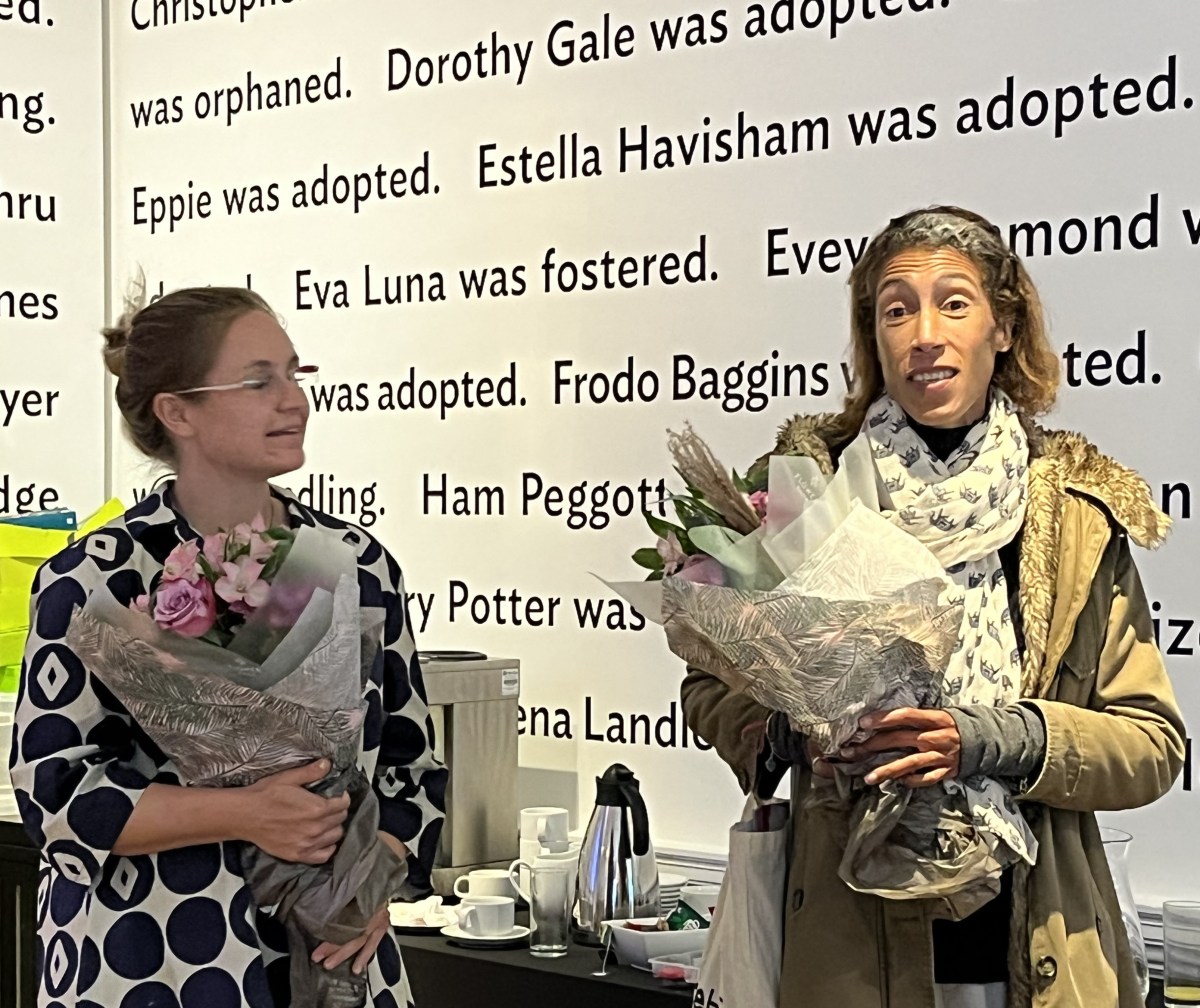
Our annual workshop unusually took place in September this year. We were delighted that our morning keynote was given by Dr. Karen Lipsedge and Dr. Emma Newport, both long- standing members, contributors, and supporters of the WSG. Emma Newport began the session by suggesting that there are many questions raised by the word ‘Margins’ which becomes particularly slippery when we consider the prepositions which are often attached, such as outside and beyond, within, between, above or beneath. She guided our discussion about agency and how active or passive words affect our understanding of the term. Power relations and choice are important, and crucially questions of gender, class and issues of who exactly is ‘on the margins’. The term is always political and ideological.
Karen Lipsedge then used the case study of Samuel Richardson’s Pamela, giving a close reading of the Joseph Highmore painting of Pamela and Lady Davers 1743-4 , (National Gallery of Victoria) to examine women’s autonomy in the domestic space. The painting shows the consequences of altering a woman’s assigned role in a patriarchal tradition. A lower-class woman was not expected to be genteel or virtuous but to gratify her master’s sexual demands. Pamela’s movement between the informal and formal rooms of the house as lady’s maid, servant and then wife mark the changes in her status. The painting depicts the moment when Lady Davers and her nephew attempt to attack and crush Pamela, asserting she has merely undergone a sham marriage with Mr. B, in a parody of the harmony and sociability usually represented in an eighteenth-century conversation piece. The focus on the table as a sign of social and hierarchical power and the positioning of other characters in the composition highlight the details that were important to Richardson in his alternative domestic scene and could be read as a queering of marginal space and questioning of what it meant to be at the centre.
Coincidentally, a recent Chawton House exhibition From the Margins illustrated efforts to support endangered species of the South Downs through restoration of hedgerows and wildflowers. This exhibition highlighted alternative approaches to the idea of marginal spaces, their fragility and the energy and struggle required to survive in an overlooked and threatened environment. We examined a quotation from Pamela, in which Pamela is described as a cuckoo who needs to be ‘hedged in’, with all the associations conjured by the term ‘cuckold’. Is Pamela a temporary joy of summer or a cuckoo in Mr. B’s nest?
The keynote presentations were rich and thought-provoking and were followed by a lively and enthusiastic discussion.
After a sociable lunch we reconvened for short presentations by workshop attendees, to explore a fascinating range of ideas related to On The Margins. Taking a cue from Pamela, we looked at the ‘monstrous’ masculine Mrs. Jewkes and the eighteenth-century female body as essentially rendered disabled and defined by what it could not do; we heard about medical recipes by women who were on the margins of professional and scientific knowledge whose work was usually printed cheaply, achieving only ephemeral status; and about the marginal status of women in the court room, 1810-12 Scottish case studies of women defendants who insisted on being heard in defiance of efforts to marginalise them because of their ethnicity, illegitimacy or accusations of lesbianism; Criminal cases against women who cross-dressed and made careers of piracy revealed that there was no explicit law against the practice; women as landladies were marginalised figures, surviving under difficult conditions, as were the dancing girls who had no choice but to perform for the French invaders during Napoleon’s Egyptian campaign.
We heard about a woman who survives a shipwreck to live alone on an island and gain agency when separated from her family, in Penelope Aubin’s The Noble Slaves (1722); and about Caroline-Stéphanie-Félicité, Madame de Genlis’ novella La Femme Philosophe (1804), which imitates the novel Edmund Oliver by Charles Lloyd (1798) where sexual transgression leads to the female character Gertrude’s downfall, but Genlis makes her the protagonist, exploring a liminal space of fluid and unstable subjectivity.
Women travellers such as Hester Piozzi, Ann Flaxman and Mary Shelley stood on the rim of Vesuvius, a real marginal space of danger, and recorded their impressions. We also enjoyed a performance-based presentation in which a portrait of Mary Moser was questioned about her life and career, now that recent attention has brought her out of the shadows.
Marginality in all its subtle shades emerged from our day, in a variety of disciplines and fields of research. Presentations gave us snapshots of exciting ongoing work and, as Karen Lipsedge concluded, ‘a rich ecology of things to explore’.
Many thanks to our keynote speakers and all our participants, and we look forward to further conversations in our next workshop!
Review by Miriam Al Jamil
 Women's Studies Group 1558 - 1837