Review: WSG Seminar 6 February 2025

The WSG seminar on the 6 February featured presentations by Pilar Botías Domínguez and Charlotte MacKenzie. The scheduled paper by Amy Solomons and Elizabeth Ingham has been postponed until the 2025–2026 seminar season.

Pilar offered an analysis of Aphra Behn’s play The Rover (1677) through the lens of the masquerade. She suggested that Behn uses the masquerade not only as a dramatic device, but also as a means to explore women’s right of self-determination. The paper was rich in quotation and citation providing contextual depth to the analysis of the play and its internal dynamics. For example, employing Bakhtin’s (1984) idea of carnival time – as being “subject only to its laws, that is, the laws of its own freedom” – Pilar illustrated how the immersive, carnivalesque setting of the play enables female defiance and transgression.

The use of masks and crossdressing in The Rover highlight the limited social mobility that is usually available for women. In the play, by wearing masks, women are able to defy patriarchy and adopt a new identity while the carnival takes place, as their own identity is disabled for a moment. For example, Hellena can dress as a gypsy, permitting her to act differently than her social station would normally allow. The paper explored the actions and words of Behn’s two very different women – Hellena and Florinda – and their acts of defiance and ultimate compliance.  Additionally, Pilar demonstrated how the male characters of the novel were the targets of female wit and satire.

Charlotte MacKenzie offered an analysis of women in Georgian Cornwall and how their learning was facilitated by local knowledge making communities. Charlotte explored three categories of female learning set against the backdrop of Cornwall as a county of technological and scientific discovery. Each of the three categories featured detailed case studies of Cornish women drawn from local manuscript sources, alongside material from women visitors such as Hester Piozzi and the writer Eliza Fenwick.

The first category featured women as household managers,  which included running finances and healthcare. Examples were provided of female friendly societies that enabled women to set aside money for financial security, and the role of women in providing rural healthcare.  The second category included women as readers, writers, and theatre-goers, exploring (among other things) the role of the Penzance theatre, book clubs and circulating libraries. The third example focused on women and their involvement in natural history. This paper demonstrated the wide range of women’s intellectual involvement in the sharing of knowledge: from friendly female societies to meetings on antiquities to participants in Cornwall’s mining community.

To close the session, there was a lively discussion about both presentations. Pilar was able to explicate that, as The Rover takes place outside of England, the Naples setting heightens the sense of freedom and strangeness, allowing for the presentation of topics not always suitable for the English stage. The conversation also turned to the more sinister and dangerous connotations of the masquerade and how masks could hide pock marks, decay, and signs of venereal disease. Charlotte gave greater detail of the types of society meetings women were attending in Cornwall, such as those related to mining and geology, and there was further discussion of the Penzance book club. Charlotte astutely concluded that women did not have to be literate to make or share knowledge; knowledge could be passed on orally or via demonstration. Both presentations were extremely well-received.

By Louise Duckling and Valerie Schutte
WSG Seminars Reminder and Review

WSG Seminar Reminder

Thursday 6 February, 2025 – ZOOM

STARTING 6.45 FOR 7 PM, FINISHING AT 8.30 PM, GREENWICH MEAN TIME

Chair: Valerie Schutte
Host: Gillian Williamson

Dra. Pilar Botías Domínguez: ‘‘Masquerading! a lewd custom to debauch our youth’’: compliance and defiance in Aphra Behn’s The Rover (1677).

Charlotte MacKenzie: Women and knowledge making communities in Georgian Cornwall.

*NOTE – The scheduled paper by Amy Solomons and Elizabeth Ingham (on the library of Lady Mary Wortley Montagu) will now be featured in our 2025-2026 seminar season.

The seminar will take place on Zoom. Please be aware, you must be a member of the WSG to gain access to the Zoom sessions. The links are distributed through our WSG mailing list 24-hours before the event.

For further information, please see our seminars page.  To join the WSG, please see our membership page.

Review: WSG Seminar, Thursday 16 January, 2025 – ZOOM

Chair: Valerie Schutte
Host: Megumi Ohsumi

Speakers:

Jasmin Bieber: Unprecedented Paths Beyond Europe: British Women’s Travel Writing 1680-1780.

Chandni (Anjali) Rampersad: Female Genius In Memoriam: Women Writers’ Afterlife in the Gentleman’s Magazine (1731-1806).

Rosalyn Sklar: Healing women: Early modern women as healers in their own texts, practices and representations.

The 16th of January marked the first WSG seminar of 2025. The three speakers all presented portions of their PhD thesis research. Jasmin Bieber presented on eighteenth century women travelers, discussing women as authors of travel narratives meant for publication. In her project, she considers ideas such as gender, genre, mobility, and public versus private spheres. Rosalyn Sklar presented on early modern women in the medical sector. She pointed out the commonality of the presence of women in the sick chamber, even though they tended to be dismissed as non-medical personnel. In her larger research, she is interested not only in evidence of women’s participation in medical practices, but also how they wrote about it, and how it was written about by others. Chandni Rampersad presented on the visibility of female genius, especially through the lens of the Gentleman’s Magazine. She argued that understandings of female genius were riddled with eighteenth century moral ideals. Often, women were pitted against one another in the magazine.

We had time for about seventeen minutes of questions, which resulted in a lively discussion around women functioning in male spheres. As pointed out by Gillian, the three papers all considered the terms in which women were able to enter into and operate in male spaces, and the extent to which their actions were controlled by men. As each of the speakers suggested, women in the late-seventeenth and eighteenth centuries had to negotiate their roles in the public sphere, while considering practices, terms, and titles designed for male virtues or male execution. These ideas are sure to be considered further in the next WSG seminar on 6th February, where we will have three exciting papers on women writers, readers, and knowledge makers. 

~ Valerie Schutte

Reminder: Two WSG Seminars This Week

Zoom Seminar

Thursday 16 January, 2025 – ZOOM

STARTING 6.45 FOR 7 PM, FINISHING 8.30 PM. GREENWICH MEAN TIME

Speakers and papers:

Jasmin Bieber: Unprecedented Paths Beyond Europe: British Women’s Travel Writing 1680-1780.

Chandni (Anjali) Rampersad: Female Genius In Memoriam: Women Writers’ Afterlife in the Gentleman’s Magazine (1731-1806).

Rosalyn Sklar: Healing women: Early modern women as healers in their own texts, practices and representations.

The seminar will take place on Zoom. Please be aware, you must be a member of the WSG to gain access to the Zoom sessions. The links are distributed through our WSG mailing list 24-hours before the event.

For further information, please see our seminars page.  To join the WSG, please see our membership page.

Special Seminar Travellers in Eighteenth-Century Europe: The Sexes Abroad

Saturday 18 January, 2025 – FOUNDLING MUSEUM, LONDON

STARTING 1 FOR 1.30 PM, FINISHING 4.30 PM GREENWICH MEAN TIME

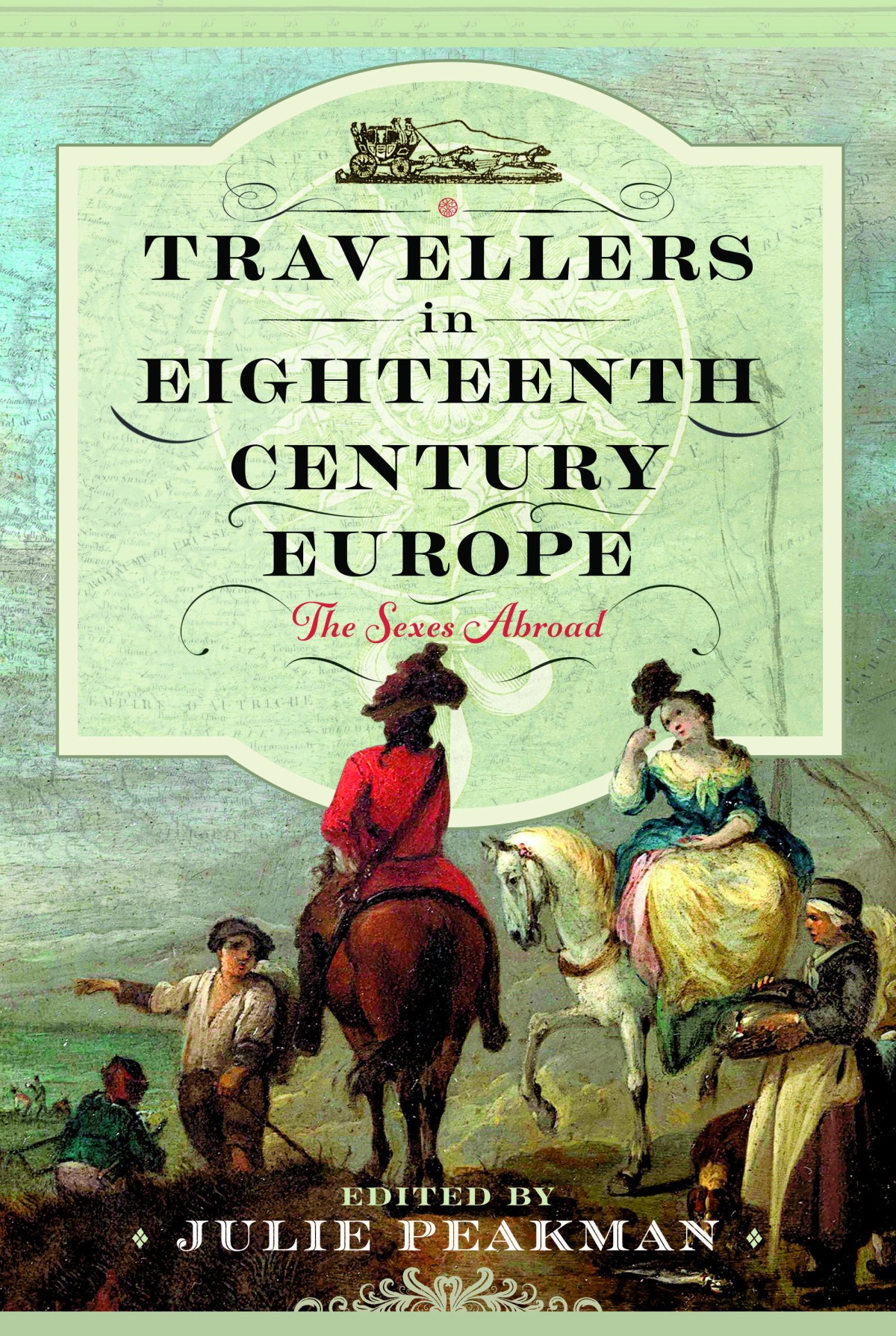
The Women’s Studies Group will be holding a special seminar at the Foundling Museum in London on 18 January 2025, from 1.30pm to 4.30pm. Come along and listen to Julie Peakman introduce a new edited collection, Travellers in Eighteenth-Century Europe: The Sexes Abroad.

Julie and contributors from the book will give short talks on their chapters. Speakers include Valentina Aparicio, Maria Grazia Dongu, Louise Duckling, Miriam al Jamil, and Teresa Rączka-Jeziorska. Please see the attached PDF for more details and the full book contents.

There will be plenty of time for sociability, so we hope you can join us. Friends and partners are welcome. Please RSVP to wsgpostbox@gmail.com with ‘Travellers’ in the Subject Line and please indicate if you are bringing a guest.

The Foundling is a wheelchair accessible venue, and directions for getting to the Museum can be found here, including for those who are partially sighted.

Come and join us for a glass of wine at this social event.

Special Seminar Travellers in Eighteenth-Century Europe: The Sexes Abroad

The Women’s Studies Group will be holding a special seminar at the Foundling Museum in London on 18 January 2025, from 1.30pm to 4.30pm. Come along and listen to Julie Peakman introduce a new edited collection, Travellers in Eighteenth-Century Europe: The Sexes Abroad.

Julie and contributors from the book will give short talks on their chapters. Speakers include Valentina Aparicio, Maria Grazia Dongu, Louise Duckling, Miriam al Jamil, and Teresa Rączka-Jeziorska. Please see the attached PDF for more details and the full book contents.

There will be plenty of time for sociability, so we hope you can join us. Friends and partners are welcome. Please RSVP to wsgpostbox@gmail.com with ‘Travellers’ in the Subject Line and please indicate if you are bringing a guest.

Rescheduled WSG Seminar: Monday 14 October 2024

Waiting Room opens at 5:45 p.m. for 6:00 to 7:30 p.m. (British Summer Time) Chair: Valerie Schutte

Our first seminar of the 2024–2025 season will now take place on Monday 14 October 2024. Please note the earlier start and finish time.

The seminar will take place on Zoom. Please be aware, you must be a member of the WSG to gain access to the Zoom sessions. The links are distributed through our WSG mailing list 24-hours before the event

Our speakers are:

Marion Wynne-Davies: Isabella Whitney and London

This paper draws upon research for a longer study on how early modern women writers represented London in their literary works. It focuses specifically on Isabella Whitney and her “Her Will and Testament” that is part of A Sweet Nosegay (1573). The poem belongs to a long tradition of verse satire, however, the focus here will be on her representation of London. I am indebted to recent scholarship on the re-gendering of early modern European cites, as well as informative scholarship on Whitney herself. The paper builds upon these theories and criticisms to explore in detail her depictions of those parts of London related to shopping, in particular the spaces that provided food, clothes, medicines, wine and household items. Through a close analysis of the poem, I argue that Whitney depicts a re-gendered city that would have been recognisable to contemporary readers, especially women. Moreover, the details provided allow us to follow her map of London and to recreate it in the present day, finding more similarities than might at first be imagined.

Avantika Pokhriyal: The Sign of the Woman: Reading Spatial Negotiations in Betsy Thoughtless

Eliza Haywood was a woman of her time who was attuned to literary trends. Even beyond her canny commercialism, Haywood was deeply immersed in London’s artistic, social, and political spaces. She spent her entire career in London; effectively living and dying in the city. [1] Yet, she is hardly ever studied as a London writer. More often than not, that is a prerogative reserved of male writers from Ned Ward to Charles Dickens. Kathryn King, a modern-day biographer of Haywood, is one of the few critics who has acknowledged this aspect of Haywood’s life and writing and sees in Haywood an urban woman. [2] King nudges her readers towards “imagining Haywood’s place within both urban space and the emerging urban literary culture” (105).  Although King here is discussing Haywood’s stint as a publisher, this certainly extends to all aspects of Haywood’s multi-faceted career in London.

I argue that only did Haywood benefit from the urban development of London but also placed her heroines in this urban space. This paper will study The History of Miss Betsy Thoughtless (1751), which is largely set in London, as expressing the various aspects of women’s urban experiences. My aim is to show that Betsy Thoughtless is an example of, what Mark Hallett refers to as “narratives of urbanized mobility” (103). This means that it portrays different dimensions of what it means to move about in urban London as a woman in the eighteenth-century. These experiences range from the exhilarating and liberating to the dangerous and ruthless.

Through characters such as Betsy, Lady Mellasin, Flora, Miss Forward and Harriot, the novel explores a range of experiences of women in cities beyond the binary of the lady and the whore. These women are not so much locked in opposition with each other as on a sliding scale from where they force us to reconsider ideas about women in public spaces as seen in other contemporary representations of other urban mobility (such as Harlot’s Progress). Unlike Hogarth’s work, Betsy Thoughtless plays with the idea of the ‘fall’ of the ingénue in the city. More than once, the protagonist, Elizabeth, or Betsy as everyone calls her, comes dangerously close being ‘undone’ during her explorations in the city. But when we juxtapose these scenes with the violence Betsy later faces in domestic spaces and situations such as with Mr. Munden, her husband, or his patron, who makes improper sexual advances towards her, it begs the question if the urban is, in fact, the threat to women’s safety? Or, is the home possibly just as, or more unsafe? And while to narrator exposes Betsy vanity and impetuosity throughout the novel, she also never condemns her desire to explore the urban space around her and even goes so far as to nudge the reader to be more understanding towards the protagonist. [3] Thus, Betsy, however dangerously close she comes to it, always remains unharmed.

[1] According to Blouch, in “Eliza Haywood and the Romance of Obscurity”, Haywood lived in “New Peter Street, Westminster (now Chadwick Street)” when she passed away (544).

[2] It should be noted that King’s work is “the first full-length biographical treatment of its subject in nearly a century” (3).

[3] While in London, Betsy is a guest of Mr. Goodman, whose wife is given to urban excesses. Given this environment, the narrator argues that, “It cannot, therefore, seem strange, that Miss Betsy, to whom all these things were entirely new, should have her head turned with the promiscuous enjoyment, and the very power of reflection lost amidst the giddy whirl” (36-37)

Emily C. Cotton: Elite Women’s Agency in Marriage Negotiations, 1742-1788

This paper examines the female side of eighteenth-century elite marriage-brokering networks. I analyse how women could provide a range of services and perform a multitude of roles influencing a young woman’s marriage choice and negotiations. Sisters, female friends and relatives could serve as intermediaries, negotiators, advisors and social agents in bringing an aristocratic marriage into effect. By moving beyond the involvement of parents, it becomes clear from correspondence and diaries that both married and unmarried women felt a strong duty to concern themselves with a bride-to-be’s impending nuptials. This paper will demonstrate how many elite women participated in the social arena and managed dynastic fortunes, and as such found a way to exert power in the service of their families and friends. But such roles have gone unnoticed by historians, as the participation of such women in marriage choice and negotiations was widely accepted, and mostly welcomed by the young women in this study. A study of such participation serves to fill the gaps and flesh out the scanty references to ‘friend’ and ‘kin’ involvement in marriage brokering. The cooperation of a range of elite females, on acceptable terms, could have significant advantages for a young woman on the cusp of marriage.

For further information, please see our seminars page.  To join the WSG, please see our membership page.