Review: WSG Seminar (25 September 2021) by Miriam Al Jamil

This is a review of the WSG seminar that took place on 25 September 2021. The speakers were:

  1. Valerie Schutte: Anachronistic representations of Edward Underhill
  2. Helen Leighton Rose: Women’s subversion of the Scottish Church Courts 1707-1757
  3. Matthew Reznicek: Healing the Nation; Women, Medicine and the Romantic National Tale
  4. Norena Shopland: Women Dressed as Men

Abstracts of the speakers’ papers are available to read here.

Our 2021-2022 Seminar season began with an excellent selection of papers from four speakers, ostensibly on a variety of unrelated topics and yet subtle connections emerged through the discussion.

Valerie Schutte’s paper examined the afterlives of Gentleman Pensioner Edward Underhill’s 1561 memoir which traced his life as a Protestant under Mary I’s reign, beginning with his arrest for publishing a now lost ballad at her accession in 1553. Elements of the memoir later appeared in John Strype’s 1721 Ecclesiastical Memorials which was used by Agnes and Elizabeth Strickland in their Lives of the Queens of England, From the Norman Conquest, With Anecdotes of Their Courts (London: Henry Colburn, 1845) and by the prolific writer W.H. Ainsworth in his popular The Tower of London (London: Bentley, 1840). Schutte offered Underhill’s devotion to the queen in spite of his anti-Catholicism as a more nuanced alternative to the standard view of hostile Protestant reaction to Mary. The nineteenth-century writers she examined were sympathetic to Mary, citing her marriage to Philip II of Spain as the source of Protestant oppression throughout her reign, although Charles Dickens’ unequivocal characterisation of ‘bloody Queen Mary’ still prevails as part of the national historical narrative.

In the discussion Schutte expanded on archival evidence of ballads against Mary I, citing twenty surviving examples, handwritten on cheap paper, most in single copies at the Society of Antiquaries. The writers were persecuted, though some of their ballads no longer exist. Underhill’s Catholic friends gave him the nickname ‘the Hot Gospeller’, a term picked up on by Ainsworth. Schutte also noted that the Strickland sisters’ romantic study of the Queens of England focused on them as women rather than simply as wives, which makes the book unusual.

Helen Leighton Rose’s paper presented her ongoing work on cases brought before the Scottish Kirk in two localities. She discussed the different recorded cases brought before the sessions, the types of moral offences and forms of punishment. The crimes included adultery, for which the punishment was six appearances wearing sackcloth in a public place of repentance, and fornication which involved three appearances. The ultimate sanction, meted out to a woman who repeatedly refused to appear was ‘lesser excommunication’, which meant she was shunned by her community, denied marriage, baptism or a funeral and banished from her place of birth. Rose pointed out that this had serious implications for accessing poor relief. The case studies revealed intriguing facts about women who were unafraid of accusing and naming the men implicated in their crimes, and who defied the punishments meted out to them. They also highlighted the fact that wealthy men could often avoid embarrassing personal repercussions by helping their pregnant victims circumvent the kirk disciplinary system and give birth in arranged lodgings in Edinburgh, while they themselves could evade punishment by paying fines. The case studies brought the individual women uncovered from the archives vividly to life.

Discussion points included the role of the well organised private lodging houses in Edinburgh, which require more research. A question was asked about cross-dressing as a recorded crime, and Rose has not found this or homosexuality mentioned in the records yet. The rich subject of her research clearly offers many different rewarding paths for future work.

Our third paper centred on Sydney Owenson’s The Wild Irish Girl (1806) Vol. I, II and Vol. III,   

and Maria Edgeworth’s Ennui, or Memoirs of the Earl of Glenthorn (1809).

The paper interrogated the idea of healing as a potentially feminist intervention. Reznicek gave a close reading of these novels, in the light of the social and economic conditions of Ireland which contributed to high mortality in nineteenth-century cholera outbreaks, and the concept of a healthy social body composed of healthy individuals to which the woman as healer made a crucial contribution. Owenson’s novel is usually cited as the first ‘national tale’, but is not usually interpreted as a story of sickness and healing (See for example, discussions in:

https://www.cambridge.org/core/books/cambridge-companion-to-the-irish-novel/national-tale-and-allied-genres-1770s1840s/7195FADCF1F85A2DB7E05A43EE49A15E [accessed 28 September 2021]).

Reznicek suggested that Owenson’s use of the word ‘physicianer’ to describe her character Glorvina was a deliberate subversive one to challenge contemporary male-dominated medical practice. The plot of the novel reveals that the threat of disease and religious fervour in the Prince of Inismore character makes his integration into the new social body impossible. Edgeworth used fever as a potent metaphor with multiple meanings. Her novel Ennui poses literature as the remedy of ennui as a disease. Once again, the woman is healer within the plot and in the broader context of the national social body.

Discussion ranged from the disabled body in Romantic fiction such as the Waverley novels, to Swift’s The Story of the Injured Lady in which ‘Ireland’ is the wronged virgin and ‘Scotland’ is the sickly rival for marriage to ‘England’, in Swift’s critique of marriage.

Our final paper was an overview of Norena Shopland’s writing projects, specialising in LGBT history, highlighting pertinent issues for many researchers into womens’ history. The instability of terminology and changes of definitions over time means that it can be difficult to find people from the past, particularly in the case of women living their lives as men, dressing, and working as men, unrecorded and marginalised. Shopland mentioned such celebrated cases as Hannah Snell, the soldier; Mary Anne Talbot or John Taylor, a sailor; and the pirates Anne Bonny and Mary Read. Other unidentified women later worked as navvies on the railways or as bricklayers, etc. The pay was better for men’s work, and it could be a short-term solution to hardship.

During a lively question session, the point was made that the literary cross-dressing heroine usually returns to heteronormativity after her escape to follow her lover is resolved in the plot. The detective work necessary to uncover archival sources for the anonymous women and the confusion over national traditions of dress which might be interpreted as more male than female; the infantilisation of women as a subtext in the ‘breeching’ of boys who progressed to adulthood and left their sisters behind; breeches parts for women in the theatre; and the hazards of labouring as a man with the vulnerabilities of the female body were all topics addressed. The interesting textual alteration made to the 16th century Geneva Bible which described Adam and Eve using fig leaves to make themselves breeches showed the sensitivity to gender-appropriate terms, when it was illegal for a woman to take men’s clothing.

As usual, the discussion could have continued well beyond time. We found all the papers stimulating and thought provoking. Our thanks to all the participants, and we look forward to more insights into WSG speakers’ research in the months to come.

-Miriam Al Jamil
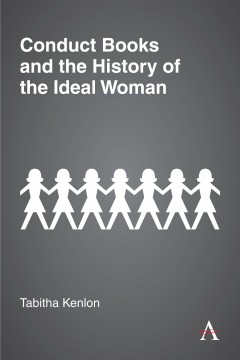
Conduct Books and the History of the Ideal Woman. By Tabitha Kenlon. London and New York: Anthem Press. 2020. pp. 218. £80 (hardback). ISBN: 9781785273148.

Tabitha Kenlon’s ambitious, witty and well-written monograph, Conduct Books and the History of the Ideal Woman, examines six centuries of conduct books and etiquette guides designed for women. A chronological exploration, each chapter homes in on the most popular conduct books published each century, though, as readers will discover, publishers repeatedly reprinted the same conduct books regardless of whether the advice was decades or even centuries old. As such, mothers, grandmothers, and even great-grandmothers could be reading (and expected to conform to) the same written advice over a fifty to one-hundred-year period. Kenlon states that while moral, religious, and social expectations adapted and changed over the centuries, advice given to women on how she should behave, how she should dress, and what was considered appropriate feminine behaviour remained disturbingly constant. Kenlon even makes parallels between advice as found in conduct books and modern tropes as seen and read in sitcoms, movies, plays, and novels as a deliberate reminder that female stereotypes have been deeply ingrained in Western European culture since the Middle Ages.

In the very first chapter, which examines two conduct manuals from the fourteenth century, Kenlon explains that women were expected to embody two opposing traits: a wife was to be submissive to her husband when he was present, but to also take over his duties in his absence, including managing a household, educating children, and giving orders. In Kenlon’s words, these texts ask that a woman be ‘both strong and submissive, intelligent and biddable, capable and helpless’ (p. 16).

By the sixteenth century, conduct manuals dwelled on a woman’s appearance, advising her to avoid ostentatious dress and gossip, less she be branded vain and outspoken. In the seventeenth century, women were encouraged to adopt self-reflection and to self-police their own behaviour. Silence and modesty were upheld as ideal feminine traits and those who failed to conform to the ideal were ‘scolded’ both legally and socially. 

Until the eighteenth century, many writers justified their advice by referring to the Bible, and biblical stories. From the eighteenth century onwards, however, Kenlon shows that writers moved away from primarily religious justifications and instead focussed more on general morality. For centuries, girls and young women were advised to fix their attention on preparing for marriage and securing an acceptable husband. Once married, keeping her husband happy and having children was expected to sustain a woman until her dying breath. Of course, happiness is somewhat of a moving target. In previous centuries, submission and silence were the acceptable behaviours women needed to adopt, but in the eighteenth century, a husband desired a wife he could have a conversation with on different topics of interest. Of course, she could not be too outspoken or too controversial, but she should be able to converse enough that the couple developed companionship. As such, girls needed to be educated so they could engage in polite conversation. Kenlon’s description of eighteenth-century female education reminded me of the fairy tale, Goldilocks and the Three Bears. If a young woman did not receive an ample education, she was too boring. If she appeared too educated, she may become too outspoken. Striking a balance was the key.

I found Kenlon’s final chapter on self-help guides and other advice writing for women in the twentieth and twenty-first centuries the most powerful but also the most disheartening. Many of these self-help guides repeat centuries-old advice: women should avoid being too loud, too brash, too outspoken, too sexy, too frigid, too put together, and too slovenly. Such advice is still very much part of present-day Western society.

Kenlon avoids discussing the LGBTQ+ perspective, even in her chapters on the twentieth and twenty-first centuries. I realise this may seem like a divergence for an already historically broad study, but it would be interesting to read Kenlon’s perspective on how advice writing speaks to the LGBTQ+ community. Indeed, a chapter that considers the LGBTQ+ perspective might make a nice addition if Kenlon were ever invited to produce a second edition of the book.

Overall, Conduct Books and the History of the Ideal Woman was a thoroughly enjoyable and thought-provoking read and a must for any student or scholar exploring gender history. This book is also available as an e-book and an audio book and, as such, is one of the first academic publications to take advantage of the audio book format. This is a much-needed development in academic book publishing, given that it makes books more accessible to a wider audience. I hope Kenlon’s determination to make the text available in multiple formats is adopted by others in future.

Dr Brianna Robertson-Kirkland

Royal Conservatoire of Scotland/University of Glasgow

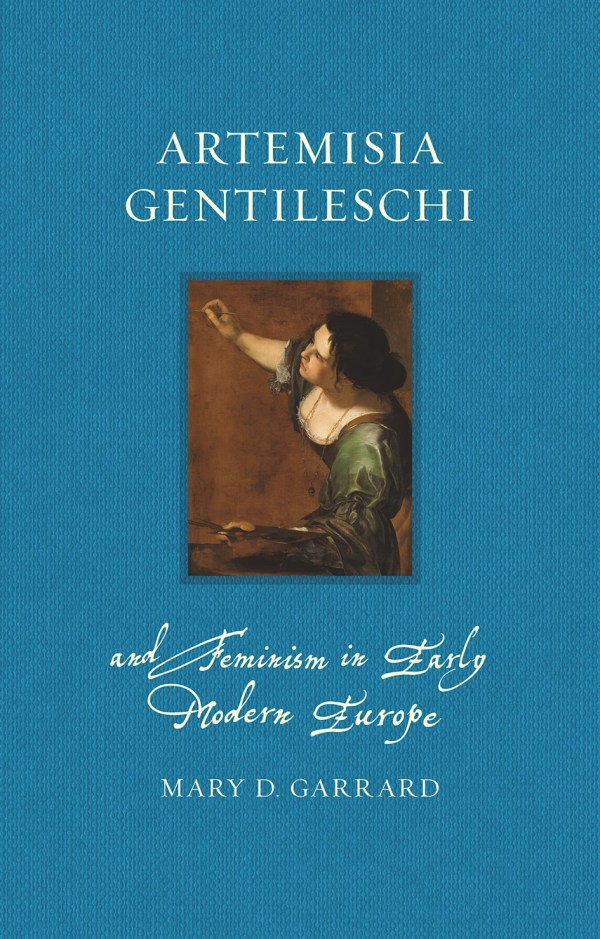
Artemisia Gentileschi and Feminism in Early Modern Europe by Mary D. Garrard. London: Reaktion Books. 2020. Pp. 320. £15.95 (hardback), ISBN 9781789142020.

Artemisia Gentileschi is an artist whose time has more than come. New acquisitions of her work continue to emerge with great fanfare into the gallery spaces of the world’s most august art institutions, the most recent being the Getty Museum’s acquisition of her Lucretia (1627). In 2020, London’s National Gallery built an important show around the acquisition of Gentileschi’s Self Portrait as Catherine of Alexandria (1615–17). Gentileschi’s paintings are reentering a world in which not nearly enough has changed for women since the time when she was painting her original visions. In a climate of feminist protest, in which women’s voices are rightly loud and insistent, Gentileschi’s work retains a force of resonance, a relevance, that renders it as compelling and urgent as ever it was.

Not least, the parallel between Gentileschi’s experience of taking a rape complaint to trial and the experiences of women today who enter a courtroom in the hope of obtaining justice is painfully obvious. It is by now impossible to approach Gentileschi’s oeuvre without knowledge of this crime against her, and of the horror of her trial. The MeToo movement has highlighted how common it is for women to experience the crime of sexual assault and how rarely such crimes are punished. Society continues to accommodate systemic violence against women and girls. The crime of rape, then, is apposite to women’s reception of her work at this contemporary moment. It cannot be evacuated from Gentileschi’s history as an artist without enacting a distortion.

Yet too often, Gentileschi’s works of art have been framed as materially indexical to her rape, as symptoms arising from a private trauma. At their worst, such framings figure Gentileschi’s artistic agency as secondary to that of her abusers, whose actions not only “author” her works but provide their natural interpretive framework. Clearly, there is a balance to be struck between telling the whole of the important story of this female artist and allowing the undoubted quality and originality of her work to stand on its own terms. This can only take place outside of the tired psychobiographical framework that serves only to suppress Gentileschi’s painterly originality within a reductive teleological narrative of victimhood.

Eminent scholar, founding member of the field of feminist art history and pioneer of Artemisia Gentileschi studies, Mary D. Garrard is perhaps uniquely equipped to plot a course through these rocky waters. If, as Garrard argues, the repetition and magnification of artists and their work is a central strategy for canon formation, then Garrard is rightly feted for having been responsible for some of the most effective and transformative repetition and magnification of women’s art in the discipline of art history. Her new book represents a new and full account of Artemisia Gentileschi’s life and work. There are seven chapters, organised around recurring and important themes in Gentileschi’s work. This structure facilitates an interrogation of the contemporary visual and literary context illuminating these pictures and their subjects – their Judiths, Susannas, Lucretias, musicians, saints and allegorical figurations.

Garrard’s strategy of situating Gentileschi’s paintings within the contemporary writing and patronage of women avoids the shallows, contextualising the paintings within a broad and lively field of female authorship, creativity and crucially, feminism avant-la-lettre. This does not render the emotion in Gentileschi’s paintings insubstantial, but rather rebalances it against a feminist intellectual ballast, recuperating this extraordinary artist’s richness and range. It reframes Gentileschi’s work as a deliberate intervention in public debate.

Garrard’s book establishes Gentileschi very firmly as a player within the artistic and intellectual networks spanning Europe’s great courts and cities. This is really fascinating stuff, which, moreover, serves to situate Gentileschi’s art within a transterritorial conversation, as visual currency circulating within an intellectual exchange, that both draws on and responds emphatically to contemporary discourses. Moreover, Garrard demonstrates how Gentileschi’s paintings intervened in the flourishing feminist debates then known as the querelles des femmes, resituating her oeuvre within a lively community of early modern women who thought, knew, spoke, wrote, performed and painted. Intriguingly, Garrard argues that Gentileschi’s painting visualises this community of women as one which crosses class lines. Garrard extends this idea beautifully throughout, showing how Gentileschi’s work too spans historical time, forming a rallying point for the entry of new members into this feminist community persevering into our own present day.

While acknowledging the dangers of the biographical fallacy, Garrard makes a good case for reading Gentileschi’s pictures with her biography in mind. She argues convincingly for the painter’s use of her own likeness in her paintings, a matter of some recent debate. Garrard’s love for her subject is apparent, certainly no bad thing, and her connoisseurial, but also heartfelt, engagement with her subject produces a rich intimacy in her treatment of the artist’s history. Garrard’s use of the painter’s first name throughout is indicative of this intimacy, which feels very genuine, even ethical, as the evident product of so many years of patient study (I don’t claim the same privilege for myself here, although Garrard’s point about the status of Gentileschi’s celebrity, her name brand recognition, is well made). Accordingly, Garrard works hard to centre the originality of Gentileschi’s style, of her painterly voice, and points to several areas fertile for new research, not least, early modern women’s feminist patronage of women artists.

This intimacy extends into Garrard’s formal discussions of Gentileschi’s paintings, their remarkably palpable women, livid with corporeality, their straining hands, solid forearms and locked elbows, their stolid calm in the face of blood and danger. Gentileschi’s painting of women psychologically and physically absorbed in the back-breaking work of political murder, their total commitment to assassination, retains the power to arrest the gaze. Both Gentileschi and Garrard debunk the cherished myth that women of early modern Europe were all as modest and submissive as the conduct literature of their own day and an art historiography rooted in the nineteenth century would have them be.

The book’s approach stands on it own in quite a busy field. Much is being published on Artemisia Gentileschi right now, but nothing quite like this. The book is written in an engaging and conversational style appealing to a generalist audience, but there is plenty here for specialists to value. As standard with Reaktion Books, there are lovely endpapers and a cloth cover, and many high quality colour reproductions. There is a useful bibliography. A small caveat: I would have liked more information in the image captions, where the dimensions of paintings and their locations are not usually listed; it’s important for us to know the scale at which Gentileschi worked.

Dr Sara Ayres

Affiliate Researcher

Centre for Privacy Studies at Copenhagen University

Early Modern Women: Lives, Texts, Objects. Edited by Martine van Elk. https://martinevanelk.wordpress.com/ Accessed 11 February 2020.

Martine van Elk’s Early Modern Women: Lives, Texts, Objects is a fascinating blog that offers interdisciplinary and comparative analysis of early modern women authors and artists. The blog emphasizes that authorship, writing, and artistic endeavors were often interlinked as different aspects of self-expression. It has a search function, as well as an archive drop down by month and a category filter with options such as courtesans, biography, marriage, and religious women. Van Elk also accepts guest posts, which seem to represent more than half of the entries.

Its greatest strength is that Van Elk highlights the lives and works of a transnational group of women, typically English and Dutch, which reflects her 2017 monograph on early modern women writers in England and the Dutch Republic. She argues that seventeenth-century women need to be examined from a cross-cultural perspective to more fully understand the collective experience of early modern women as a whole.

The blog is suitable for both a general and a scholarly audience, as she highlights little know women and topics that could be introductory to students and those interested in the early modern period, yet every entry contains a section with references for further reading and most entries engage with the historiography of the subject. The entries are typically about 2,000 words and take many different foci, from one single object, such as the handkerchief (18 September 2016), to a theme, such as mottos (18 October 2016) or engraving (22 February 2017), to case studies of a specific woman or group of women, such as Celia Fiennes (18 June 2018) and Susanna Teellinck (10 July 2019).

My favorite entry is on female engravers, one written by Van Elk herself. In this post, Van Elk explores to what extent copper engraving was a gendered activity, in that it would have taken place in a male-dominated print shop. She finds print-making to be a collaborative activity between a designer, engraver, and publisher. Seventeenth-century female engravers were rare, but when known, it seems like they also had male relatives who were engravers and they worked within a family business. Magdalena van de Passe (1600–1638) was daughter and sister to male Dutch engravers, and created prints by the time she was 14 years old. Her engravings often were derivative of other engravers, which Van Elk suggests could be understood as translations, in the way that translation of texts was a more suitable activity for women than was original writing.
Sadly, the most recent blog entry is from July 2019, and it was written by a guest. As many of Van Elk’s own posts stemmed from research for her 2017 book, hopefully new posts will arrive as she works on her own new research. She is also a main contributor to the Early Modern Female Book Ownership blog (previously reviewed here), where her newest entries can be found.

Valerie Schutte
Independent Scholar

Valerie Schutte has published widely on royal Tudor women, book dedications, and queenship. Her second monograph, Princesses Mary and Elizabeth Tudor and the Royal Gift Book Exchange, will be published with ARC Humanities Press in 2021.

Review of WSG Seminar: 20th February 2020

Despite the recent cold weather, the atmosphere at the Women’s Studies Group February seminar was as warm and welcoming as ever. We were treated to three very different, but equally fascinating papers, the individual chronologies of which stretched from the mid-seventeenth century to the 1820s and covered subjects as diverse as death and dying, legal and textual subjectivities and observations of nineteenth-century Chilean culture. At the heart of each, though, lay careful analyses of how women in the past constructed themselves and the world around them through the written word. The seminar was conducted via zoom and ably chaired by Trudie Messent.

First to speak was Dr Sarah Ailwood of the University of Wollongong. Sarah lectures in law and has previously authored a book on Jane Austen and masculinities. Her talk for the WSG, however, was entitled ‘In justice to myself’: Legal and Textual Subjectivities in Eighteenth-Century Women’s Memoirs’. Sarah’s central thesis was that by ‘harnessing emerging genres of popular, published life writing’, namely the print memoir, ‘women forged a new form of legal subjectivity.’ She began by outlining the theory developed by Costas Douzinas that those living within a modern liberal democracy will be typically both subjectus and subjectum in relation to the law: that is, simultaneously under the authority of the law and a participant in its creation. In contrast to this, women of the eighteenth century were only subjectus, bound to obey the law without participating in its creation. Sarah also cited the work of Peter Goodrich – that the power of the law rests in its cultural influence, as well as institutions and legal texts. From this theoretical starting point, Sarah explored the idea that the female-authored mid-eighteenth-century legal memoir allowed women to ‘create a new, resistant form of legal subjectivity’ and evidenced this through the work of two eighteenth-century women: Sarah Rippon and Anne Bailey. Rippon published The True State of the Case of Sarah Rippon in 1756 and used the subjectus persona of a poor, vulnerable widow to challenge both the legal system and the men who conspired against her, showcasing her knowledge of the system and her abilities as a litigant as she did so. Bailey constructed a similar subjectus persona through her 1771 text The Memoirs of Mrs Anne Bailey. In this she positioned herself as a victim caught in a cycle of debt, assault and exploitation even though the true purpose of the book was to publicly shame the men who had wronged her. Sarah argued that although both women ostensibly cast themselves as oppressed victims of the legal system, their memoirs speak to their authors’ resistance of that role and their determination to assert agency over the narrative of their life.

The second speaker was Daisy Winter, a PhD student at Northumbria University. She examined the writings of Lady Elizabeth Delaval within the context of seventeenth-century women’s devotional meditations. This was a time when women were expected to examine and reflect upon their behaviours, not least to use written texts to curate a ‘good death’ for themselves when the time came. However, Daisy argued that the motivations for Delaval’s musings were complex and may not have stemmed solely from a fear of judgement in death. Two meditations were considered in detail. The first, written in 1662, was entitled ‘Upon the Singing of a Lark’. In this, Delaval used the ‘Godly’ bird to rebuke her habit of sleeping in late. The second was a cluster of prayers written as a response to a severe bout of toothache. This was allegedly caused by an infestation of more than two hundred worms(!) and inspired Delaval to contemplate her own mortality. Intriguingly, this gory episode may not have had its roots in personal experience. Daisy cited the work of Sara Read, who suggests that Delaval may have appropriated it from a letter originating at the court of Charles 1. As Delaval’s family were Stuart sympathisers, the tale could also function as an indication of political allegiance. Further, Daisy argued that Delaval’s writings also link to wider cultural concerns surrounding disease, death and decay: this was a time when the plague swept across England and Delaval, like so many of her contemporaries, was personally affected by it. Indeed, toothache was also not the inconvenience it is today but a potentially deadly illness, with tooth problems regularly appearing as a cause of death in contemporary bills of mortality. Daisy also explored the temporal disruption between the composition of the texts and their later transcription by an older Delaval into the curated manuscript that exists today, possibly as a precursor for publication. Daisy concluded by saying that although Delaval’s approach to crafting a good death was complicated, it was likely she did experience a fear of her own mortality, when ‘her neglect of her “penitential hours” [came] to haunt her.’

The final paper was given by Valentina Aparicio, from the University of Edinburgh. Her paper was entitled ‘Maria Graham’s Journal of a residence in Chile (1824): a transnational community of women’ and forms part of a wider research project concerning Scottish women who travelled to South America at the end of the eighteenth and start of the nineteenth centuries. Her paper for the WSG focussed on Maria Graham, who was born Maria Dundas and later became known as Lady Callcott. Graham travelled to Chile with her husband. However, he died before they arrived and she landed in South America as a widow. Rather than return home, she elected to stay in the town of Valparaiso and, during the year she spent there, Graham mixed with people from a number of different backgrounds, nationalities and classes. Generally, Graham appeared to be more sympathetic towards Chilean women, rather than the expatriate British women she met, whom she likened to Mrs Elton from Austen’s Emma. Valentina examined two of Graham’s encounters in detail. The first featured an elderly neighbour with a large flower garden who used her horticultural knowledge for healing purposes – La Chabelita. The second was with the women of La Rinconada who made the pottery Graham used at home. One of the most striking observations Valentina made was that Graham did not appear to apply her own British, classist, world-view to the Chilean women she encountered. Rather, she was prepared to meet with them in their own contexts and engage with them upon their own terms. For example, when she visited the female potters she was eager to sit down with them and join them in their work. As was later discussed during the questions, this may well have reflected a (post)Romantic ideal of the labouring poor but equally may have been something she would not have felt able to do in her own country where strict notions of class propriety would apply.

It was a stimulating and enjoyable session that provided much food for thought and a number of lively discussions during the questions. Huge thanks to all our speakers and to everyone who made February’s session possible.

Review by Dr Alison Daniell