Summer Book Launch Event

Please join us for a special online Zoom event on Thursday 27 July, when we will be celebrating four new books by WSG members. Each author will be giving a short, informal talk about their work, followed by a Q&A session.

This event is free and open to everyone. Why not come along for some summer reading inspiration?

Reserve your place now on Eventbrite: Summer Book Launch Event – Online Tickets, Thu 27 Jul 2023 at 19:00 | Eventbrite

COME AND MEET OUR GUEST AUTHORS:

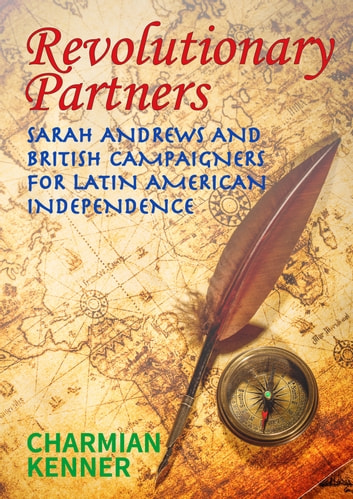
Charmian Kenner is a researcher and writer on women’s history, with a special interest in Latin America. She will discuss her free eBook Revolutionary Partners: Sarah Andrews and British campaigners for Latin American independence.

Revolutionary Partners asks: How did a young woman from Yorkshire meet a Venezuelan revolutionary in the year 1800? This is the story of Sarah Andrews and Francisco de Miranda, whose London home served as a British headquarters for the struggle to liberate Latin America from Spanish rule. Their sons Leander and Francisco took up the cause, joining many Britons who crossed the Atlantic to fight alongside Simón Bolívar or witness the dawn of a new society. All were partners in the revolution, but their contribution is little-known in Britain today, and Sarah Andrews has remained in the shadows.

Peter Radford is an Olympic medallist and world record holder, and Professor at the University of Glasgow and Brunel University. He will discuss his new monograph They Run with Surprising Swiftness: The Women Athletes of Early Modern Britain.

Sports have never been the sole preserve of men; women athletes have always been there. As this book shows, throughout the seventeenth and eighteenth centuries in Britain, women of all ages ran, fought, rode, played football, cricket, tennis, and other sports. They competed in tough, head-to-head events that required extraordinary endurance and skill. They Run with Surprising Swiftness recognizes these remarkable athletes and their achievements and aims to restore them to their rightful place in the long history of women in sport.

Sara Read is a Senior Lecturer in English at Loughborough University. Her research is in the cultural representations of women, bodies and health in the early modern era.

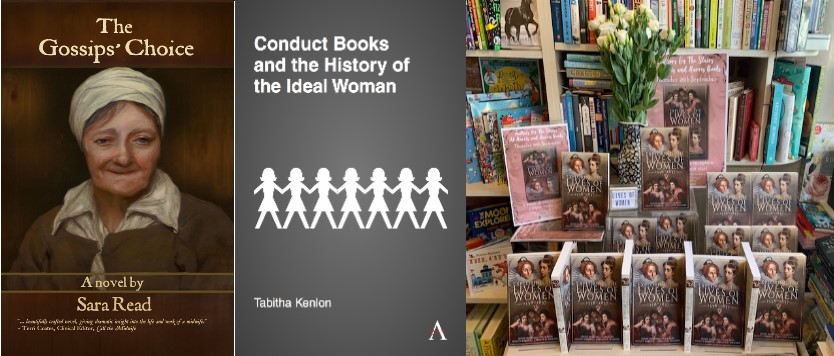
Her second novel The Midwife’s Truth is a sequel to The Gossips’ Choice and continues the story of midwife Lucie Smith. The birth stories, which form the backdrop to the novels, are inspired by the case notes of a Bristol midwife published in 1737. The books mix humour, compassion, and sorrow, and have been scrupulously researched.

Kim Sherwood is an award-winning author and creative writing lecturer at the University of Edinburgh. Her latest novel, A Wild and True Relation (2023), was described by Dame Hilary Mantel as “a rarity – a novel as remarkable for the vigour of the storytelling as for its literary ambition. Kim Sherwood is a writer of capacity, potency and sophistication.”

The novel opens during the Great Storm of 1703, as smuggler Tom West confronts his lover Grace for betraying him to the Revenue. Leaving Grace’s cottage in flames, he takes her orphaned daughter on board ship disguised as a boy to join his crew. But Molly, or Orlando as she must call herself, will grow up to outshine all the men of his company and seek revenge – and a legacy – all of her own.
How the WSG supported my research

A reflection by Charmian Kenner

I have just published my book Revolutionary Partners: Sarah Andrews and British Campaigners for Latin American Independence, and as an independent researcher I have found the Women’s Studies Group to be a vital source of support.

I discovered Sarah Andrews, the main subject of my research, in a painting at the Venezuelan Cultural Centre in London. The picture is a contemporary re-imagining of a scene taking place in the early 1800s. Simón Bolívar, the future Liberator of Venezuela, Bolivia, Colombia, Ecuador, Peru, and Panama from the Spanish, is being received by fellow revolutionary Francisco de Miranda at the latter’s London home. My attention was caught by the depiction of a young woman in the corner of the painting, reading a book with two young children next to her.

This young woman turned out to be Sarah Andrews, the British partner of Francisco de Miranda. Intrigued, I began to investigate her story and found that Sarah ran the household, which served as a London headquarters for supporters of Latin American independence. My starting point was a treasure trove of Sarah’s letters to Miranda while he was away fighting in Venezuela from 1805-1807 while she held the fort back home.

I had been a feminist historian 35 years earlier and many other things in between. Now retired, with no institutional affiliation, I needed a way to exchange ideas with like-minded people. The ideal would be a group centered on women’s history, so I searched online and was excited to find the WSG close to me in London, with seminars accessible to all.

Attending my first seminar, I was welcomed and immediately treated as an equal. Everyone I spoke to was interested in my topic and eager to help, suggesting references and recommending lines of enquiry. I was relieved to find that many in the group were independent researchers and had been able to publish their work.

The seminars were a constant source of wonder, revealing so much about centuries of women’s history. Ideas about my own research were stimulated as contributors interacted with the audience and drew out threads of commonality between the presentations. Questions and comments were always infused with a spirit of positivity. 

Some topics were of direct relevance to my research. A paper by Valentina Aparicio drew attention to Maria Graham’s journal of her stay in newly-independent Chile in 1822, which became an important source for my study. Together with documentation I had already gathered on Mary English and Kitty Cochrane, who accompanied British partners fighting alongside Simón Bolívar, this widened my focus beyond Sarah Andrews’ story. My book now includes the experiences of other British women supporters of Latin American independence.

Like everyone in the WSG, I was invited to submit a paper for the seminars. This was an opportunity to focus my thinking and develop my analysis. The response from the audience was heartening. They were keen to discover more about Sarah Andrews and her social and political context, encouraging me to continue with the research and to publish.

Feedback at the seminar provided me with key ideas from wide-ranging scholarly knowledge amongst the WSG. For example, several group members highlighted the significance of Sarah Andrews’ father being a shoemaker. This could explain how Sarah encountered revolutionary ideas in the Yorkshire market town where she was born since shoemakers’ shops were a well-documented centre for radical discussion.

Further help was forthcoming after the seminar. Louise Duckling sent suggestions for publishers, whilst Gillian Williamson shared information she found in Old Bailey records concerning a burglary at Sarah Andrews’ home in 1840. The court evidence revealed Sarah’s living arrangements and those sharing her house at this point, a period for which little other data was available.

This support validated my topic and spurred me on. I soon began to write, and at a recent WSG seminar I was happy to say that I was about to publish my book with free access online. WSG members received this announcement with the same pleasure and interest they had shown throughout my research journey. It felt like coming full circle. 

The final hurdle was to convert my Word document into the format required for an e-book. Images and captions kept repositioning themselves, and I couldn’t find anyone who knew how to solve the problem. Once again, WSG came to the rescue. I put out a call for help on the email list, and Louise Duckling quickly responded with suggestions for people experienced in formatting. The first person I contacted sent an immediate reply and not only sorted out my pictures but also improved the book’s overall design. I was ready to publish! Revolutionary Partners: Sarah Andrews and British Campaigners for Latin American Independence can be accessed free here.

Thank you, WSG!

Charmian Kenner

Charmian Kenner started life as a feminist historian in the 1970s. After many other incarnations she returned to her original occupation, having discovered the existence of Sarah Andrews, the partner of Venezuelan revolutionary Francisco de Miranda in London in the early 1800s. Sarah’s intriguing story was waiting to be told, and the result is the recently published book Revolutionary Partners: Sarah Andrews and British Campaigners for Latin American Independence, available free on Kobo.

Great explorations: a fictional midwife and fictions of ideal women by Louise Duckling

Following on from the arrival of WSG’s anniversary volume in paperback format, Louise Duckling introduces new books launched by two of its contributors: Sara Read and Tabitha Kenlon.

_________________________________________________________ 

On an autumnal evening last September, a small crowd gathered at Harris & Harris Books in Clare, Suffolk, for one of its popular Author on the Stairs events. Gillian Williamson and I had been invited to talk about WSG’s anniversary book, Exploring the Lives of Women, 1558–1837, which had recently been released in paperback format.

As one of the book’s editors, I wanted to convey the scope and originality of our authors’ contributions in my talk. Therefore, I chose to address the question: why had so many of the women featured in the book been left out of the historical record? I considered how women’s history was constructed (and gendered) in Victorian biographical dictionaries, using our ‘bookend’ queens Elizabeth I and Victoria as opening case studies, before introducing some of the women whose lives are explored in our anniversary volume.

This approach led neatly into Gillian’s talk about her chapter on the Gentleman’s Magazine. Gillian eloquently described how the magazine constructed ideas of gender in the eighteenth century, specifically referencing the emergence of obituaries in its pages. The obituaries were used by Gillian (with some brilliant flashes of humour) to show how femininity was framed in the Gentleman’s Magazine, while also providing glimpses of a less-neatly gendered society.

There was an opportunity for the audience to ask questions and handle some of our original source material – an 1866 edition of a female biographical dictionary and an early volume of the Gentleman’s Magazine­. We enjoyed lively discussion and hospitality, in the perfect setting of an independent bookshop. Reflecting on this evening, in such an intimate and sociable environment, it is clear we were very fortunate. For anyone releasing a book right now, any ‘in-person’ events or celebrations will have to wait. This is exactly the case for two of our book’s contributors, whose latest work has been published during the lockdown.

The first of these new books is by Dr Sara Read, who specialises in cultural and literary representations of women, reproduction and medicine in the early modern period. Sara played a pivotal role in the WSG book, serving as both co-editor and contributor, with her chapter focusing on The Countesse of Lincolnes Nurserie (1622) by Elizabeth Clinton and highlighting views around childcare and breastfeeding. In her latest work, Sara continues to draw upon this rich subject knowledge, while venturing into new territory: the genre of historical fiction.

In her excellent debut novel, The Gossips’ Choice, Sara has created an atmospheric world for her protagonist, the midwife Lucie Smith. The book has been described as a seventeenth-century version of ‘Call the Midwife’, as we follow Lucie’s cases during the plague year of 1665. It is a beautifully crafted and impeccably researched novel, drawing upon a wide range of historical sources. For example, some of the events in the book are inspired by A Complete Practice of Midwifery (1737), the memoir of midwife Sarah Stone. This approach provides authentic detail to a vividly imagined and compelling story.

The second new book release is by Dr Tabitha Kenlon. Tabitha’s research concentrates on eighteenth-century British novels, theatre, and conduct manuals. In Exploring the Lives of Women, Tabitha’s chapter provides a close reading of a single text, exposing the confused rhetoric in the cautionary pamphlet Advice to Unmarried Women (1791) written by an anonymous clergyman. Tabitha also contributed one of the two poems in our book, ‘Gretchen’s Answer’, which follows similar themes by exploring the consequences of “when society tells women how to think, how to act, how to feel” (Exploring, p. 98).

Tabitha’s first monograph continues this investigation. In Conduct Books and the History of the Ideal Woman, Tabitha shows how the longest-running war is the battle over how women should behave. This is an exceptional study, being the first of its kind to provide a trans-historical approach: expanding upon previous period-specific studies, Tabitha considers the persistence (or alteration) of the female ideal over six centuries. Tabitha’s brilliant close readings of a wide range of texts are superbly executed and entertaining, making the book highly accessible to the specialist or general reader. It is a powerful book, written with compassion and flashes of anger, in an elegant and witty prose.

Until we can all meet to celebrate, congratulations to Sara and Tabitha for producing two great books. Full reviews of both publications will appear on this website in the coming months: watch this space!

____________________________________________

The Gossips’ Choice by Sara Read is published by Wild Pressed Books for £12.

Conduct Books and the History of the Ideal Woman by Tabitha Kenlon is published by Anthem Press for £80 (hardback) and £25 (ebook). Please ask your institutional library to buy a copy. A 20% discount is available to WSG members.

Exploring the Lives of Women, 1558–1837, the anniversary book by WSG, is published by Pen & Sword Books for £19.99 (hardback), £12.99 (paperback) and £5.20 (ebook).

Please support your local independent booksellers if you can. Harris & Harris Books is currently offering a delivery service.

Upcoming Publication: Princesses Mary and Elizabeth Tudor and the Gift Book Exchange

This fall my second monograph, Princesses Mary and Elizabeth Tudor and the Gift Book Exchange, will be published with ARC Humanities Press in the “Gender and Power in the Premodern World” series. The monograph was meant to be published this summer, but due to the current pandemic, it is at the press awaiting copy-editing. The press plans to re-open in August. I actually presented portions of the first chapter at the Women’s Studies Group meeting on 30 January 2016.

This primary focus of this monograph are the four manuscript dedications that Princess Elizabeth wrote to Henry VIII, Katherine Parr, and her brother Edward, that accompanied her four pre-accession gift translations. It is clear that to fully understand these dedications, Elizabeth’s work cannot be separated out from that of her sister Mary. The dedications must be examined by themselves, as well as alongside the New Year’s gift-giving tradition in which she gave them both her and Mary’s youthful translations, and how her dedications and translations came to be represented after she completed them. Comparing dedications, then, is another way to compare their pre-accession experiences of Mary and Elizabeth, a time period for both women which is largely ignored for their later years as queen.

Importantly, rather than treating the pre-accession translations of Elizabeth and Mary as separate and not equal, this study examines them together, as Mary and Elizabeth undertook some of their translation at the exact same time. I show that Mary’s translations need to be considered as important as Elizabeth’s translations, and how in fact, Elizabeth’s translations were of little importance at the time she created them.

This study re-evaluates important literary achievements made by both princesses before they became queens. The first chapter is an analysis of the book dedications that were given to Princesses Elizabeth and Mary to show how Elizabeth’s dedications were part of a genre that used supplication and modesty to make a personal connection with the recipient of the dedication. The second chapter concentrates on Mary’s translations. Unlike those by Elizabeth, neither had an accompanying dedication and she did not give either as New Year’s gifts. The third chapter is the crux of my interpretation of Elizabeth, offering an examination of her four dedications alongside an explanation of the texts that they accompany. I suggest that Elizabeth had to give Henry, Edward, and Katherine Parr translated texts with dedications to prove her loyalty and show her desire not to be demoted from the royal family again. To greater emphasize the singularity and importance of Elizabeth’s dedications, the fourth chapter examines extant New Year’s gift-exchange information for the years in which Elizabeth gave her translated manuscripts to her relatives. The final chapter concentrates on the printed publications of Elizabeth’s translation of Marguerite of Navarre’s Le Miroir de l’áme pécheresse.

Valerie Schutte

Valerie Schutte is author of Mary I and the Art of Book Dedications: Royal Women, Power, and Persuasion (2015). She has edited or co-edited four collections on topics such as Mary I, Shakespeare, and queenship. Her personal website is https://tudorqueenship.com/.

A Celebration of Mary Wollstonecraft

Many thanks to WSG member Emma Clery who organised this fascinating day and invited our group; the following report is by Charmian Kenner, one of a number of WSG members who attended.

A celebration of Mary Wollstonecraft (1759-1797) held on 27 April 2019, the 260th anniversary of her birth, invited us to consider her ‘in the round’ by discussing her life, work and legacy through research in history, literary criticism, politics and philosophy; and by experiencing representations of Wollstonecraft through art, film and drama. We met in the atmospheric Old St Pancras Church in London, with participants sitting on either side of the aisle that Wollstonecraft walked down to marry William Godwin, and with a lunchtime visit to the original site of her grave in the churchyard. Participants came from around the UK and as far afield as Japan and the US.

A theme throughout the event was how Wollstonecraft’s thinking prefigured and fed into ideas and struggles of today. Hannah Dawson focused on Wollstonecraft’s central concern with freedom, or rather women’s lack of it, since economic dependence on men meant vulnerability and loss of self, leaving women obsessed with beauty as their only asset to hold the male gaze – a condition from which we have yet to entirely escape. Wollstonecraft’s argument that women were playing a part assigned to them by society, rather than this being their authentic nature, links directly with today’s views on gender as a construct we can change. Catherine Packham pointed to connections between Wollstonecraft’s critique of modernity, in particular the late eighteenth-century social and economic order, and analyses by current theorists such as Thomas Piketty. Laura Kirkley highlighted Wollstonecraft’s cosmopolitan outlook, seeing humans as globally interdependent with shared moral obligations, exemplified in her support for Native Americans and her criticisms of empire.

A rousing discussion of ‘What would Mary do?’ with Shrabani Basu, Charlotte Gordon and Bee Rowlatt, imagined multiple possibilities for a contemporary Wollstonecraft, from having a strong social media presence to speaking out on modern slavery and refugee issues, to being a campaigning member of the academy. The latter position was impossible to achieve in her lifetime, and Andrew McInnes reminded us of the tensions in being a ‘philosophesse’ in the late eighteenth century, when women thinkers were both celebrated and stigmatised, though Wollstonecraft tried to take a gender neutral position and establish herself as a philosopher first and foremost. Isabelle Bour pointed out that Wollstonecraft’s reception was different in France at the time, where her life was not seen as scandalous, and she was appreciated as an intellectual in the mode of Germaine de Staël. Translations of Wollstonecraft’s work were popular with moderate Girondin revolutionaries and her ideas became part of progressive French thought.

Janet Todd and Lyndall Gordon, whose studies led the way in research on Wollstonecraft, both contributed to the day. Lyndall Gordon, looking for missing pieces in the jigsaw of Wollstonecraft’s life, shared her latest investigations into Mary’s stay in Hamburg, where she seems to have discovered a fraud that shook her faith in lover Gilbert Imlay. Janet Todd relished the burgeoning interest in Wollstonecraft studies, compared to the 1960s when her proposed PhD on Wollstonecraft was deemed ‘too obscure’. She also warned us against making Wollstonecraft, who characteristically was ‘always prickly’ and swam against the mainstream, into a ‘national treasure’. Speakers and audience at the conference agreed that Wollstonecraft sustains us today with her resilience in the face of life’s challenges, both personal and political.

A number of organisations carry on Wollstonecraft’s legacy. The Mary Wollstonecraft Fellowship celebrates her writing with talks and events; the Mary Wollstonecraft Philosophical Society disseminates her work and that of other women philosophers of the period, including through university curricula; the Wollstonecraft Society promotes education in schools; Mary on the Green fundraises to place a statue of Wollstonecraft by Maggie Hambling on Newington Green; and New Unity has a Heritage Lottery funded project at Newington Green Meeting House, ‘Uncovering the Dissenters’ Legacy at the Birthplace of Feminism’.