WSG Member Organizes Hybrid Conference: “Collective Biographies Across Disciplines and Ages”

WSG Member Organizes July 1st, 2025 Hybrid Conference: “Collective Biographies Across Disciplines and Ages”

The Women’s Studies Group 1558–1837 is pleased to announce an upcoming one-day hybrid conference, “Collective Biographies Across Disciplines and Ages,” taking place on 1 July 2025, in person at the Università degli Studi di Cagliari (Faculty of Humanities, Via San Giorgio 12, Aula 6 and Aula Magna) and online via Microsoft Teams. This international event is organized by WSG member Dr. Maria Grazia Dongu, and it brings together an international group of scholars across disciplines.

About the Conference

This conference explores the literary, historical, and artistic dimensions of collective biography, narratives that center shared experience, social connection, and cultural memory. Presenters will consider how collective biographies function as both historical sources and narrative strategies, across genres as varied as Shakespearean drama, Quaker life writing, detective fiction, and eighteenth-century art. Drawing on approaches from literary studies, historiography, and biography theory, the conference reflects on how individual and group identities are shaped through storytelling.

The Women’s Studies Group 1558–1837 is proud to support this event, which features presentations by a number of our members and provides the opportunity to strengthen scholarly networks internationally and across disciplines.

Conference Schedule – 1 July 2025

9:30 am – Brief Introduction: On Collective Biographies by Maria Grazia Dongu (Università di Cagliari)

10:00 am – Competing to Tell Lives in Shakespeare’s Richard III by Maria Grazia Dongu (Università di Cagliari)

10:30 am – A Case Study of Early Quaker Biographies by Judith Roads (Independent Scholar)

11:00 am – Indizi tra le righe: l’Irlanda che cambia nelle detective story (Clues Between the Lines: Ireland’s Changing Face in Detective Stories) Luciano Cau (Università di Cagliari)

11:30 amBreak

12:00 pm – Anne of Cleves in Collective Biographies by Valerie Schutte (Independent Scholar)

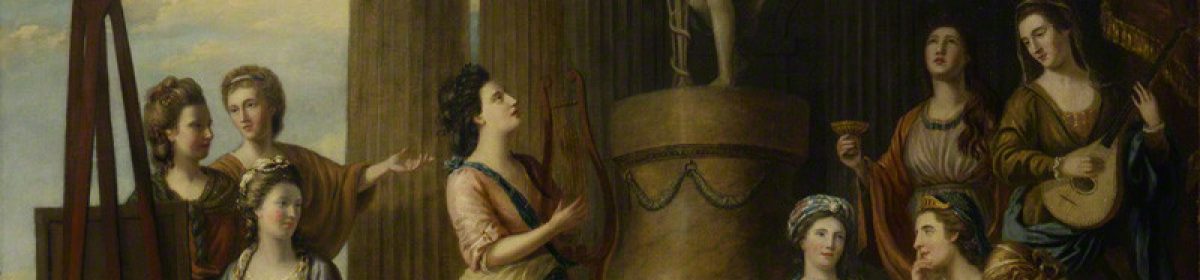
12:30 pm – The Collective Biographies of 18th-Century Art: Harnessing the Power of Storytelling to Re-Read Martin’s “Lady Elizabeth Murray and Dido Belle” (1779) by Karen Lipsedge (Kingston University)

1:00 pm – Vita collettiva e autorialità: La famiglia Manzoni (Collective Life and Authorship: The Manzoni Family) by Fabio Vasarri (University of Florence)

13:30 pm – Catherine of Aragon, Cardinal Wolsey and Henry VIII through Chronicles and Shakespeare’s plays by Valeria Steri, Alessandra Carta, and Elena Melis (Università di Cagliari)

The day will conclude with a roundtable discussion among speakers and attendees.

Hybrid Attendance – All Are Welcome

This is a hybrid event, and attendees are warmly invited to join either in person or virtually.
To receive the Microsoft Teams link for online attendance, please contact Dr. Maria Grazia Dongu at dongu@unica.it.

The Women’s Studies Group 1558–1837 is proud to support Dr. Maria Grazia Dongu in organizing this exciting interdisciplinary event. We celebrate her leadership and the vibrant international scholarly exchange this conference promises to foster across disciplinary boundaries.

BSECS 2020: Heroines, Hoops, Heels, Witches & Ghosts: Femininity & the Natural, Unnatural & Supernatural. Women’s Studies Group 1558-1837 Panel

This year at the British Society for Eighteenth-Century Studies annual conference, the Women’s Studies Group were represented by three fantastic panellists: Tabitha Kenlon, Alison Daniell and Carolyn D. Williams. The session was chaired by Yvonne Noble. This panel was well attended and allowed for a lively discussion, closely linked to the papers. Below is the panel proposal, which provides a little more detail with regards to the overall idea for the panel and the individual papers.

This panel considers different ways in which ideas about the natural, unnatural and supernatural on the one hand, and the characteristics and capabilities of women on the other, can become ambiguous and complicated when brought into contact with each other.

Dr Tabitha Kenlon, in ‘A Handbook for Heroines: Acting the Part in Northanger Abbey’, invokes performance theory to argue that Jane Austen’s heroine, by refusing to adhere to all the rules presented to her by conduct manuals, draws attention to the performative elements of ‘nature’. Although conduct manuals assured readers that women were naturally disposed to certain activities and temperaments, writers nonetheless felt obliged to remind women to behave in ways that, if truly natural, should have required little effort. In this respect they were not so different from the Gothic novels that Catherine found so delightful, and whose popularity gave concern to anxious moralists. She must adjust her own actions to fit the story she is really in, while learning to distinguish between malicious deception and required social performance.

Alison Daniell’s ‘Of False Hair, Bolstered Hips and Witchcraft: The Regulation of Women’s Bodies and an Act of Parliament that Never Was’ discusses the Matrimonial Act 1770 (or, as it is more commonly known, The Hoops and Heels Act 1770), which ostensibly permitted husbands to divorce wives who had seduced and betrayed them into matrimony by using perfume, make-up, heels and other commonplace beauty aids; the wives were also to ‘incur the penalty of the laws now in force against witchcraft, sorcery, and suchlike misdemeanours’. It is a fake: it was never passed, or even debated, by Parliament and its provisions do not exist anywhere in law. Yet it is referenced in a number of academic publications and has been quoted, re-quoted and published in newspapers across the globe for over 175 years. This paper analyses possible legal sources for its provisions and discuss some of the cultural factors associating women’s power over men with witchcraft and a mutable female body. It will also suggest a more prosaic origin for the myth than the emotive combination of witchcraft and divorce we know today.

In ‘”Overcome by the horror of the piece”: Women and Ghosts on the Eighteenth-Century Stage’, Carolyn D. Williams considers some cultural, gendered and theatrical implications of Sarah Siddons’ belief that in Macbeth, Act III, scene iv, when Banquo’s ghost twice appears to Macbeth at a banquet, Lady Macbeth sees it too. Critical opinion has generally opposed her view of this episode, despite contemporary evidence that she made it work on stage. The presentation will conclude with some brief workshopping of a few key moments in the banquet scene, and of one line in Act V, scene i, the sleepwalking scene, once offered as self-evident proof that Siddons’ views were untenable, but which could take on additional, and powerful, resonance if these views are respected.