Elisabetta Sirani. By Adelina Modesti. London: Lund Humphries. 2023. Pp. 144 + 65 colour and 12 black and white illustrations. £35.00 (hardcover), ISBN 9781848224971. By Anna Pratley

This is the first of three reviews we will be publishing on the Illuminating Women Artists series, edited by Andrea Pearson and Marilyn Dunn, and published by Lund Humphries. The beautifully illustrated volumes in this series explore the lives and works of women artists, many of whom have been previously overlooked in the history of art. To begin, Anna Pratley discusses the volume on Elisabetta Sirani.

 *******

Built upon decades of dedicated research and an informed analysis of recent developments in scholarly thought, Adelina Modesti’s contribution to the Illuminating Women Artists series is essential reading for any student or enthusiast seeking an overview of the remarkable life and work of Elisabetta Sirani (1638–1665). By seamlessly weaving into the text faithful English translations of seventeenth-century Italian sources and non-judgemental explanations of art historical terminology, Modesti has forged a highly accessible narrative which is gripping, informative, and truly illuminating.

Modesti begins by providing an impressively concise overview of the contemporary issues which shaped Sirani as an artist, including those relating to her family, education, and influential sociopolitical debates associated with the Counter-Reformation. Alongside addressing topics familiar to the scholar of early modern women, such as the Querelle des Femmes (‘Woman Question’), it also considers those factors unique to Bologna which allowed women artists to flourish. The most significant of these is the “matrilineal pedagogic model”, a term coined by Modesti to acknowledge Bologna’s encouragement of women teaching other women (p.19). Readers who wish to delve further into recent archival discoveries relating to the success of Bolognese women artists are appropriately signposted to Babette Bohn’s Women Artists, their Patrons, and their Publics in Early Modern Bologna (Penn State University Press, 2021).

Chapter 2 evaluates Sirani’s training, artistic influences, technique, and style. In accordance with Linda Nochlin’s 1971 argument – that the disadvantages faced by women artists should not be employed as an intellectual position – Modesti emphasises the wealth of resources available to Sirani: plaster casts, sculptures, paintings, drawings, palace collections, churches, books, and religious festivities to name a few. Relevant archival materials support investigations into Sirani’s colleagues and apprentices, particularly Lorenzo Tinti (1626–1672), whose artistic relationship with the maestra has not yet received its due focus and would be worth further investigation. A short paragraph on Sirani’s little-known caricatures (p.50) presents a similarly tantalising opportunity for further research.

However, it is Modesti’s ability to paint a picture of Sirani’s genuine passion for her profession which remains the most illuminating aspect of this chapter, and indeed of the whole monograph. Of note are personal anecdotes from Sirani’s biographer and friend, Carlo Cesare Malvasia (1616–1693); one of these (p.41) recalls the artist’s repeated visits to a jewellery shop to view a much-loved painting, and her subsequent avoidance of returning out of embarrassment for spending so much time admiring it. Descriptions of Sirani’s technique are just as evocative, for instance, how her experiments with wet-on-wet paint application created a “shimmering quality to the surface of her paintings” (p.32).  Modesti’s writing brings Sirani to life in this chapter, allowing her youth, character, and talent to radiate from the glossy printed reproductions of her works. It is a must-read example of how to introduce a non-specialist audience to the world of art history.

A natural progression from the previous chapter, Chapter 3 covers the themes, subjects, and iconography of Sirani’s works. An examination of Sirani’s religious paintings considers their propensity for use in spiritual reflection, a significant role for artworks in the Counter-Reformation. The suggestion that Sirani’s depictions of Saint Anne gained popularity as exemplars of the aforementioned matrilineal pedagogic model is insightful and well-supported. Perhaps the most successful use of images appears in this section (pp.64–65). The rich red, white, and blue drapery of Sirani’s Virgin and Child (1663) is complemented by that of the adjacent Salvator Mundi (c.1655–8), while a self-portrait sketch apparently used as the basis of the latter work is displayed alongside it, allowing direct comparison.

However, Modesti’s examination of Sirani’s historical heroines is tenuous in places. Her argument that the formal composition of Timoclea may have been inspired by Artemisia Gentileschi’s Judith Beheading Holofernes (c.1620) (p.78) is a refreshing addition to the discourse; yet one cannot help feeling that this was an attempt to shoehorn in a connection between two women artists where there is no extant evidence that they had any knowledge of each other’s works. More perplexing is the lack of any reference to Amy Golhany’s 2011 article – which recognises the irrefutable similarity between Sirani’s Timoclea and an earlier eponymous print by Matthaüs Merian (1593–1650) – despite its inclusion in Modesti’s select bibliography.

It is also worth noting that the section on anti-heroines assumes the authenticity of an Iole (1662), a Cleopatra (c.1664), and a Circe (c.1664), all of which have contested authorship. Modesti is known for taking an enthusiastic approach to attributions, sparking much debate with the other primary scholar on Sirani, Babette Bohn. The reader should remain conscious of this and take a critical approach to new attributions in this work. Chapter 1, for instance, attributes a painting traditionally thought to be by Sirani to her sister Barbara. The curious reader will discover that the ‘reference’ supporting this claim is a link to a Facebook image of the work with no caption, posted to the page of the Galleria Umbria Perugia in 2022. There are, I am sure, reasons behind this assertion, but without knowing them it is difficult to judge its validity.

Chapter 4 offers an extensive evidence-based analysis of the artist’s patronage networks and modes of self-representation. Of note are some previously unrecognised connections with the Medici, including commissions from a Medici courtier, the chief administrative officer of the Medici military company, and a Bolognese statesman in the service of a Medici cardinal (p.99). Modesti’s chronological analysis of Sirani’s notebook is a particularly helpful guide to the evolution of the artist’s popularity over time. Towards the end of this chapter, the inclusion of visual reproductions of contemporary laude (figs. 69 and 70, p.110) adds valuable weight to the running emphasis on the artist’s impressive reputation.

Modesti’s concluding chapter is fittingly dedicated to documenting the posthumous memory of Sirani. This section provides a stark reminder of the tragedy of Sirani’s untimely death, supported by detailed descriptions of her funeral proceedings and three moving contemporary letters mourning her loss. A brief but comprehensive analysis of Sirani’s critical reception through time follows. This section subtly emphasises the important role played by women in preserving Sirani’s memory across the centuries, from Carolina Bonafede’s 1856 biographic play to the use of the Timoclea in the #MeToo movement. The commemorative plaque now adorning Sirani’s home could potentially have provided further support for Modesti’s comments on the early twentieth-century dismissal of Sirani’s works as imitations of her predecessor, Guido Reni (1575–1642). However, this omission does not detract from the success of this chapter.

Just as Sirani produced an astonishing 200+ paintings in just over a decade of work, Modesti’s book encompasses a vast amount of research in just 144 pages. This need for concision results in a few minor lapses in academic rigour, mostly in the justifications for attributions. Nonetheless, this book provides a much-needed point of entry into the world of Elisabetta Sirani, reminding us that many historical women artists are still awaiting equal representation outside of the boundaries of academia.

Anna Pratley recently graduated from the Warburg Institute with an MA (Dist.) in Art History, Curatorship and Renaissance Culture. Her research interests include amateur women miniaturists working in seventeenth-century England, the domestic lives of the “middle class” in the long eighteenth century, and the application of feminist surveillance theory to women’s self-portraiture.

WSG ‘Her Stories: Upcoming sessions in 2025

Reading for 3rd WSG reading group session on 5th June, 7-8pm 2025 (GMT)

‘The History of Betsy Thoughtless’ Eliza Haywood (Yvonne’s suggestion).

Please see the WSG May Newsletter for the Zoom link.

Reading for 4th WSG reading group session on 28th October, 7-8pm 2025 (GMT)

Frances Brooks’ ‘History of Montague’ (Jasmine’s suggestion).

Please see the WSG May Newsletter for the Zoom link.

How each reading group will be organised:

At the start of each reading group session, the member who selected the text will give a very brief introduction to it and why they selected it.

We will then each share the one thing we want to discuss about the text, whether that is the characters, the style, the reader or one word or phrase. It is up to you!

Review: Special seminar with Merry Wiesner-Hanks, February 13, 2025, Review by Louise Duckling

We were delighted to welcome distinguished Professor Emerita Merry Wiesner-Hanks as a special guest to discuss her new book Women and the Reformations: A Global History.

O’Rourke, Simon; Susanna Wesley (1669-1742), Mother of Methodism; ; http://www.artuk.org/artworks/susanna-wesley-16691742-mother-of-methodism-323273

The seminar began with a 30-minute presentation outlining the book’s structure and introducing us to some of the incredible women within its pages. Professor Wiesner-Hanks explained how the idea for the book emerged in response to the Luther 500 celebrations in 2017. These celebrations did not truly reflect the new scholarship on women that had emerged in Reformation Studies in the previous decades. Women and the Reformations aims tofill that gap for a general audience.

Our attention was drawn to the plural in the title: this is a work about Reformations, Catholic and Protestant, with women from both sides appearing in every chapter. The motivation is to draw parallels and comparisons, rather than organise the material in a ‘predictable’ way. The text is therefore structured by the type of women that are featured: monarchs, mothers, migrants, martyrs, mystics, and missionaries.

The historical, geographical, and thematic scope of the book is impressive. The content will not be covered in detail here, as a full book review is planned for a later post. In the meantime, we will share some fascinating insights from the seminar.

Most strikingly, it is worth noting there are 258 named individuals in the book. Some of them are very young – and they were taken very seriously in their time – and some are very old. Some are well-known, such as Teresa of Avila, and others are recently discovered.

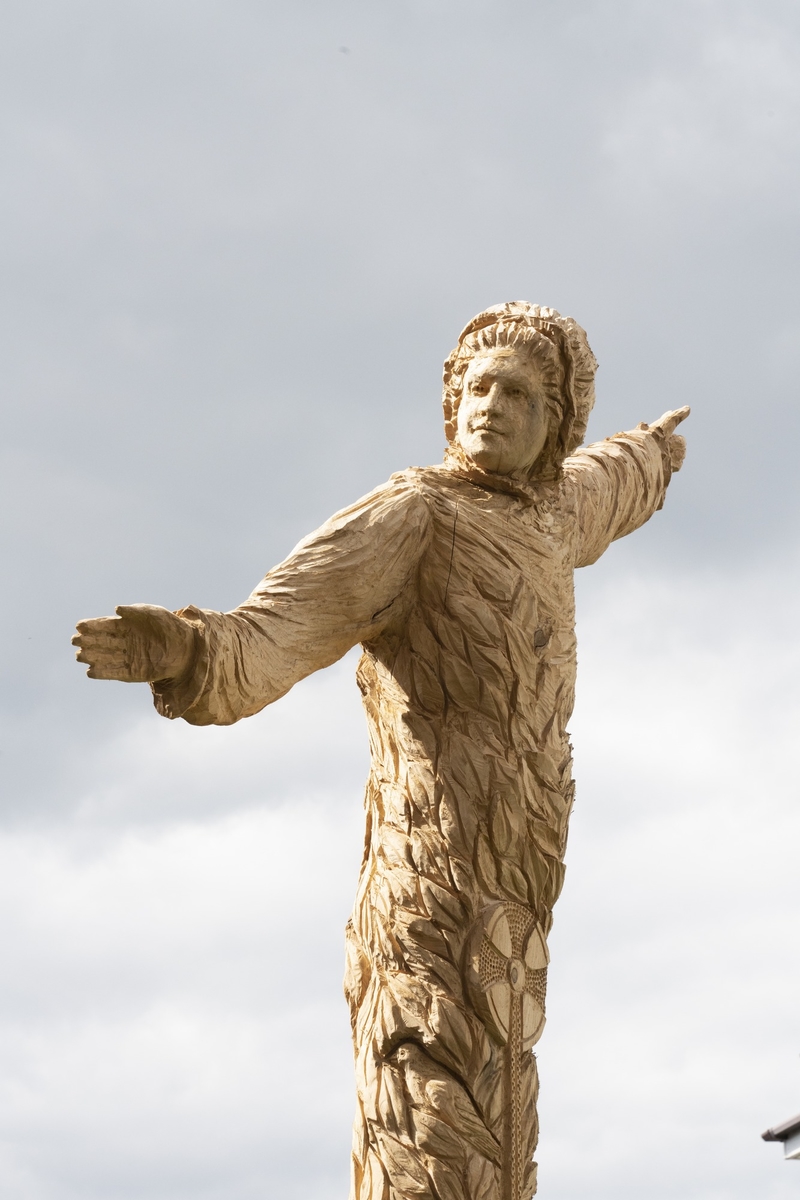
Professor Wiesner-Hanks’ presentation gave a very clear sense of how ordinary people might encounter these women today, through memorials, statues, and material culture. A striking example is the sculpture of Susanna Wesley (1669–1742) by Simon O’Rourke, carved from the remains of a Cypress tree in East Finchley Methodist Churchyard.  

Another significant feature of the book is the fact it is a global history. A woman from outside Europe is featured in each chapter. For example, among others, we heard about the African visionary, Kimpa Vita; the Ethiopian abbess and saint, Walatta Petros; the Peruvian mystic, Rose of Lima; and Japanese and Korean martyrs.

In the questions, we enjoyed a lively discussion on women’s agency, early modern patriarchy, and Allyson M. Poska’s case for “agentic gender norms”. Women were right at the centre of every different exchange at this time, actively breaking these gender norms. There were so many female networks in this period, and a surprising number of women rulers who exercised power: this is essentially a book about women’s agency.

Another important strand to the conversation was around writing craft: how can we communicate ideas in an accessible way for a wider audience? Professor Wiesner-Hanks shared some tips, ideas, and her enthusiasm for writing a trade book, covering elements from writing style to selection of material. This was a practical and inspirational way to close the session. We hope to hold similar events in the future.

Our thanks to Merry Wiesner-Hanks and the team at Yale University Press, as well as our chair Valerie Schutte, for making this seminar possible.

Captions:

Susanna Wesley (1669–1742), Mother of Methodism. By Simon O’Rourke.

© the artist. Image credit: Nick Bowman / Art UK.

Annual workshop

Details for our annual workshop have now been announced. They are as follows.

Women’s Studies Group Annual WorkshopSunday 18th May 2025, at the Foundling Museum, London, WC1N 1AZ Registration 11 a.m; event ends at 4.30 p.m.

Meeting and Greeting in (im)Polite Society Keynote by Professor Penelope Corfield: ‘Female Salutations in Britain in the Long Eighteenth Century: Deep Curtseying, Bobbing, Kissing … and Shaking Hands’.

Keynote Abstract: Greetings are dynamic. They can be given politely or rudely. They also change significantly over time. So women, when giving or receiving salutations, have to stay alert and make choices – as Penelope Corfield explains in her keynote lecture, focusing upon Britain in the long eighteenth century.

Further details, including the call for 5-minute presentations and registration details can be found here.

2025 – 2026 Call for papers from the Women’s Studies Group: 1558-1837 (London) 

The Women’s Studies Group 1558-1837 is a small, informal, multidisciplinary group formed to promote women’s studies in the early modern period and the long eighteenth century. Established in the 1980s, the group has enabled those interested in women’s and gender studies to keep in touch, hear about one another’s research, meetings and publications, and meet regularly to discuss relevant topics. We organize regular meetings and an annual workshop (see membership application form) where members can meet and discuss women’s studies topics. This season we shall also be hosting two book launches for publications by our members. We can offer advice and opportunities to engage in activities that increase opportunities for publication or enhance professional profiles in other ways. The WSG is open to men, women, and non-binary people, students, faculty, and independent scholars, all of whom are invited to join the group and give papers.

The group now has two kinds of meetings for seminars.

In-person seminar meetings. These will take place at the Foundling Museum, 40 Brunswick Square, WC1N 1AZ, UK, on Saturday afternoons. We will be allowed into the room at 1.00 pm., to give us time to sort out paperwork and technology, but sessions will run from 1.30 – 4.30 pm. So please arrive a little early if you can.

ZOOM seminar meetings. These will take place on Thursday evenings and will be hosted by a member of the WSG committee. They will run from 19:00 – 20:30 GMT , with the waiting room opening at 18.45 GMT.

Topics can be related to any aspect of women’s studies: not only women writers, but any activity of a woman or women in the period of our concern, or anything that affects or is affected by women in this period, such as the law, religion, etc. Male writers writing about women or male historical figures relevant to the condition of women in this period are also a potential topic. Papers tackling aspects of women’s studies within or alongside the wider histories of gender and sexuality are particularly welcome; so are topics from the early part of our period. We would also welcome how-to presentations for discussion: examples of suitable topics would include, but are not limited to, grant applications, setting up research networks, becoming a curator, co-authorship, using specialised data, and writing about images. Papers should be 20-25 minutes.

Dates of seminar meetings: 
Saturday 4 October 2025In-person, Foundling Museum London 13:00 for 13:30 – 16:30, British Summer Time (GMT +1)
Thursday 6 November 2025ZOOM 19:00 – 20:30 (GMT)
Saturday 6 December 2025In-person, Foundling Museum, London 13:00 for 13:30 – 16:30 (GMT)
Thursday 15 January 2026ZOOM 19:00 – 20:30 (GMT)
Thursday 12 March 2026  ZOOM 19:00 – 20:30 (GMT)
Saturday 7 February  2026  In-person, Foundling Museum, London 13:00 for 13:30 – 16:30 (GMT) 

Find out more about us on https://womensstudiesgroup.org

Please reply to 2wsgevents@gmail.com with expressions of interest and draft titles, listing all the seminar sessions when you are available to present your paper by 31 April 2025.  

Final titles and abstracts will be expected to follow by the end of May 2025.