The Women’s Studies Group 1558–1837 is pleased to announce the speakers for their seminar series 2025–2026

The Women’s Studies Group 1558–1837 is pleased to announce the speakers for their seminar series 2025–26.

The group has two kinds of meeting for seminars.

In-person seminar meetings. These take place at the Foundling Museum, 40 Brunswick Square, WC1N 1AZ, UK, on Saturday afternoons. We will be allowed into the room at 1.00 pm, to give us time to sort out paperwork and technology, but sessions will run from 1.30 pm – 4.30 pm. Please arrive between 1.00 pm – 1.30 pm. The Foundling is a wheelchair accessible venue, and directions for getting to the Museum can be found here, including for those who are partially sighted. Seminars are free to WSG members. Non-members are welcome and are kindly requested to pay the Museum entrance fee and make a donation of £2 for refreshments. Those attending the seminars are welcome to look round the museum before or after.

ZOOM seminar meetings. These take place on Thursday evenings and will be hosted by a member of the WSG committee. They run from 7.00 pm – 8.30 pm, with the waiting room opening at 6.45 pm. Please be aware, you must be a member of the WSG to gain access to the Zoom sessions. The links are distributed through our WSG mailing list 24-hours before the event.

Women’s Studies Group 1558–1837, Seminar Schedule 2025–2026

Saturday 4 October 2025            

In-person, Foundling Museum London 13:00 for 13:30 – 16:30, British Summer Time (GMT +1)

Julia Hamilton:  Anna of Denmark and the origins of the Stuart sequence.

Pilar Botías Dominguez: Cathartic privacy: war, exile and melancholia in Margaret Cavendish’s Sociable Letters.

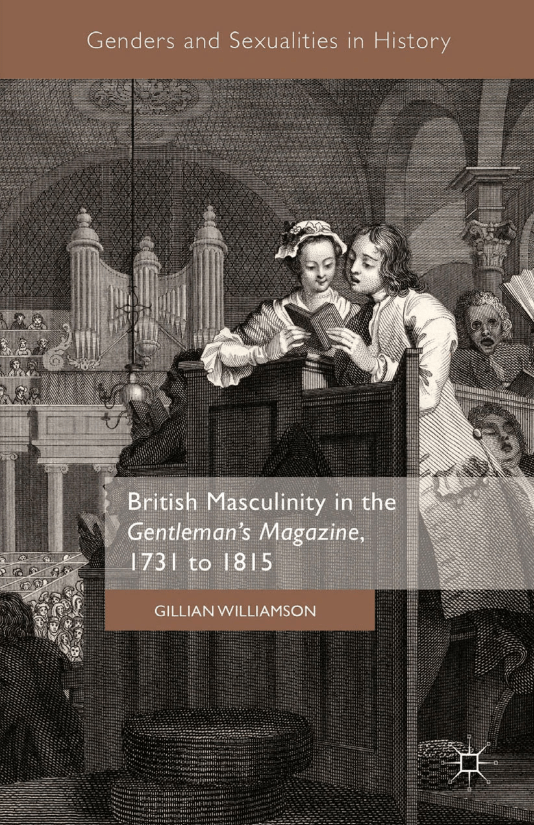
Gillian Williamson: Elizabeth Inchbald: a life in lodgings.

***

Thursday 6 November 2025           

ZOOM 19:00 – 20:30 (GMT) 

Valerie Schutte: Queen Mary I of England and portrait medals in print.

Conor Byrne: Representations of the executions of British Queens in early modern images.

Yihong Zhu: Women at night: readers, writers, pleasure-seekers, and night-walkers in eighteenth-century London.

***

Saturday 6 December 2025       

In-person, Foundling Museum London 13:00 for 13:30 – 16:30 (GMT)

Breeze Barrington: ‘Versifying Maid[s] of Honour’: Mary of Modena’s artistic legacy.

Diane Clements: ‘A very anxious and affectionate mother’: dealing with personal indebtedness in Georgian England.

Rhian Jones: ‘For what signifies an absent friend?’ Epistolary friendship between women and men in England, c. 1650-1750.

***

Thursday 15 January 2026         

ZOOM   19:00 – 20:30 (GMT)

Stephen Spiess: Trans Allegoresis: Margaret Cavendish’s ‘Assaulted and Pursued Chastity’.

Gillian Beattie-Smith: Creating women’s literary identities: the Tour of Scotland.

Vicki Joule: Travelling and performing the self: Delarivier Manley and the ‘Stage’ coach.

Brianna Robertson-Kirkland: The other Mrs Corri: Camilla Corri’s musical legacy in Edinburgh.

***

Saturday 7 February 2026     

In-person, Foundling Museum London 13:00 for 13:30 – 16:30 (GMT) 

Esther Villegas de la Torre: Seventeenth-century women scholars: an interdisciplinary, comparative approach.

Nora Rodriguez Loro: The rhetoric of royal panegyrics: Medbourne’s dedication of St Cecily (1666) to Catherine of Braganza.

Sarah Clarke: Catharine Pelzer’s years in Exeter in the 1840s: from child prodigy to adult musician. Clutching at straws.

 ***

Thursday 12 March 2026               

ZOOM   19:00 – 20:30 (GMT)  

Sarah Barthélemy: Spiritual retreats and women in early modern France.

Helena Queirós: Mediated bodies, devotional scripts: intermedial practices in early modern convents.

Laura Giuliano: Lady Anna Miller (1741-1781): a question of connoisseurship.

Teresa Rączka-Jeziorska: A Polish museum in an English garden. Romantic collection of multinational items of Princess Izabella Czartorska née Flemming.

 ***

Thursday March 19 2026       

ZOOM   19:00 – 20:30 (GMT) 

Elisabetta Marino: Mary Shelley and biography, between history and romance.

Ramit Samaddar: Sophia Goldborne in Colonial Bengal: Phebe Gibbes’s Hartly House, Calcutta.

Charlotte Vallis: The role of French Ambassadors at the courts of Elizabeth Petrovna and Catherine II.

Lisa VandenBerghe and Isabelle Lémonon-Waxin: Victorine de Chastenay: a scholar, an archive, a digital edition

For further information including abstracts, see our seminars page, or contact the organiser Carolyn D. Williams, cdwilliamslyle@aol.com. To join the WSG, see our membership page.

WSG Member Organizes Hybrid Conference: “Collective Biographies Across Disciplines and Ages”

WSG Member Organizes July 1st, 2025 Hybrid Conference: “Collective Biographies Across Disciplines and Ages”

The Women’s Studies Group 1558–1837 is pleased to announce an upcoming one-day hybrid conference, “Collective Biographies Across Disciplines and Ages,” taking place on 1 July 2025, in person at the Università degli Studi di Cagliari (Faculty of Humanities, Via San Giorgio 12, Aula 6 and Aula Magna) and online via Microsoft Teams. This international event is organized by WSG member Dr. Maria Grazia Dongu, and it brings together an international group of scholars across disciplines.

About the Conference

This conference explores the literary, historical, and artistic dimensions of collective biography, narratives that center shared experience, social connection, and cultural memory. Presenters will consider how collective biographies function as both historical sources and narrative strategies, across genres as varied as Shakespearean drama, Quaker life writing, detective fiction, and eighteenth-century art. Drawing on approaches from literary studies, historiography, and biography theory, the conference reflects on how individual and group identities are shaped through storytelling.

The Women’s Studies Group 1558–1837 is proud to support this event, which features presentations by a number of our members and provides the opportunity to strengthen scholarly networks internationally and across disciplines.

Conference Schedule – 1 July 2025

9:30 am – Brief Introduction: On Collective Biographies by Maria Grazia Dongu (Università di Cagliari)

10:00 am – Competing to Tell Lives in Shakespeare’s Richard III by Maria Grazia Dongu (Università di Cagliari)

10:30 am – A Case Study of Early Quaker Biographies by Judith Roads (Independent Scholar)

11:00 am – Indizi tra le righe: l’Irlanda che cambia nelle detective story (Clues Between the Lines: Ireland’s Changing Face in Detective Stories) Luciano Cau (Università di Cagliari)

11:30 amBreak

12:00 pm – Anne of Cleves in Collective Biographies by Valerie Schutte (Independent Scholar)

12:30 pm – The Collective Biographies of 18th-Century Art: Harnessing the Power of Storytelling to Re-Read Martin’s “Lady Elizabeth Murray and Dido Belle” (1779) by Karen Lipsedge (Kingston University)

1:00 pm – Vita collettiva e autorialità: La famiglia Manzoni (Collective Life and Authorship: The Manzoni Family) by Fabio Vasarri (University of Florence)

13:30 pm – Catherine of Aragon, Cardinal Wolsey and Henry VIII through Chronicles and Shakespeare’s plays by Valeria Steri, Alessandra Carta, and Elena Melis (Università di Cagliari)

The day will conclude with a roundtable discussion among speakers and attendees.

Hybrid Attendance – All Are Welcome

This is a hybrid event, and attendees are warmly invited to join either in person or virtually.
To receive the Microsoft Teams link for online attendance, please contact Dr. Maria Grazia Dongu at dongu@unica.it.

The Women’s Studies Group 1558–1837 is proud to support Dr. Maria Grazia Dongu in organizing this exciting interdisciplinary event. We celebrate her leadership and the vibrant international scholarly exchange this conference promises to foster across disciplinary boundaries.

WSG 2025 – 2026 Calendar of Events

Day/Date/Time EventDetails
Saturday 4 October 2025
13:30 – 16:30 (BST) GMT+ 1
In-person seminar 
Foundling Museum,40 Brunswick Square, London WC1N 1AZ
Julia Hamilton:  Anna of Denmark and the origins of the Stuart sequence.
Pilar Botías Dominguez: Cathartic privacy: war, exile and melancholia in Margaret Cavendish’s Sociable Letters.
Gillian Williamson: Elizabeth Inchbald: a life in lodgings.
28 October 2025
19:00 – 20:00 (GMT)
WSG Reading Group: Her StoriesFrances Brooks’ ‘History of Montague’
Thursday 6 November 2025
19:00 – 20:30 (GMT)
Online seminar via ZoomValerie Schutte: Queen Mary I of England and portrait medals in print.
Conor Byrne: Representations of the executions of British Queens in early modern images.
Yihong Zhu: Women at night: readers, writers, pleasure-seekers, and night-walkers in eighteenth-century London.
Saturday 6 December 2025
13:00 for 13:30 – 16:30 (GMT)
In-person seminar 
Foundling Museum, 40 Brunswick Square, London WC1N 1AZ
Breeze Barrington: 
‘Versifying Maid[s] of Honour’: Mary of Modena’s artistic legacy.
Diane Clements: ‘A very anxious and affectionate mother’: dealing with personal indebtedness in Georgian England.
Rhian Jones: ‘For what signifies an absent friend?’ Epistolary friendship between women and men in England, c. 1650-1750.
Thursday 15 January 2026
19:00 – 20:30 GMT
Online seminar via ZoomStephen Spiess: Trans Allegoresis: Margaret Cavendish’s ‘Assaulted and Pursued Chastity’.
Gillian Beattie-Smith: Creating women’s literary identities: the Tour of Scotland.
Vicki Joule: Travelling and performing the self: Delarivier Manley and the ‘Stage’ coach.
Brianna Robertson-Kirkland: The other Mrs Corri: Camilla Corri’s musical legacy in Edinburgh.
Saturday 7 February 2026
13:00 for 13:30 – 16:30 (GMT)
In-person seminar 
Foundling Museum, 40 Brunswick Square, London WC1N 1AZ
Esther Villegas de la Torre: Seventeenth-century women scholars: an interdisciplinary, comparative approach.
Nora Rodriguez Loro: The rhetoric of royal panegyrics: Medbourne’s dedication of St Cecily (1666) to Catherine of Braganza.
Sarah Clarke: Catharine Pelzer’s years in Exeter in the 1840s: from child prodigy to adult musician. Clutching at straws.
Sunday 8 March 2026International Women’s DayDetails to be confirmed. WSG in collaboration with the Foundling Museum.
Thursday 12 March 2026
19:00 – 20:30 (GMT)                
Online seminar via ZoomSarah Barthélemy: Spiritual retreats and women in early modern France.
Helena Queirós: Mediated bodies, devotional scripts: intermedial practices in early modern convents.
Laura Giuliano: Lady Anna Miller (1741-1781): a question of connoisseurship.
Teresa Rączka-Jeziorska: A Polish museum in an English garden. Romantic collection of multinational items of Princess Izabella Czartorska née Flemming.
Thursday 19 March 2026Online seminar via ZoomElisabetta Marino: Mary Shelley and biography, between history and romance.
Ramit Samaddar: Sophia Goldborne in colonial Calcutta: Phebe Gibbes’s Hartly House, Calcutta.
Charlotte Vallis: The role of French Ambassadors at the courts of Elizabeth Petrovna and Catherine II.
Lisa VandenBerghe and Isabelle Lémonon-Waxin: Victoria de Chastenay: a scholar, an archive, a digital edition.
Saturday 18 April 2026 (GMT)WorkshopAn opportunity to present and discuss your research interests.
Saturday 16 May 2026Summer VisitHam House visit. A NT property, former home of Catherine & Elizabeth Murray.

Women’s Studies Group Annual Workshop, 18 May 2025: Meeting and Greeting in (im)Polite Society

Keynote by Professor Penelope Corfield:

‘Out of the Shadows: Eighteenth-Century Women Greeting their Fellow Britons . . . and Shaking Hands’.

This year we were delighted to welcome Professor Corfield as our 2025 Workshop keynote speaker. Her recent work on the complex nature of shaking hands throughout history informed her talk which was amply illustrated with slides. As she noted, styles of greeting are evidence of the changing social status and roles of women, but they are difficult to research. They usually go unremarked as part of daily life and changes only take place over decades. There are few images of women shaking hands. Urban and commercial growth, the rise in literacy and the expansion of radical Protestantism were all involved in the development of different styles of salutation. There are passing references to greetings in different forms of literature, plays, diaries, letters, etc., and examples from many women writers of the eighteenth century were cited. Forms of greeting between working women prove harder to identify than the deep formal curtsey which remained current in elite and court circles. Eventually the egalitarian handshake of the Quakers spread throughout society to become the most acceptable and common mode of greeting.

Five-minute presentations by workshop attendees revealed, as usual, a fascinating variety of interpretations on the theme. We had two panels, Women in Society and Music and Manners, with many connections between them. We discussed the different forms of public and private residential access provided by bells and doorknockers, the forms of surveillance, control and punishment imposed on women who transgressed in public, and the visible signs of conformity provided by uniform dress, particularly for charity school children. The means of distinguishing social status through access to public spaces in London, the Spa towns and the sites of Parisian promenades, and the alarm caused when this delineation broke down was discussed as a feature of eighteenth-century urban living. The anxiety of arranging introductions, announcing arrivals and of adhering to correct precedence and customary greetings was covered by several presentations; the different meanings of the term ‘Gallantry’ in Austen and Burney novels was examined, and an array of calling cards from the Sophia Banks collection demonstrated their role in sociability and self-fashioning but also how they maintained exclusivity.

Among our papers on music, we learnt about dedications in books of music, both their polite and political significance, and about the precarious status of musicians who were often segregated in the homes where they performed, even if celebrated for their talent. Occasionally, however, music became a leveller and musicians became part of the household. Finally, we enjoyed a demonstration of ‘Making the Honours’ before dancing, the formal bows and curtsies, eye contact and body postures which became essential features of eighteenth-century dance.

We had a stimulating and convivial day with so much to think about as a result of our discussions. Thank you to all participants for putting so much thought into your contributions, and to Professor Corfield for providing the focus of our event!

Laboring Mothers. Reproducing Women and Work in the Eighteenth Century. By Ellen Malenas Ledoux. Charlottesville: University of Virginia Press. 2023. Pp. 274. $29.50 (paperback), ISBN 9780813950280. By Jasmin Bieber

Ellen Ledoux’s Laboring Mothers is dedicated to women as nurturers and caretakers and their multifarious professions. The monograph consists of six chapters – organised into three parts – featuring mothers who worked as actors, midwives, soldiers, slaves, street hawkers and prostitutes. This selection already points to Ledoux’s central ambition to seek out intersections of gender and class in a diverse array of case studies. The female elite of eighteenth-century Britain is accordingly not her main focus; instead, she concentrates primarily on the lower and working classes, the mothers without a ‘voice’ or those whose ambitions cast them into obscurity. Working mothers, Ledoux determines, existed and continue to exist on societal and spatial thresholds in which the principles and expectations of the public and private spheres merge and/or clash.

Ledoux not only productively renders visible those mothers at the margins, but she also argues that they enabled and were enabled by two cultural and social circumstances of the eighteenth century: the emergence of the public sphere and the cult of motherhood. These conditions, she observes, “created an Enlightenment concept of maternity that galvanized privileged women’s ability to earn income and, in some cases, to professionalize” (p. 3). As this statement demonstrates, her study draws attention to the strategies that allowed women to deliberately profit from their status as mothers and also highlights rhetorical representations or visual reflections of motherhood. Laboring Mothers employs an intersectional feminist reading that applies a broad understanding of ‘text’ as anything pertaining to a signifier, which results in a vast and impressively researched corpus of paintings, poems, letters, advertisements, plays, contracts, newspaper articles and further materials that facilitate Ledoux’s reading of “literal and symbolic forms of motherhood” (p. 9). Her acknowledgement of women’s resilience is paired with sober reflections on the tolls of maternal caretaking and, at times, working conditions that render mothering impractical or even impossible.

Part 1 of the book (‘Speaking for Herself’) is dedicated to women utilising the public sphere to their economic advantage, a pursuit which is impaired by their social, financial, and educational status. Ledoux presents, in her first chapter, the cases of actresses Sarah Siddons and Mary Robinson. For both, maternity and motherhood were not damaging circumstances. They deliberately staged their swollen pregnant bodies and mother–child relations to curate their virtuous public images, which were paradoxically based on a display of the private. While they garnered societal criticism for their practices – especially once their bodies showed their advanced age and illnesses – their longstanding professional successes speak to the eighteenth century’s fascination with maternity on display. Their stagings were only acceptable if their motherly duties were not superseded by their desire for fame and fortune. Chapter 2 offers a different perspective on such public self-fashioning by turning to midwifery and its shifting trends throughout the eighteenth century, notably from female to male practitioners. In response to these developments, manuals by female midwives argued for their expertise, pointing to their first-hand experience as mothers as topping male medical education. The chapter effectively demonstrates the paradoxical rhetoric governing debates that appear to hinge on existential gendered distinctions and the scrutiny of gender.

While Part 1 presents professionalism and motherhood as being far from exclusive states, Part 2 (‘Spoken For’) opens with another apparent contradiction. In Chapter 3, Ledoux introduces two mothers who served in the military, Christian Davis and Hannah Snell. Their autobiographies are testimonies of women’s patriotism and a desire for a lifestyle detached from normative societal female obligations. The absence of motherly affection and care for their children is considered a rejection of any aspirations to adhere to ‘good’ motherhood. Ledoux refrains from speculating on the lack of remarks on their time as mothers or their disinterest in their children’s future. Instead, these gaps in their narratives are used to highlight the stark limitations of female virtues in a militant and thus masculine-coded field of work. Chapter 4 likewise deals with a narrative’s failings in addressing maternity and its affective dimension, in light of physically taxing work. While reciprocal caretaking had been possible in all previous cases, The History of Mary Prince (1831) emphasises the insurmountably different expectations towards empathic caretaking and the labouring and living conditions of female slaves. Ledoux observes what she terms as ‘slow violence’ (pp. 116ff) in early instances of Prince’s narrative. Her reading results in bleak imageries of motherhood that either end in spiritual defeat or the death of mother and child. The chapter adds to its primary case an array of caricatures that showcase how the supposed ‘natural’ nurturing abilities of black women have been used and reproduced in public debates surrounding childcare at English-owned plantations.

Opening Part III (‘Spoken About’), Chapter 5 consists of six representations of female street hawkers, all artistic renditions by (male) painters such as William Hogarth and Thomas Rowlandson. As caricatures, parts of larger ensembles or allegorical representations, women are depicted carrying their children as well as tools of their professions. This balancing act already runs counter to idealised practices of the ‘cult of motherhood’ that sees women solely focused on nurturing, as expertly demonstrated by Ledoux with the example of Caroline Watson’s Maternal Tuition (1793). In such street hawker prints, lower-class mothers – literally and metaphorically – buckle the expectations of mindful mothering while pursuing honest or socially degrading occupations. Failing at one task entails failing at the other; a gin seller, for instance, is bound to bring forth the next generation of drunkards. The influence of the mother’s profession on their offspring is, however, shrouded in silence in Ledoux’s final chapter on prostitutes. Demonstrating the eighteenth century’s shifting attitude towards prostitutes as victims rather than active perpetrators by exploring manuscripts relating to the Magdalen House. The case study highlights sentimental rhetoric as an effective tool to stage a woman’s resort to prostitution as a parental obligation, allowing for her potential readmission into society.

Ledoux expresses throughout her work an awareness of the complex etymology of terms central to her cultural research. Her collection of cases highlights the effects and processes of the dissemination of stereotypes surrounding the feminine and female, as well as the enduring issues related to womanhood and motherhood. Her conclusive remarks reflect her findings on prevailing contemporary formations and cement the importance of Ledoux’s work in addressing mothering as a profession, one whose compatibility with women’s working aspirations can greatly vary. Laboring Mothers is an excellent read for students and researchers of British eighteenth-century society and presents its readership with a productive intersectional feminist perspective with far-reaching applicability.

***

Jasmin Bieber is a doctoral student at the University of Konstanz, Germany, where she is working on her PhD project dedicated to eighteenth-century British women travellers. Her research reflects her interests in gendered geography and literary spatiality, and she enjoys teaching undergraduate courses in early modern to contemporary literature.