Great explorations: a fictional midwife and fictions of ideal women by Louise Duckling

Following on from the arrival of WSG’s anniversary volume in paperback format, Louise Duckling introduces new books launched by two of its contributors: Sara Read and Tabitha Kenlon.

_________________________________________________________ 

On an autumnal evening last September, a small crowd gathered at Harris & Harris Books in Clare, Suffolk, for one of its popular Author on the Stairs events. Gillian Williamson and I had been invited to talk about WSG’s anniversary book, Exploring the Lives of Women, 1558–1837, which had recently been released in paperback format.

As one of the book’s editors, I wanted to convey the scope and originality of our authors’ contributions in my talk. Therefore, I chose to address the question: why had so many of the women featured in the book been left out of the historical record? I considered how women’s history was constructed (and gendered) in Victorian biographical dictionaries, using our ‘bookend’ queens Elizabeth I and Victoria as opening case studies, before introducing some of the women whose lives are explored in our anniversary volume.

This approach led neatly into Gillian’s talk about her chapter on the Gentleman’s Magazine. Gillian eloquently described how the magazine constructed ideas of gender in the eighteenth century, specifically referencing the emergence of obituaries in its pages. The obituaries were used by Gillian (with some brilliant flashes of humour) to show how femininity was framed in the Gentleman’s Magazine, while also providing glimpses of a less-neatly gendered society.

There was an opportunity for the audience to ask questions and handle some of our original source material – an 1866 edition of a female biographical dictionary and an early volume of the Gentleman’s Magazine­. We enjoyed lively discussion and hospitality, in the perfect setting of an independent bookshop. Reflecting on this evening, in such an intimate and sociable environment, it is clear we were very fortunate. For anyone releasing a book right now, any ‘in-person’ events or celebrations will have to wait. This is exactly the case for two of our book’s contributors, whose latest work has been published during the lockdown.

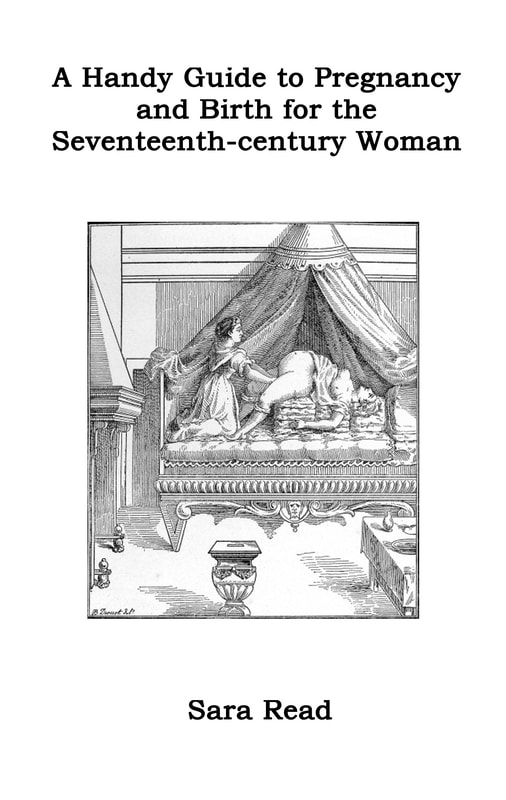
The first of these new books is by Dr Sara Read, who specialises in cultural and literary representations of women, reproduction and medicine in the early modern period. Sara played a pivotal role in the WSG book, serving as both co-editor and contributor, with her chapter focusing on The Countesse of Lincolnes Nurserie (1622) by Elizabeth Clinton and highlighting views around childcare and breastfeeding. In her latest work, Sara continues to draw upon this rich subject knowledge, while venturing into new territory: the genre of historical fiction.

In her excellent debut novel, The Gossips’ Choice, Sara has created an atmospheric world for her protagonist, the midwife Lucie Smith. The book has been described as a seventeenth-century version of ‘Call the Midwife’, as we follow Lucie’s cases during the plague year of 1665. It is a beautifully crafted and impeccably researched novel, drawing upon a wide range of historical sources. For example, some of the events in the book are inspired by A Complete Practice of Midwifery (1737), the memoir of midwife Sarah Stone. This approach provides authentic detail to a vividly imagined and compelling story.

The second new book release is by Dr Tabitha Kenlon. Tabitha’s research concentrates on eighteenth-century British novels, theatre, and conduct manuals. In Exploring the Lives of Women, Tabitha’s chapter provides a close reading of a single text, exposing the confused rhetoric in the cautionary pamphlet Advice to Unmarried Women (1791) written by an anonymous clergyman. Tabitha also contributed one of the two poems in our book, ‘Gretchen’s Answer’, which follows similar themes by exploring the consequences of “when society tells women how to think, how to act, how to feel” (Exploring, p. 98).

Tabitha’s first monograph continues this investigation. In Conduct Books and the History of the Ideal Woman, Tabitha shows how the longest-running war is the battle over how women should behave. This is an exceptional study, being the first of its kind to provide a trans-historical approach: expanding upon previous period-specific studies, Tabitha considers the persistence (or alteration) of the female ideal over six centuries. Tabitha’s brilliant close readings of a wide range of texts are superbly executed and entertaining, making the book highly accessible to the specialist or general reader. It is a powerful book, written with compassion and flashes of anger, in an elegant and witty prose.

Until we can all meet to celebrate, congratulations to Sara and Tabitha for producing two great books. Full reviews of both publications will appear on this website in the coming months: watch this space!

____________________________________________

The Gossips’ Choice by Sara Read is published by Wild Pressed Books for £12.

Conduct Books and the History of the Ideal Woman by Tabitha Kenlon is published by Anthem Press for £80 (hardback) and £25 (ebook). Please ask your institutional library to buy a copy. A 20% discount is available to WSG members.

Exploring the Lives of Women, 1558–1837, the anniversary book by WSG, is published by Pen & Sword Books for £19.99 (hardback), £12.99 (paperback) and £5.20 (ebook).

Please support your local independent booksellers if you can. Harris & Harris Books is currently offering a delivery service.

Summer Online Seminar, 1230-1530, Saturday, 20 June 2020

We have rescheduled the previously cancelled March seminar. The session will now take place via Zoom. If you would like to join the session, please consider becoming a WSG member. Full details and abstracts can be found here.

*****

1230-1530, Saturday, 20 June 2020

(via Zoom – the link is only available to WSG members)

Lindy Moore: The Scottish Schoolmistress in the Eighteenth Century

Alexis Wolf: Women and Mentoring in the Late Eighteenth Century: Mary Wollstonecraft, Margaret King and Mary Shelley

Rachel Eckersley: Female benefactors to dissenting academies in England

Catriona Wilson: “Some attention to those female members”: Feminised monarchy in the first exhibition of Kensington Palace’s State Apartments, 1899

Chair: Gillian Williamson
Assistant Chair: Angela Escott
Zoom Host: Brianna Robertson-Kirkland

Upcoming Publication: Princesses Mary and Elizabeth Tudor and the Gift Book Exchange

This fall my second monograph, Princesses Mary and Elizabeth Tudor and the Gift Book Exchange, will be published with ARC Humanities Press in the “Gender and Power in the Premodern World” series. The monograph was meant to be published this summer, but due to the current pandemic, it is at the press awaiting copy-editing. The press plans to re-open in August. I actually presented portions of the first chapter at the Women’s Studies Group meeting on 30 January 2016.

This primary focus of this monograph are the four manuscript dedications that Princess Elizabeth wrote to Henry VIII, Katherine Parr, and her brother Edward, that accompanied her four pre-accession gift translations. It is clear that to fully understand these dedications, Elizabeth’s work cannot be separated out from that of her sister Mary. The dedications must be examined by themselves, as well as alongside the New Year’s gift-giving tradition in which she gave them both her and Mary’s youthful translations, and how her dedications and translations came to be represented after she completed them. Comparing dedications, then, is another way to compare their pre-accession experiences of Mary and Elizabeth, a time period for both women which is largely ignored for their later years as queen.

Importantly, rather than treating the pre-accession translations of Elizabeth and Mary as separate and not equal, this study examines them together, as Mary and Elizabeth undertook some of their translation at the exact same time. I show that Mary’s translations need to be considered as important as Elizabeth’s translations, and how in fact, Elizabeth’s translations were of little importance at the time she created them.

This study re-evaluates important literary achievements made by both princesses before they became queens. The first chapter is an analysis of the book dedications that were given to Princesses Elizabeth and Mary to show how Elizabeth’s dedications were part of a genre that used supplication and modesty to make a personal connection with the recipient of the dedication. The second chapter concentrates on Mary’s translations. Unlike those by Elizabeth, neither had an accompanying dedication and she did not give either as New Year’s gifts. The third chapter is the crux of my interpretation of Elizabeth, offering an examination of her four dedications alongside an explanation of the texts that they accompany. I suggest that Elizabeth had to give Henry, Edward, and Katherine Parr translated texts with dedications to prove her loyalty and show her desire not to be demoted from the royal family again. To greater emphasize the singularity and importance of Elizabeth’s dedications, the fourth chapter examines extant New Year’s gift-exchange information for the years in which Elizabeth gave her translated manuscripts to her relatives. The final chapter concentrates on the printed publications of Elizabeth’s translation of Marguerite of Navarre’s Le Miroir de l’áme pécheresse.

Valerie Schutte

Valerie Schutte is author of Mary I and the Art of Book Dedications: Royal Women, Power, and Persuasion (2015). She has edited or co-edited four collections on topics such as Mary I, Shakespeare, and queenship. Her personal website is https://tudorqueenship.com/.

Chawton House Lockdown Literary Festival, 15-17 May, 2020

Chawton House has staged an online festival of excellent talks, interviews, discussions and workshops over an intensive three-day weekend which has been a triumph of organisation. Many of the sessions are still available to view on YouTube.

Originally conceived as an actual festival at Chawton, it was forced to go online at short notice. It was part of the current emergency appeal for the future survival of the house, a crisis exacerbated by the coronavirus lockdown. If the key contribution of Chawton to promoting womens’ literature was ever in doubt, this event resoundingly proved otherwise. The number and variety of participants as speakers and audience from all over the world demonstrated the quality of important research and creative thought which makes the study of womens’ lives and writing so vibrant and exciting. The emotional and imaginative connection which the house continues to inspire was clear to see.

Papers were delivered with slides or as informal interviews and most included opportunities for questions via Twitter or Zoom to follow. The festival began with presentations about displays at Chawton on Jane Austen and responses to her novels and on the current Man-up! exhibition, as well as authors’ introductions to books related to female enterprise and courage, such as Julie Wheelwright’s Sisters in Arms: Female Warriors from Antiquity to the New Millenium, Sharon Wright’s Balloonomania Belles, and Wendy Moore’s Endell Street about a hospital which was entirely run by women during the first world war. Related doctoral research by Rebecca James on pirates and Alison Daniell’s on the formidable Elizabeth Knight, the only female squire of Chawton House, added to the sense of dynamic and fearless enterprise which characterised the women featured across all the festival talks.

Jane Austen’s lesser-known contemporary women writers such as Jane West and Jane Porter were discussed by Devoney Looser, and publisher John Murray II’s correspondence and collaborations with writers such as Mariana Starke and translator Sarah Austin were the subjects of Gillian Dow’s talk. Of course, Jane Austen herself and her legacy were essential elements of the three-day programme. This included Emma Clery’s research on the history of the Jane Austen Society and Janine Barchas’s entertaining survey of the many cheap and low-budget versions of Austen’s novels which were produced over the years both here and abroad. Many of these utilised Hollywood film stills for their sensationalised front covers. These prompted very personal memories and sharing of much-thumbed copies in the question and answer session. A fictionalised exploration of Austen and her sister Cassandra’s relationship by Gill Hornby in her new book Miss Austen and personal memories of living in the house as a child by Caroline Knight, as well as Chawton House volunteer Martin Caddick’s research into the house and its various residents over four hundred years set Chawton itself centre stage.

In addition to scholarly papers and readings from new work, an interesting aspect of the festival was the focus on practical creative writing in Claire Thurlow’s writing workshop and Sinéad Keegan’s session on writing found poetry sourced from Chawton’s archive. During Keegan’s sessions, participants were invited to share their own work, constructed, reassembled and edited to form new poems, and helpful advice and feedback were offered. The female accomplishment of needlework, so much part of an eighteenth-century woman’s daily life, was discussed by Jennie Batchelor. Her project which inspired beautiful examples based on The Lady’s Magazine embroidery patterns resulted in an exhibition at Chawton in 2016, and she has now published a book with Alison Larkin, Jane Austen Embroidery. One of her points was that the view of sewing as part of female drudgery and a symbol of oppression, from Mary Wollstonecraft onwards, needs to be reassessed. A final and delightful paper was given by Hilary Davidson who has recently published Dress in the Age of Jane Austen, and her slides dwelt on the fashion plates and satirical prints which often direct our views of the fashion of the early nineteenth century. Women were well aware of the niceties of detail and their implications for taste and decorum.

I have given a taste of the festival which included many more papers. There was a wealth of insights, new subjects to explore and new books to resist buying (or not!) but most of all, a real sense of joy and a shared love of the literature and history which Chawton has nurtured and enabled for many years now. Apart from missing the tea break chats which a normal conference encourages, I found Chawton’s online version was at least as stimulating if not more absorbing and immersive, and I am sure it left everyone involved determined to secure the future of this centre of womens’ writing for many years to come.

Miriam Al Jamil

Miriam Al Jamil is a committee member of WSG, as well as of The Johnson Society of London. She is chair of the Burney Society UK and fine arts editor for BSECS Criticks. She posts reviews on a variety of sites and in academic journals. Her chapter on a Zoffany painting was recently published in Antiquity and Enlightenment Culture.

Review of A Georgian Heroine: The Intriguing Life of Rachel Charlotte William Biggs, by Joanne Major and Sarah Murden (Barnsley: Pen and Sword, 2017) ISBN: 9781473863460 £19.99

On a Friday in 1987, the antiquarian book dealer John Byrne was making his way home from work when he was mugged in a street in Pimlico. The thief made off with his briefcase, a loss made all the more pertinent thanks to a rare eighteenth-century manuscript, lent to Byrne by his colleague Marius Kociejowski. A week later, the police contacted the pair to say the discarded case had been recovered and that the contents were, unfortunately, torn to shreds. When the fragments were returned, however, the manuscript was miraculously intact, possessed of a potency that had ensured its survival across time:

It was wet but in a single piece, and such was the quality of the handmade paper and the iron-based ink that once the sheets were dried out there was hardly any damage at all. (p. xxii)

The manuscript had been discovered in a cupboard by Kociejowski in a moment of serendipity, the extraordinary significance of which would later reveal itself. It was ‘stitched together to make a small booklet of twenty-eight quarto pages (three of them blank) and a covering letter of sixteen octavo pages, dated 26 February 1821, and signed “Charlotte B —”’ (p. xx). This was, it transpired, an autobiographical memoir written by Rachel Charlotte Williams Biggs, known as Charlotte and, at the time of composition, an elderly woman recalling her first love who, decades earlier, had abandoned her in search of riches in India. The intended recipient of the letter was none other than Sir David Ochterlony (1758–1825), who rose to the role of British Resident to the Moghul court in Delhi at the end of the Georgian period. More remarkable than this was that Kociejowski was a direct descendent of Ochterlony. In his preface to A Georgian Heroine, Kociejowski recalls how ‘the effect it made on me was absolutely electrifying […] it was as if the post had arrived over a century and a half late’ (p. xxi). What follows is a lively and richly detailed account of Charlotte’s life, drawn from her surviving writing by biographers and genealogists Joanne Major and Sarah Murden. Major and Murden are regular co-authors and as well as several published biographies maintain the wonderfully vivid and panoramic blog All Things Georgian. Here, through impressive archival work, they have pieced together the previously unknown life of an extraordinary Georgian woman.

Charlotte’s story begins on the shores of the Thames in 1770s Lambeth where she was courted by Ochterlony as a young girl. In the first in a series of calamitous twists, Ochterlony set out for India to earn his fortune only to find himself unable to return to England and instead forced to join the East India Company’s army. With Ochterlony in no position to support her, Charlotte was left alone in London and it is here that her account, transformed into lively prose by Major and Murden, takes off. Enter the villainous Richard Heaviside (a name ‘worthy of a Restoration comedy’) as an obsessive and dangerous young man whose crimes Major and Murden go on to document. Heaviside was the illegitimate son of a timber merchant, whose business and fortune he inherited in 1775. A regular visitor to Covent Garden, he soon became acquainted with all that neighbourhood had to offer. He nursed a growing obsession with Charlotte (whose family he knew well), ‘one that would lead to her downfall and destroy all her youthful hopes’ (p. 4).

Major and Murden’s presentation of Charlotte in this period as a passive, naive young woman who would eventually become a victim of abduction and rape at the hands of Heaviside (‘Charlotte’s unobtainability only heightened her desirability and Heaviside’s need to possess her’ p. 5) makes for difficult reading by a modern audience versed in the necessity and resonances of the #MeToo movement. There is no warning ahead of a chapter describing the rape itself, followed somewhat incongruously by a chapter not on Charlotte but on the early life of her rapist. Charlotte’s biographers do, however, offer early glimpses into the ingenuity and self-reliance that would perhaps characterise and preserve her in the years following her imprisonment at the hands of her tormentor. Requesting books, needle and thread from her captor in a bid to appear compliant, Charlotte used the tools to stitch together a secret message which, delivered to a neighbour by a visiting apothecary, secured her eventual rescue by a peripheral character in her story, Benjamin Hunt Briggs.

Charlotte fled to France with Briggs, to whom she may have been married, only to find herself once again imprisoned in the French Revolution. Eventually returning to England, Charlotte had become politicised enough to write a pamphlet A Maximum; or, the Rise and Progress of Famine, addressed to the British People, which William Wilberforce cited in parliament, crediting it to ‘a gentleman.’ She would go on to rise in Georgian society, organise the jubilee celebrations for George III and return to continental Europe, possibly as a spy, raising interesting questions about the agency and opportunities open to a woman subjected to such brutality.

Comparisons between the early events of Charlotte’s life, drawn directly from her unpublished manuscript, and the novels of Samuel Richardson are inevitable. Her writing, Major and Murden tell us, is peppered with references to her favourite poets and novelists, suggesting a self-conscious mode of composition that leads them to question the validity of the events she describes. This brings its own complications for modern readers, particularly considering the centring of sexually violent content alongside contemporary, vital calls to believe women. Repeated references made by Kociejowski as well as Major and Murden to Ochterlony having ‘gone native’ in Nepal as well as the frequent usage of ‘whore’ to signify sex workers invite further scrutiny, particular in the context of a narrative shaped by systemic injustice and disempowerment.

Although A Georgian Heroine might have benefitted from deeper engagement with Charlotte’s own words, the result is an account of the suffering and triumphs of a life lived during a turbulent period of British history in which it was supremely difficult, and regularly dangerous, to be a thinking and writing woman. Major and Murden form a compelling portrait of the previously elusive Charlotte, offering up a meaningful contribution to the ongoing feminist project of recovery. Interestingly, no visual portrait of Charlotte survives and indeed in his introduction, Kociejowski wishes that one might be found in the aftermath of the book’s publication. Certainly, Charlotte commissioned at least one miniature portrait during her lifetime, which she enclosed in an earlier letter to Ochterlony, writing with it:

it will therefore … be very pleasing to me to know you possess an object which may remind you of me when I am not more, and if as Gray says “even in our Ashes live their wonted fires” my spirit will be soothed should it be conscious that I am not entirely forgotten (p. xxv).

But, as A Georgian Heroine testifies, it was her words, committed to an explosive manuscript, that would outlive Rachel Charlotte Williams Biggs and ensure the survival of her legacy. In their hands, the emotive and affective power of her manuscript is revealed by Major and Murden, who demonstrate the myriad ways women’s life writing can offer new perspectives on the past.

Madeleine Pelling
University of Manchester

Madeleine is a postdoctoral fellow at the John Rylands Research Institute at the University of Manchester. Her research focuses on material and visual culture in the eighteenth century, and appears in the Journal for Eighteenth-Century Studies, Women’s History Review and Early Modern Women: An Interdisciplinary Journal. She is currently writing a monograph on the Duchess of Portland’s museum.

*Disclosure: Sarah Murden is a member of the Women’s Studies Group 1558–1837.

This book is available from Pen and Sword.